HCM HEAD OFFICE: Room S15, Saigon Pearl, 92C Nguyen Huu Canh, Thanh My Tay Ward, Ho Chi Minh City
HANOI BRANCH: N45-TT4 Do Dinh Thien Street, My Dinh – Song Da Urban Area, Tu Liem Ward, Hanoi
24/7
Call Now
+84 933 706 351
JMENTERPRISE CO., LTD.
Mail Now
jhcha@jmentchemical.com
Top 5 Adhesives for Export Packaging – Power of Solvent-Free PU

Top 5 Adhesives for Export Packaging – Power of Solvent-Free PU

Top 5 Adhesive Solutions for Export Packaging – The Outstanding Advantages of Solvent-Free Polyurethane (PU)

 Industry Shift in Export Packaging
As major markets like the EU, US, and Japan tighten regulations on food safety and environmental compliance (RoHS, REACH, SVHC, Plastic Pact, etc.), packaging manufacturers are required to:

  • Eliminate harmful organic solvents (VOCs)
  • Comply with non-migration and odor-free requirements
  • Optimize production efficiency while maintaining durability and aesthetics

The most advanced adhesive solution available today is:
Solvent-Free Polyurethane Adhesive (PU) – ideal for laminated flexible packaging.

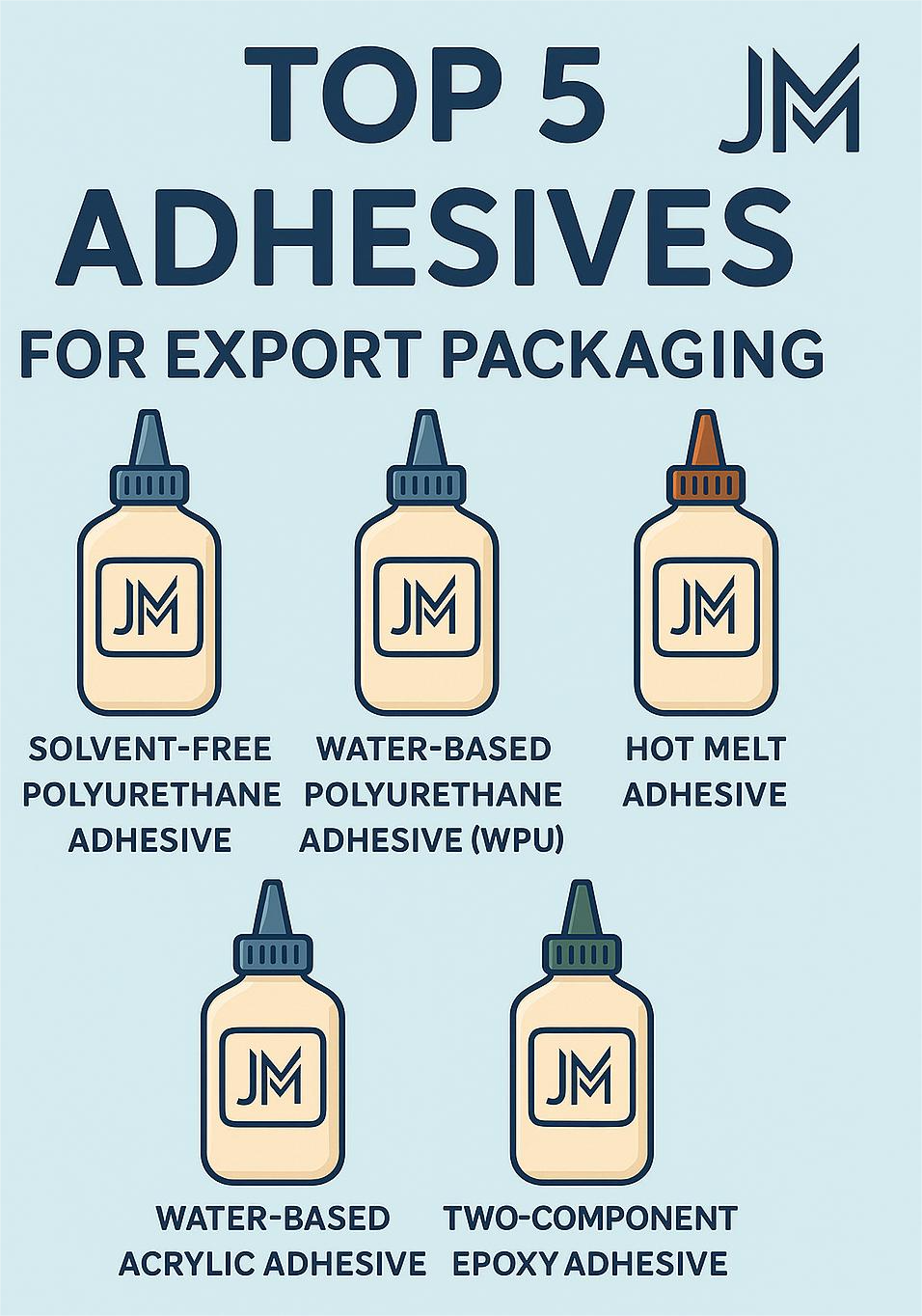
 1. Solvent-Free Polyurethane Adhesive – The New Standard in High-End Export Packaging

 Applications: Laminating multilayer films (BOPP/PE, PET/AL/CPP, PA/PE), food, cosmetic, and pharmaceutical packaging

 Key Technical Advantages:

  • VOC-free, non-toxic – safe for both consumers and plant operators
  • Fast curing, no drying system required – energy-efficient
  • Excellent bond strength, resistant to freezing, boiling, and flex-crack
  • Odorless, non-migratory – ideal for direct food contact packaging

 Recommended Product:
PU – a next-generation solvent-free PU adhesive developed by  JM ENTERPRISE CO, LTD compatible with a wide range of substrates, optimized for high-speed lamination.

 2. Water-Based Polyurethane Adhesive (WPU)

  • Best for paper-to-film lamination, kraft boxes, paper pouches, and luxury paper packaging
  • Pros: eco-friendly, easy to clean, safe handling
  • Limitations: less suitable for barrier or heat-resistant multilayer films

 3. Hot Melt Adhesive

  • Common in corrugated boxes and high-speed FMCG packaging
  • Pros: instant bonding, VOC-free
  • Limitations: low performance in multilayer films for food or medical exports

 4. Water-Based Acrylic Adhesive

  • Used for label bonding, mono-layer films, and zip-lock bags
  • Transparent, non-yellowing, excellent printability
  • Not ideal for multilayer barrier film applications

 5. Two-Component Epoxy Adhesive

  • Used in specialized applications like medical or high-performance packaging
  • Pros: superior chemical resistance and bonding strength
  • Drawbacks: slow curing time, high cost, complicated mixing process

Why Solvent-Free PU is the Future of Export Packaging Adhesives

Criteria

Solvent-Free PU

Conventional Solvent-Based

VOC Emissions

 None

✔️ Requires emission control

Food Safety

 Excellent

⚠️ Depends on formulation

Energy Efficiency

 No drying needed

 High energy usage

Production Speed

 High-speed

Moderate

Substrate Compatibility

Broad

Limited

Product Shelf Life

Stable

Variable

 JM ENTERPRISE CO, LTD – Vietnam’s Leading Developer of Solvent-Free PU for Export Packaging

 Domestic production – full control over formula and quality
 On-site technical support – tailored solutions for your equipment
 Compatible with industry-standard laminators (Nordmeccanica, Comexi, Sonten…)

Contact JM ENTERPRISE CO, LTD for samples and expert consultation
☎️ Hotline/Zalo: 84 933 706 351 Mr Cha (speak Korean and English) 84 913390054 Ms Ngan ( speak Vietnamese)
Email: jhcha@jmentchemical.com- bdm01@jmentchemical.com
Website: https://jmentchemical.com/


Newest Blogs

Epoxy Resin vs Polyurethane Resin: Key Differences & Selection Guide

Compare Epoxy Resin vs Polyurethane Resin (PU) in detail. Explore key difference...

How to Choose the Right Epoxy Resin for Industrial Applications

Learn how to choose the right epoxy resin for industrial applications. Explore k...

Zero-Carbon Emission Reduction Solutions

Explore Zero-Carbon emission reduction solutions using PU foam insulation. Learn...

In-Depth Analysis of Epoxy vs Epoxy Resin: Chemical Nature, Technical Properties, and Industrial Applications

An in-depth technical analysis of Epoxy vs Epoxy Resin. Clarify terminology, che...

Low-VOC Trends: Comprehensive Guide to Odorless Catalysts & Additives for Export-Grade PU Foam

Discover Low-VOC additives & reactive catalysts for PU Foam: Eliminate amine odo...

Fixing PU Foam Post-Demold Shrinkage & Distortion: Technical Causes & Line Solutions

Troubleshoot PU Foam shrinkage and distortion post-demolding: Uncover closed-cel...

Most Viewed Blogs

Eco-Friendly PU Adhesive for Sustainable Packaging

Durable PU laminating adhesive – solvent resistant, internationally certified....

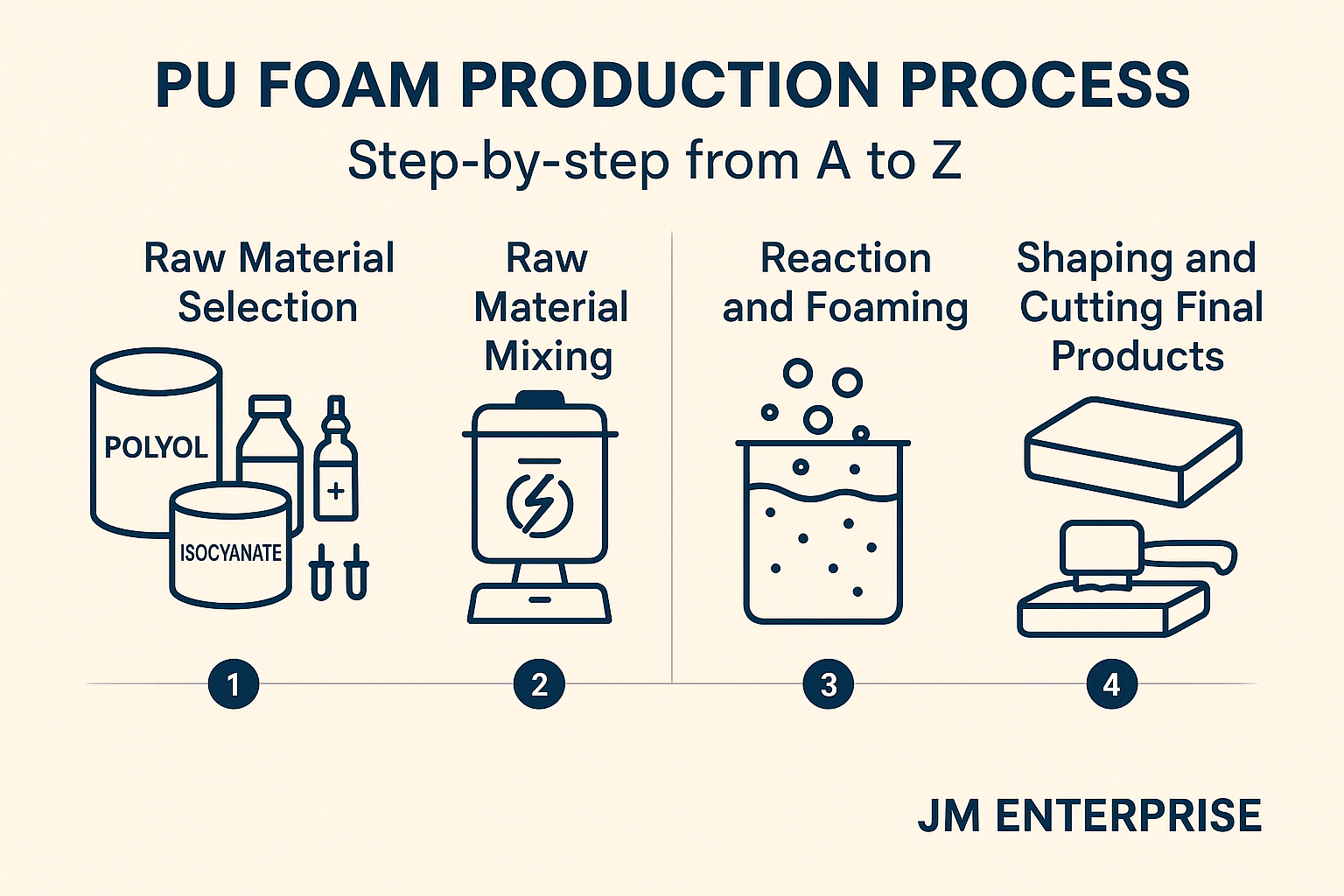
PU Foam Production Process: A Step-by-Step Guide from A to Z

Explore the complete PU foam production process from A to Z and discover how sou...

TPU and Sustainability: Is It an Eco-Friendly Material?

Discover whether TPU is truly eco-friendly, its recyclability, product life cycl...

Hydroxy and Oxygen Content in Polyol – The Key to High-Quality Polyurethane Production

How OH and oxygen content in polyol affect polyurethane performance. Learn how t...

TDI/MDI – Complete Solutions for Your PU Production Needs

JM Enterprise supplies high-quality MDI and TDI for PU production in Vietnam. Co...

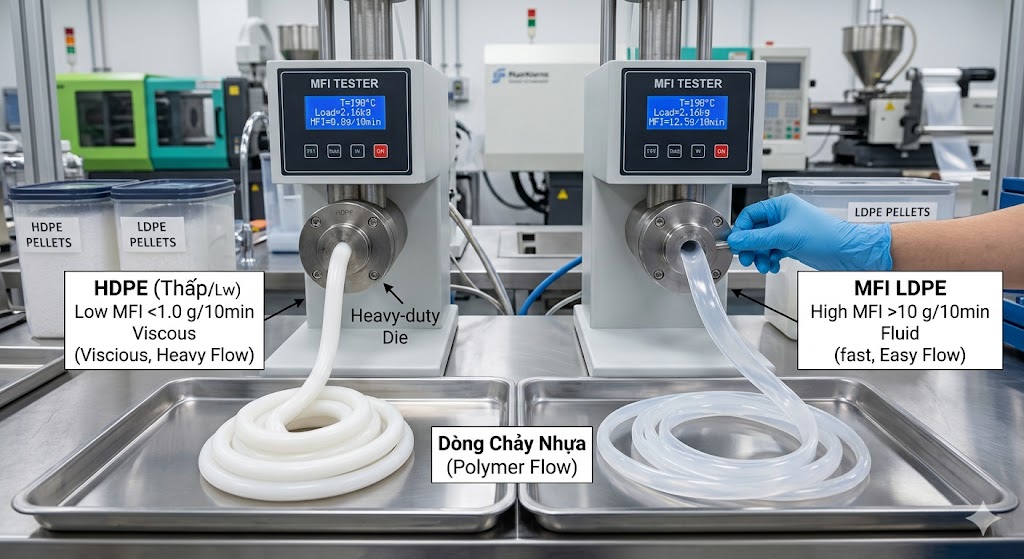
Impact of Melt Flow Index (MFI) on HDPE/LDPE Extrusion & Film Blowing | JM ENTERPRISE

Understand how MFI affects the production of HDPE and LDPE. Expert technical ins...

Related Blogs

In-Depth Analysis of Epoxy vs Epoxy Resin: Chemical Nature, Technical Properties, and Industrial Applications

An in-depth technical analysis of Epoxy vs Epoxy Resin. Clarify terminology, che...

How to Fix PU Foam Expansion Failure, Poor Expansion & Density Deficit Issues

Experiencing PU foam expansion failure, poor expansion, or density deficit? Disc...

PU Foam Production Process: A Step-by-Step Guide from A to Z

Explore the complete PU foam production process from A to Z and discover how sou...

Polyurethane in Shoe Sole Manufacturing: Molding Technology & Color Pigment Dispensing

Explore PU sole molding technology and specialized Color Paste pigment dispensin...

Top 5 Global Manufacturers of Polymer Antioxidant Additives – SONGWON Stands Out with Superior Solutions.

Antioxidant additives play a vital role in enhancing thermal stability, extendin...

TPU and Sustainability: Is It an Eco-Friendly Material?

Discover whether TPU is truly eco-friendly, its recyclability, product life cycl...

Zalo Zalo