What is Polyol and Why Does It Matter in Polyurethane Production?
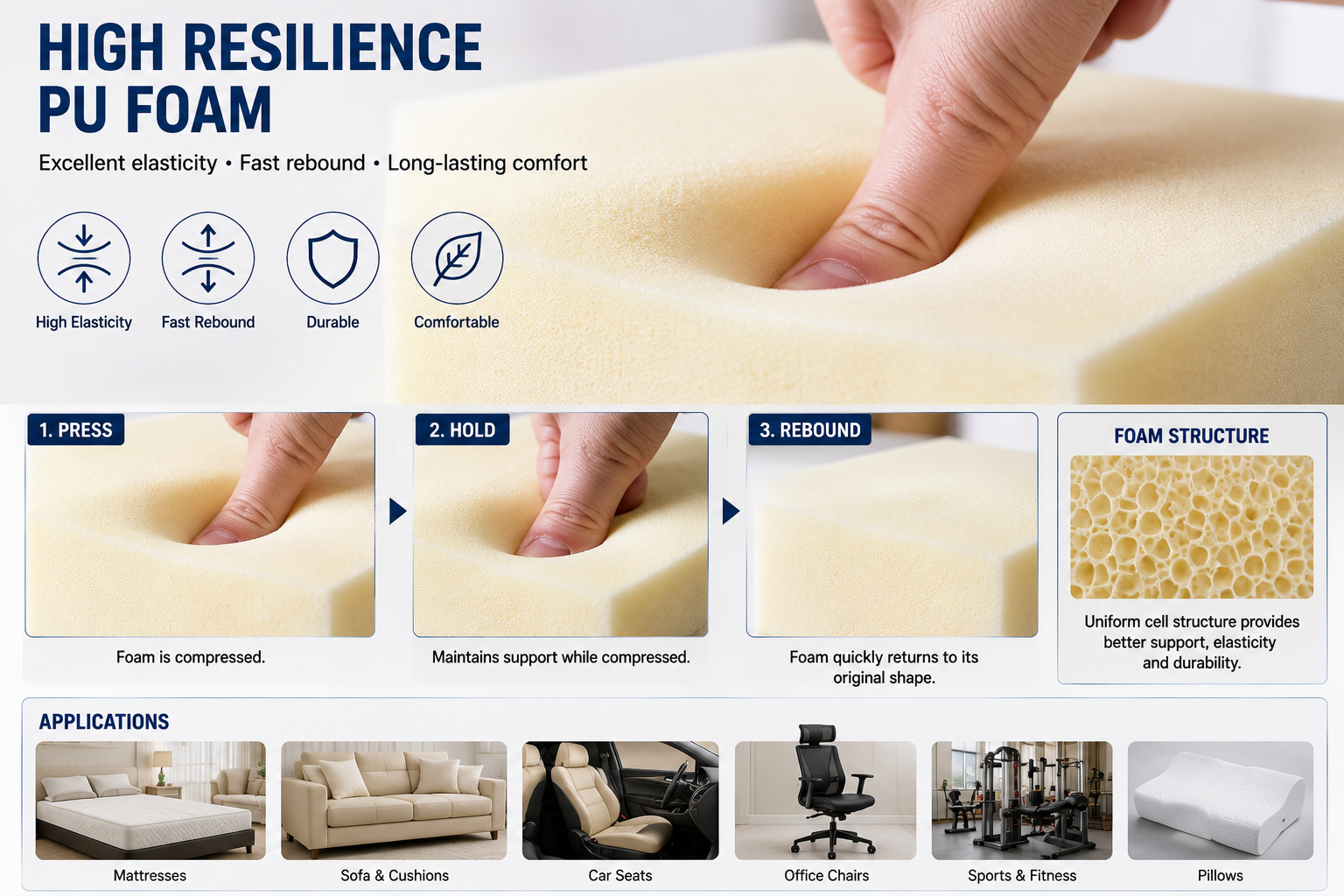
Polyol is a compound containing multiple hydroxyl (-OH) groups that reacts with isocyanate (NCO) to form urethane linkages, the backbone of all polyurethane (PU) materials.
The OH value (hydroxyl number) and oxygen content in the polyol structure directly influence:
- Reaction rate and polymerization level
- Mechanical properties (flexibility, hardness, compression strength)
- Hydrolytic and thermal stability
- Surface finish and long-term durability of PU products
1. Hydroxyl Number (OH Value) – Defining the Reactivity
💡 Definition:
The hydroxyl number measures the amount of hydroxyl groups in a polyol, expressed in mg KOH per gram of polyol.
🎯 Technical Implications:
- Low OH value (20–60 mg KOH/g): Ideal for flexible foam (e.g., cushions, seats, acoustic panels).
- High OH value (200–500 mg KOH/g): Used in rigid foam (insulation panels), adhesives, coatings.
Real-world examples:
- Polyether polyol with OH ~35: Used in automotive seat cushions – soft and durable.
- Polyester polyol with OH ~400: Used for rigid PU panels – tough and thermally stable.
NCO:OH Ratio:
- Ideal ratio: ~1.05–1.10 for full cross-linking.
- Too low OH: Incomplete PU formation → weak structure.
- Too high OH: Requires more isocyanate → increased cost, overly hard or brittle PU.
2. Oxygen Content – Influencing Reactivity and Durability
Polyols contain oxygen atoms in ether (-O-) or ester (-COO-) bonds, depending on the type.
💡 Comparison:
|
Polyol Type
|
Structure
|
Key Features
|
|
Polyether Polyol
|
Ether (-O-)
|
Fast-reacting, hydrolysis-resistant
|
|
Polyester Polyol
|
Ester (-COO-)
|
Strong adhesion, hard, prone to hydrolysis
|
🔬 Technical Effects:
- Polyether polyol:
- Faster reactivity → good for high-speed production lines
- Better water resistance
- Ideal for cushions, thermal insulation, soft PU products
- Polyester polyol:
- Higher rigidity, adhesion → great for coatings and adhesives
- More sensitive to moisture → may require antioxidants or UV stabilizers
🛠️ Application Examples Based on OH and Oxygen Content
|
Application
|
Polyol Type
|
OH Number
|
Oxygen Structure
|
Target Properties
|
|
Flexible foam (seats, beds)
|
Polyether polyol
|
28–45
|
Ether
|
Softness, elasticity, water resistance
|
|
Rigid foam (insulation)
|
Polyether or polyester polyol
|
350–500
|
Ether/Ester
|
High rigidity, thermal insulation
|
|
PU Adhesives & Coatings
|
Polyester polyol
|
100–300
|
Ester
|
Strong bonding, chemical resistance
|
|
Exterior PU Coatings
|
Polyester + UV stabilizers
|
200–400
|
Ester
|
UV durability, weather resistance
|
🧪 Best Practices in PU Formulation:
- Control moisture content in polyol – water reacts with NCO, generating CO₂ gas → creates foam defects.
- Balance NCO:OH ratio to optimize curing, cross-link density, and cost.
- Blend low and high OH polyols to tailor softness vs rigidity.
✅ Conclusion: Optimizing OH and Oxygen Content is Essential for Superior PU Quality
Understanding and adjusting the OH value and oxygen structure of polyols is crucial for successful polyurethane formulation. Whether you're producing flexible foam, rigid insulation, coatings, or adhesives, these two parameters determine the durability, performance, and cost-efficiency of your PU product.
📞 Need Technical Support or Cost-Effective Polyol Solutions?
JM ENTERPRISE is a trusted manufacturer and supplier of polyurethane-grade chemicals in Vietnam – offering:
- Stable quality comparable to global brands (Sigma, Merck)
- Competitive pricing for domestic and export markets
- Technical support tailored to your formulation needs
👉 Contact JM ENTERPRISE today to get a free consultation and customized quotation for your polyurethane production.
Hotline/Zalo: 84 933 706 351 Mr Cha (speak English and Korea) 84 913390054 Ms Ngan ( speak Vietnamese)
📧 Email: jhcha@jmentchemical.com
🌐 Website: https://jmentchemical.com/
🌿 Choose sustainable packaging today — drive long-term business growth tomorrow.
Let your brand be part of the global green revolutio