HCM HEAD OFFICE: Room S15, Saigon Pearl, 92C Nguyen Huu Canh, Thanh My Tay Ward, Ho Chi Minh City
HANOI BRANCH: N45-TT4 Do Dinh Thien Street, My Dinh – Song Da Urban Area, Tu Liem Ward, Hanoi
24/7
Call Now
+84 933 706 351
JMENTERPRISE CO., LTD.
Mail Now
jhcha@jmentchemical.com
5 Tips to Reduce Shoe Sole Defects & JM Enterprise Solutions

5 Tips to Reduce Shoe Sole Defects & JM Enterprise Solutions

In the Injection Molding process for footwear, controlling the defect rate is essential for cost optimization and high productivity. One of the most critical factors is the strategic use and selection of mold release agents.

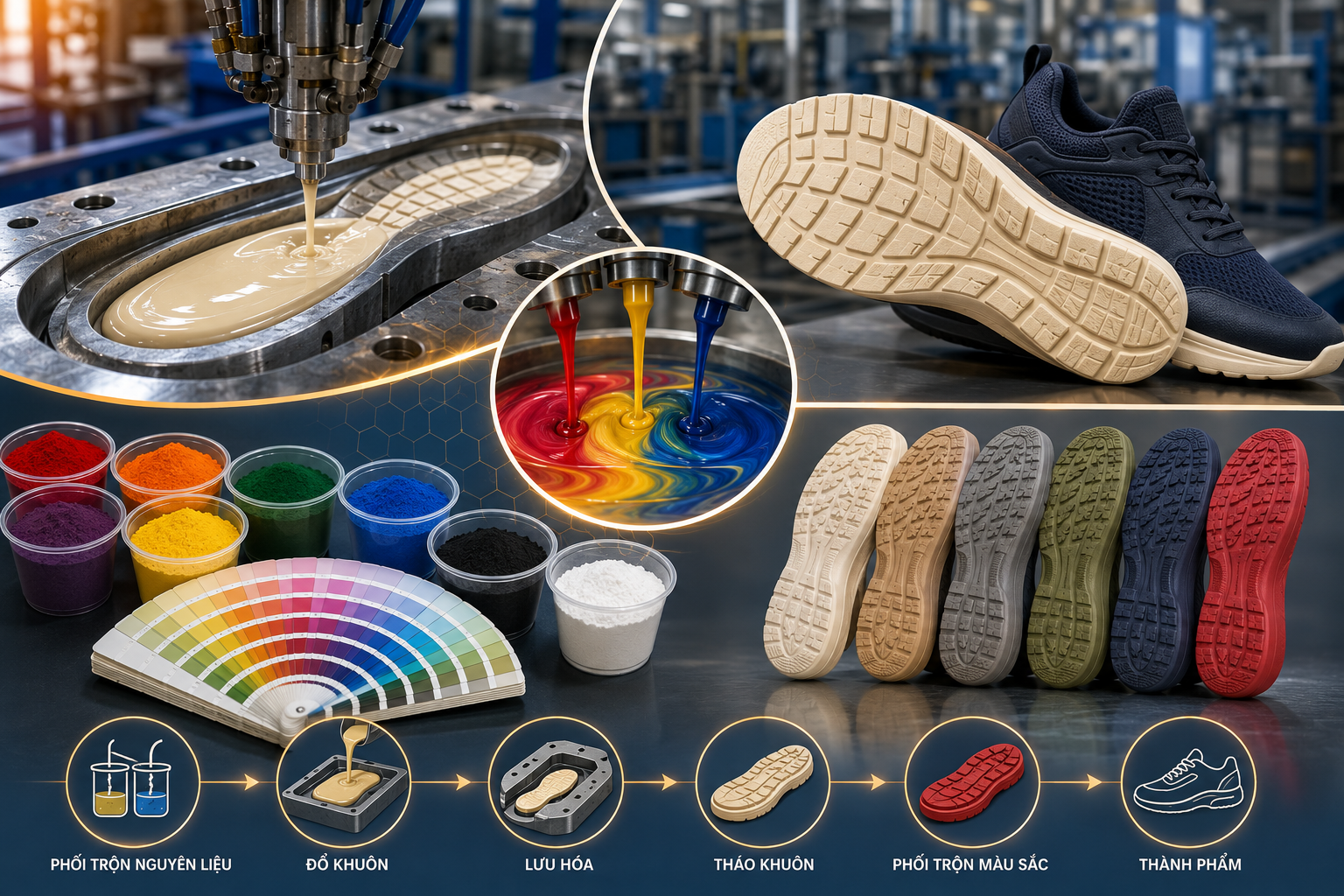
Shoe Sole Manufacturing: Key Methods and Materials Guide

Below are 5 expert tips to help you eliminate surface flaws and deformation while enhancing the final product's quality.

5 Secrets to Reducing Surface Defects and Deformation

1. Match the Release Agent to Your Material

Different materials such as PU, TPU, EVA, or Rubber have distinct chemical properties and bonding strengths. Using an incompatible release agent can lead to mold sticking or surface degradation, resulting in cracks or discoloration.

2. Utilize Fine Atomization Techniques

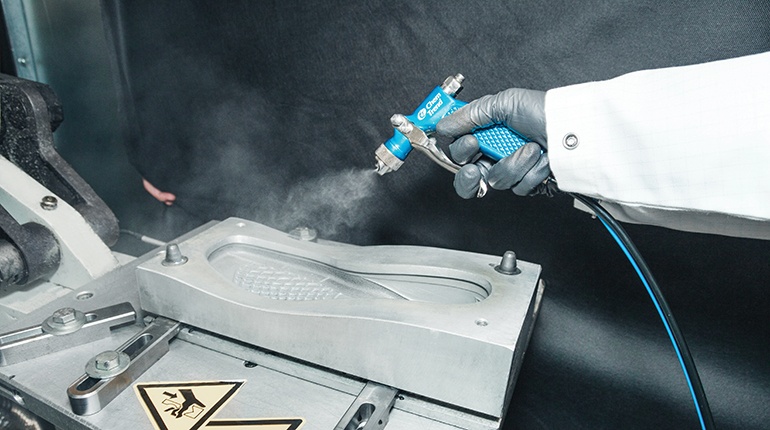
Avoid heavy or uneven spraying. Use high-pressure spray equipment to create a thin, consistent mist. This prevents pooling, which is the primary cause of oily patches and air bubbles on the sole surface.

3. Maintain Precise Mold Temperature

Mold release agents require a specific temperature range to form an effective protective barrier.

  • If the mold is too hot: The agent evaporates instantly, failing to create a film.
  • If the mold is too cold: Solvents may get trapped, leading to surface pitting and mold fouling.

4. Implement Regular Preventive Maintenance

The buildup of residual chemicals and resin is a leading cause of dimensional inaccuracies and loss of texture detail. Ensure molds are cleaned periodically to remove old layers before applying new ones.

5. Optimize Spraying Frequency

Spraying after every single cycle is often unnecessary and can be counterproductive. Excess residue can interfere with the adhesive bonding of the sole to the upper later in production. Determine the optimal spray-to-cycle ratio to save costs and maintain quality.

Criteria for Selecting Water-Based Mold Release Agents

Water-based release agents are now the industry standard due to their environmental friendliness and worker safety. Consider these criteria for your specific needs:

  • For PU (Polyurethane): Choose high-heat-resistant agents that leave a dry, non-greasy finish for easy painting or logo printing.
  • For TPU/PVC: Look for low-viscosity formulas with excellent flowability to reach the intricate grooves of athletic sole designs.
  • For EVA: Requires a formula with high chemical stability to accommodate the significant expansion rates during the foaming process.
  • General Standards: Look for stable solid content, zero carbonization at high temperatures, and ease of cleaning with mild detergents.

JM Enterprise – Your Partner for TPU and Optimization Solutions

If you are seeking a trusted partner to refine your production line, JM Enterprise offers total solutions for the footwear industry:

  • Premium TPU Supply: High-grade TPU materials with various hardness levels and superior abrasion resistance, meeting international brand standards.
  • Specialized Mold Release Agents: Our next-generation water-based agents provide a flawless finish with minimal buildup and maximum cost-efficiency.
  • Process Optimization Solutions: Our technical experts provide on-site consulting to help you identify the root causes of defects and reduce your NG (Not Good) rate.

JM Enterprise – Excellence in Durability and Quality for Every Step.

📞 Contact Us Today for Quotation & Technical Advice

📍 JM ENTERPRISE
☎️ Hotline/Zalo: 84 933 706 351 Mr Cha (speak English) 84 913390054 Ms Ngan ( speak Vietnamese)
📧 Email: jhcha@jmentchemical.com
🌐 Website: https://jmentchemical.com/

🌿 Choose sustainable packaging today — drive long-term business growth tomorrow.
Let your brand be part of the global green revolution!

Newest Blogs

The Key to Elevating Vietnamese Footwear

Discover JM's cutting-edge nano-waterproofing chemicals. A breakthrough solution...

Water Repellency Mechanism of JM Enterprise Chemicals

The JM Enterprise coating is non-film-forming. It encapsulates individual fibers...

REACH and RoHS Certificates in Footwear Accessories: What Manufacturers Need to Know

Explore REACH and RoHS compliance for footwear accessories. Discover high-qualit...

Top 5 Best Mold Release Agents for EVA Shoe Soles in 2026

Discover the Top 5 mold release agents for EVA shoe soles in 2026. JM Enterprise...

5 Tips to Reduce Shoe Sole Defects & JM Enterprise Solutions

Learn how to reduce shoe sole defects in injection molding. Discover criteria fo...

Comprehensive Solutions for Industrial Outsoles & Footwear Chemicals

JM Enterprise specializes in high-quality industrial outsoles, water-repellent c...

Most Viewed Blogs

PU Foam Production Process: A Step-by-Step Guide from A to Z

Explore the complete PU foam production process from A to Z and discover how sou...

SONGWON Anti-Oxidants for Plastic Compounding – Thermal & Oxidative Stabilization Solutions

Discover SONGWON's high-performance Anti-Oxidants for plastic compounding

Hydroxy and Oxygen Content in Polyol – The Key to High-Quality Polyurethane Production

How OH and oxygen content in polyol affect polyurethane performance. Learn how t...

TDI/MDI – Complete Solutions for Your PU Production Needs

JM Enterprise supplies high-quality MDI and TDI for PU production in Vietnam. Co...

Semi-Rigid Polyurethane Foam: Features, Applications, and Benefits

Contact JM ENTERPRISE for high-quality raw materials, competitive prices, and ex...

Top 5 Adhesives for Export Packaging – Power of Solvent-Free PU

Explore the top 5 adhesives for export packaging in 2025 compliant with EU & US...

Related Blogs

Isocyanates The Power Behind the Versatility of PU Products

Discover the essential role of isocyanates in polyurethane production. JM Enterp...

PU Foam Production Process: A Step-by-Step Guide from A to Z

Explore the complete PU foam production process from A to Z and discover how sou...

Water Repellency Mechanism of JM Enterprise Chemicals

The JM Enterprise coating is non-film-forming. It encapsulates individual fibers...

Top 5 Global Manufacturers of Polymer Antioxidant Additives – SONGWON Stands Out with Superior Solutions.

Antioxidant additives play a vital role in enhancing thermal stability, extendin...

Applications of PU Foam in Interior Design – A Booming Niche Market

PU Foam is becoming a key material in modern interior design: lightweight, durab...

Top 3 Foam Materials for Industrial Applications – PU, PE, EVA

Top 3 Foam Raw Materials for Modern Industry. Why PU Foam Leads the Market – Com...

Zalo Zalo