HCM HEAD OFFICE: Room S15, Saigon Pearl, 92C Nguyen Huu Canh, Thanh My Tay Ward, Ho Chi Minh City
HANOI BRANCH: N45-TT4 Do Dinh Thien Street, My Dinh – Song Da Urban Area, Tu Liem Ward, Hanoi
24/7
Call Now
+84 933 706 351
JMENTERPRISE CO., LTD.
Mail Now
jhcha@jmentchemical.com
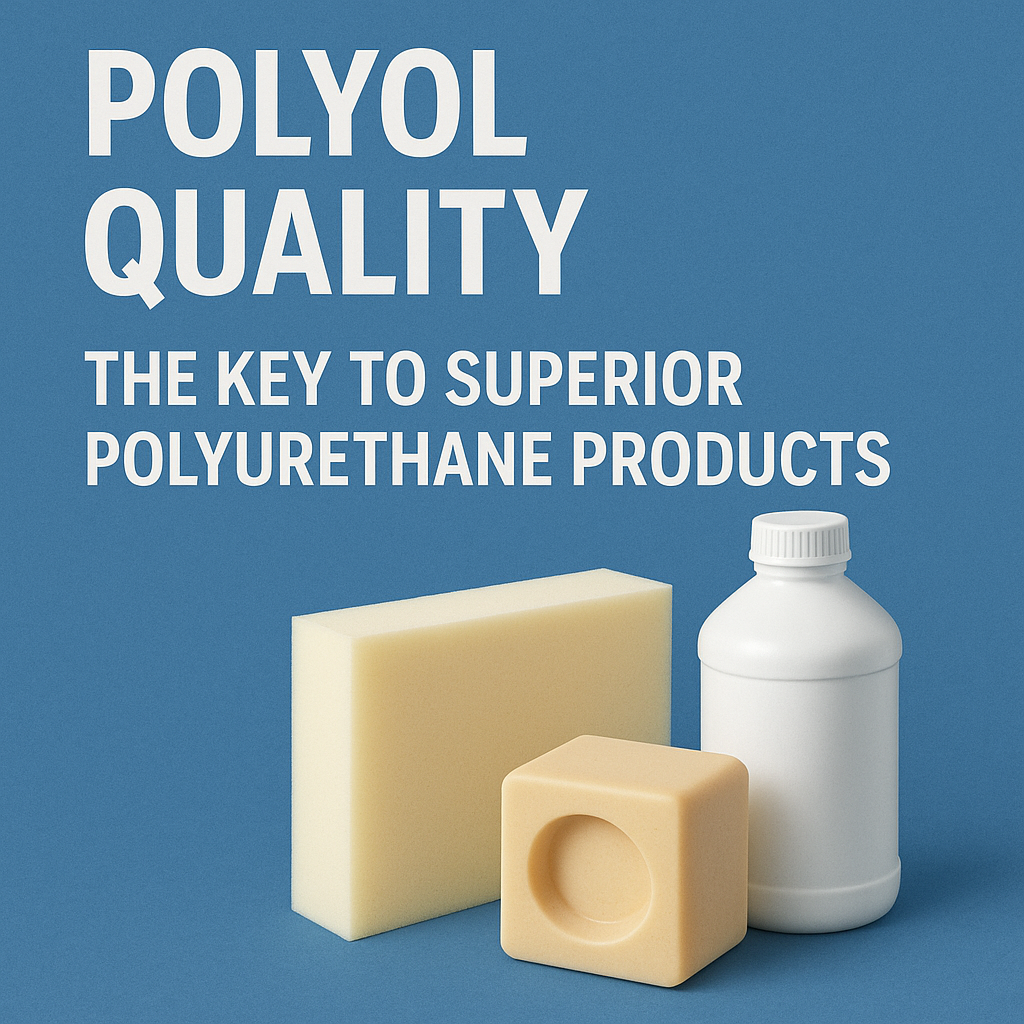
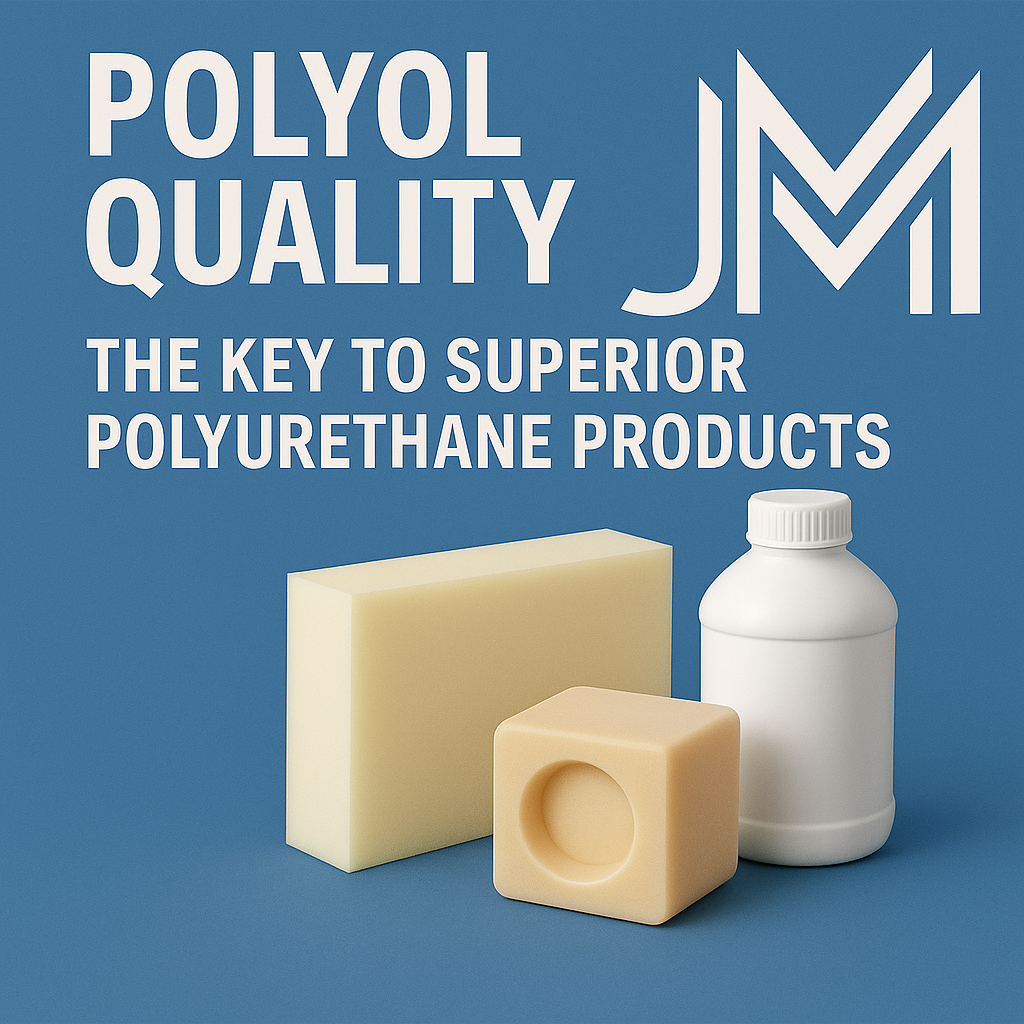
Polyol Quality – The Key to Superior Polyurethane Products

Polyol Quality – The Key to Superior Polyurethane Products

In the world of polyurethane (PU) manufacturing, the quality of polyol plays a central role in determining the mechanical properties, durability, and overall performance of the final product. Whether you're producing PU foam, elastomers, adhesives, or coatings, selecting a high-quality polyol is the foundation for delivering stable and high-performance polyurethane solutions.

Table of Contents

1. What is Polyol and Why is it Critical in PU Manufacturing?

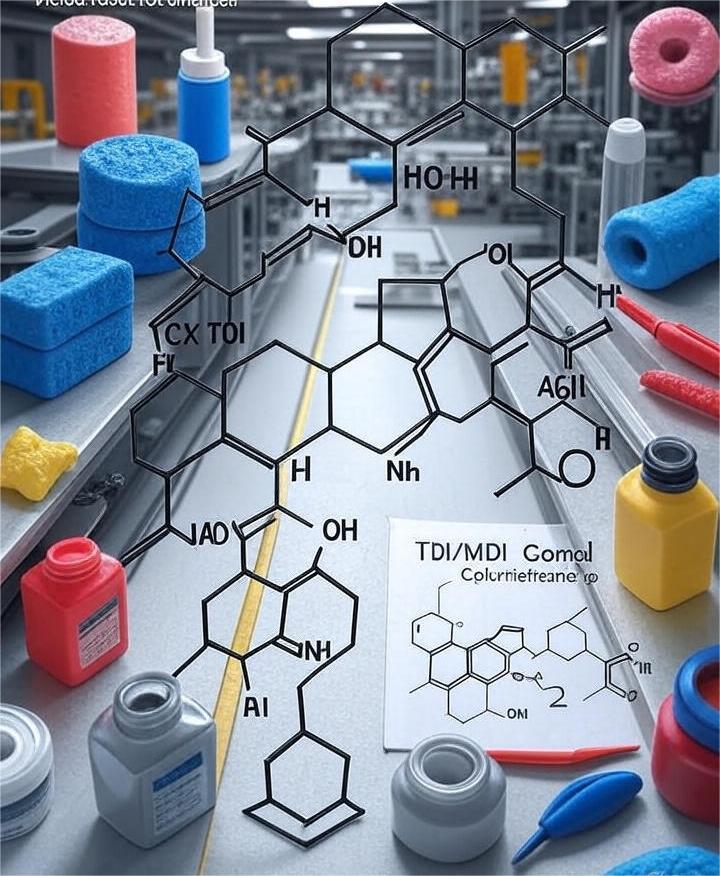
Polyol is a polyhydric compound containing multiple hydroxyl groups (-OH) that react with isocyanates (-NCO) to form polyurethane. It is the primary component in most PU formulations by volume.

There are two common types of polyol:

  • Polyether polyol: flexible, moisture-resistant → ideal for soft foam, elastomers.
  • Polyester polyol: rigid, chemical-resistant → suitable for rigid PU, adhesives, and coatings.

The quality of polyol directly affects:

  • Reaction rate with isocyanates.
  • Tensile strength, elasticity, and hardness of PU.
  • Thermal stability, UV resistance, and moisture resistance.
  • Foam structure, density, and cell uniformity.

2. Key Indicators of a High-Quality Polyol

2.1 Stable Hydroxyl Number (OH Number)

  • Measures the number of reactive OH groups.
  • A consistent OH number ensures precise control of the NCO:OH ratio, which determines the softness or rigidity of the PU product.

2.2 Low Moisture Content (Typically < 0.05%)

  • Prevents unwanted side reactions that produce CO₂ gas → avoids pinholes or voids in PU parts.

2.3. Controlled Molecular Weight

  • Influences the polymer chain length → directly impacts flexibility, toughness, and durability.

2.4. Good Color and Thermal Stability

  • Clean, low-color polyol with minimal impurities ensures PU products remain clear, color-stable, and UV-resistant.

2.5. Excellent Compatibility

  • Mixes well with isocyanates and additives, ensuring uniform reactions and preventing phase separation.

3.Why Controlling Polyol Quality Is Essential
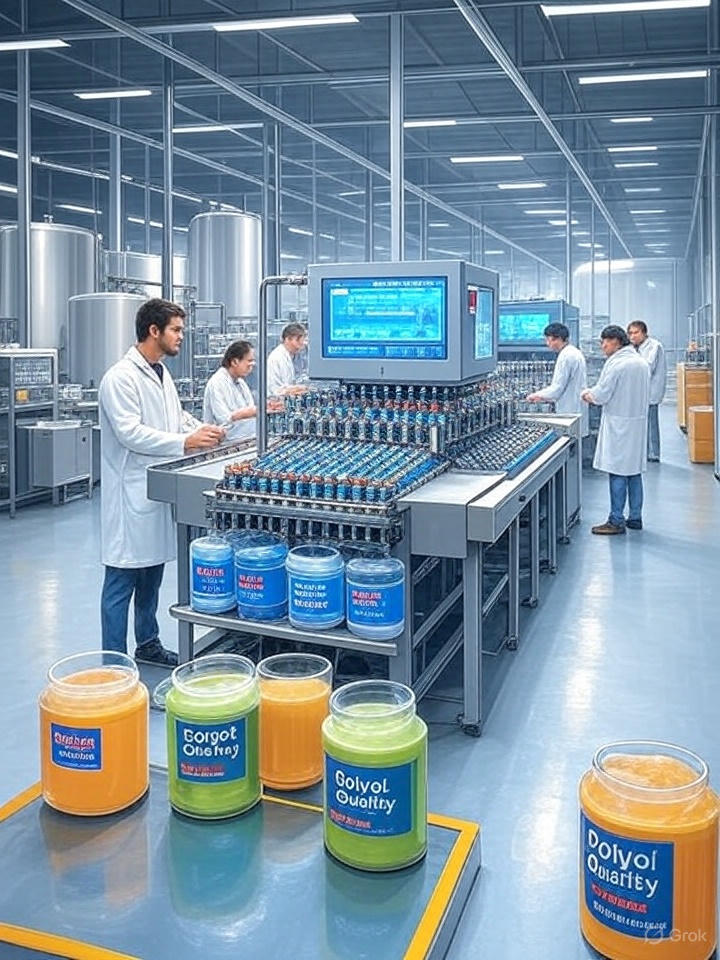
Using unstable or low-grade polyol can result in:

  • Incomplete reaction with isocyanates → weak, low-performance PU.
  • Inconsistent viscosity → difficulty in processing and molding.
  • Surface defects such as bubbling, cracks, or shrinkage.
  • Decreased mechanical strength and faster material degradation.

Controlling polyol quality means controlling the final PU product quality.

4.High-Quality Polyol for PU Applications 

JM ENTERPRISE provide industry-grade polyol with:

  • Precisely controlled OH number, low moisture, and consistent viscosity.
  • Designed for a wide range of applications: PU foams (rigid and flexible), elastomers, adhesives, coatings.
  • Compatible with MDI, TDI, and a variety of catalyst and additive systems.

 Our team offers full technical support to help you optimize formulation, minimize production defects, and reduce overall cost.

Contact JM ENTERPRISE today for consultation and free samples

Hotline/Zalo: 84 933 706 351 Mr Cha (speak English and Korea) 84 913390054 Ms Ngan ( speak Vietnamese)

 Email: jhcha@jmentchemical.com
 Website: https://jmentchemical.com/

 Choose sustainable packaging today — drive long-term business growth tomorrow.
Let your brand be part of the global green revolutio

Newest Blogs

Expert Guide: Distinguishing High-Quality Virgin Resin from Adulterated Recycled Plastic

Learn professional techniques to identify high-quality virgin resin from impure...

HDPE, LDPE, and LLDPE Comparison: Choosing the Right Grade for Optimal Mechanical Properties

Compare HDPE, LDPE, and LLDPE technical properties and applications. Learn how t...

Optimizing Injection Molding Performance with LLDPE MI 7-8: Technical Analysis & Cost Solutions

Cycle Time is the vital factor determining profitability. Selecting LLDPE (Linea...

HDPE vs. LDPE vs. LLDPE MI 7-8: The Ultimate Choice for Injection Molding

Technical analysis of HDPE, LDPE, and LLDPE with Melt Index 7-8. Discover how to...

The Key to Elevating Vietnamese Footwear

Discover JM's cutting-edge nano-waterproofing chemicals. A breakthrough solution...

Water Repellency Mechanism of JM Enterprise Chemicals

The JM Enterprise coating is non-film-forming. It encapsulates individual fibers...

Most Viewed Blogs

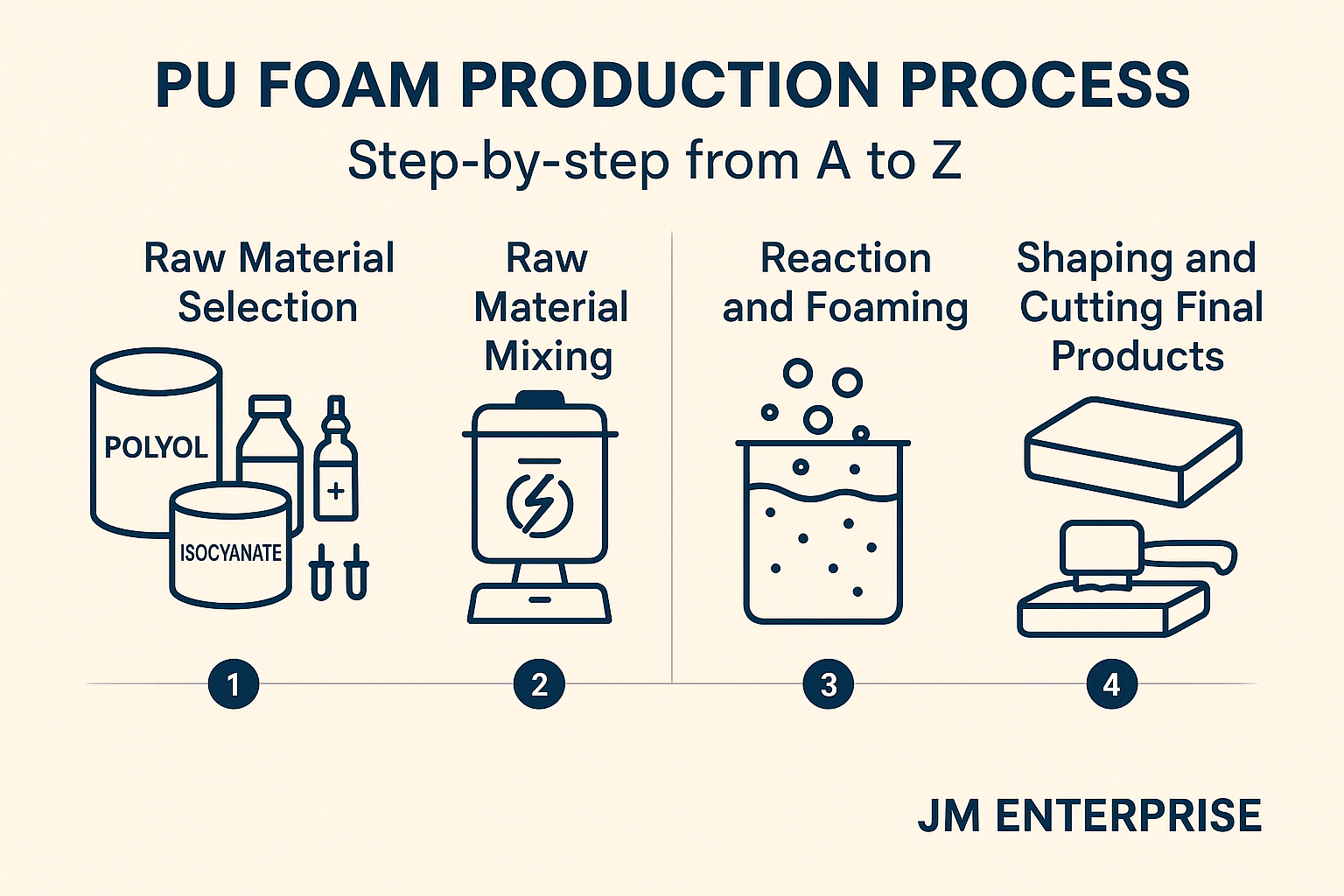
PU Foam Production Process: A Step-by-Step Guide from A to Z

Explore the complete PU foam production process from A to Z and discover how sou...

Hydroxy and Oxygen Content in Polyol – The Key to High-Quality Polyurethane Production

How OH and oxygen content in polyol affect polyurethane performance. Learn how t...

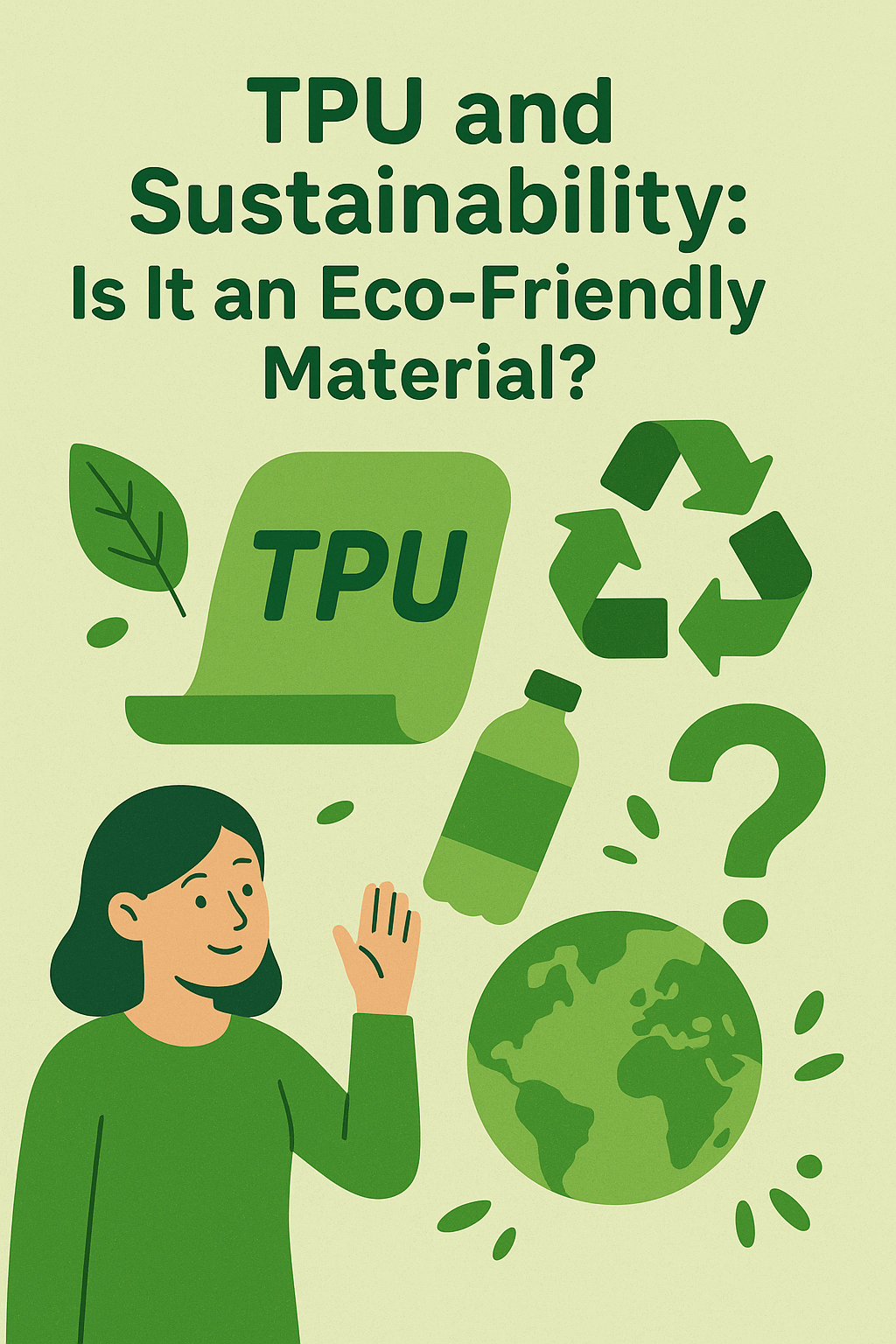
TPU and Sustainability: Is It an Eco-Friendly Material?

Discover whether TPU is truly eco-friendly, its recyclability, product life cycl...

TDI/MDI – Complete Solutions for Your PU Production Needs

JM Enterprise supplies high-quality MDI and TDI for PU production in Vietnam. Co...

SONGWON Anti-Oxidants for Plastic Compounding – Thermal & Oxidative Stabilization Solutions

Discover SONGWON's high-performance Anti-Oxidants for plastic compounding

Top 5 Global Manufacturers of Polymer Antioxidant Additives – SONGWON Stands Out with Superior Solutions.

Antioxidant additives play a vital role in enhancing thermal stability, extendin...

Related Blogs

Semi-Rigid Polyurethane Foam: Features, Applications, and Benefits

Contact JM ENTERPRISE for high-quality raw materials, competitive prices, and ex...

What is TPU? JM ENTERPRISE is a trusted supplier

TPU – Thermoplastic Polyurethane is a versatile material with high durability, h...

How to Improve the Weathering Durability of Exterior Coatings?

UV Stabilizer Solutions by SONGWON Trusted by Global Coating Leaders

TDI from Hanwha – The Pioneer of South Korea’s Chemical Industry

Buy high-purity TDI from Hanwha at the best price. Ideal for PU foam, adhesives,...

Difference Between Memory Foam and HR Foam in Pillows – Which Is Better? JM ENTERPRISE – PU Foam Raw Material Supplier

Discover the key differences between memory foam and HR foam in pillows. Compare...

Top 5 Adhesives for Export Packaging – Power of Solvent-Free PU

Explore the top 5 adhesives for export packaging in 2025 compliant with EU & US...

Zalo Zalo