Troubleshooting 5 Common Issues in Formulating Epoxy Coatings with YD-128 Resin: Air Trapping, Surface Tackiness, and Pinholes
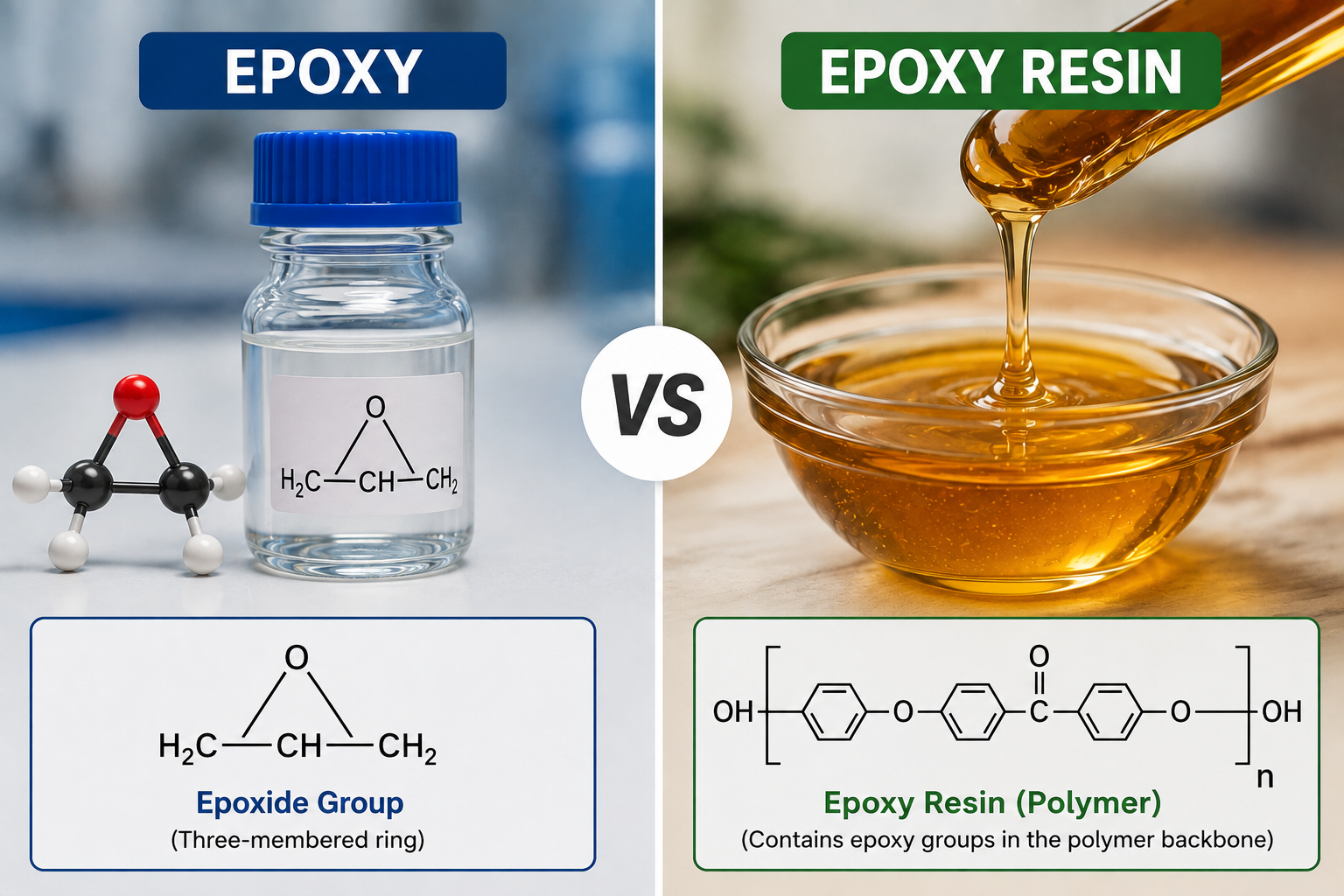
YD-128 Epoxy Resin (Standard Bisphenol-A Liquid Epoxy Resin with an EEW of 184–190 g/eq) is a core raw material in manufacturing industrial floor coatings, zinc-rich primers, anti-corrosion coatings, and two-component adhesives.
However, due to its high viscosity (11,500 – 13,500 cps at 25°C), formulation and application of YD-128 epoxy systems frequently encounter critical technical issues. This Troubleshooting Guide provides R&D-grade solutions to resolve the 5 most common defects.
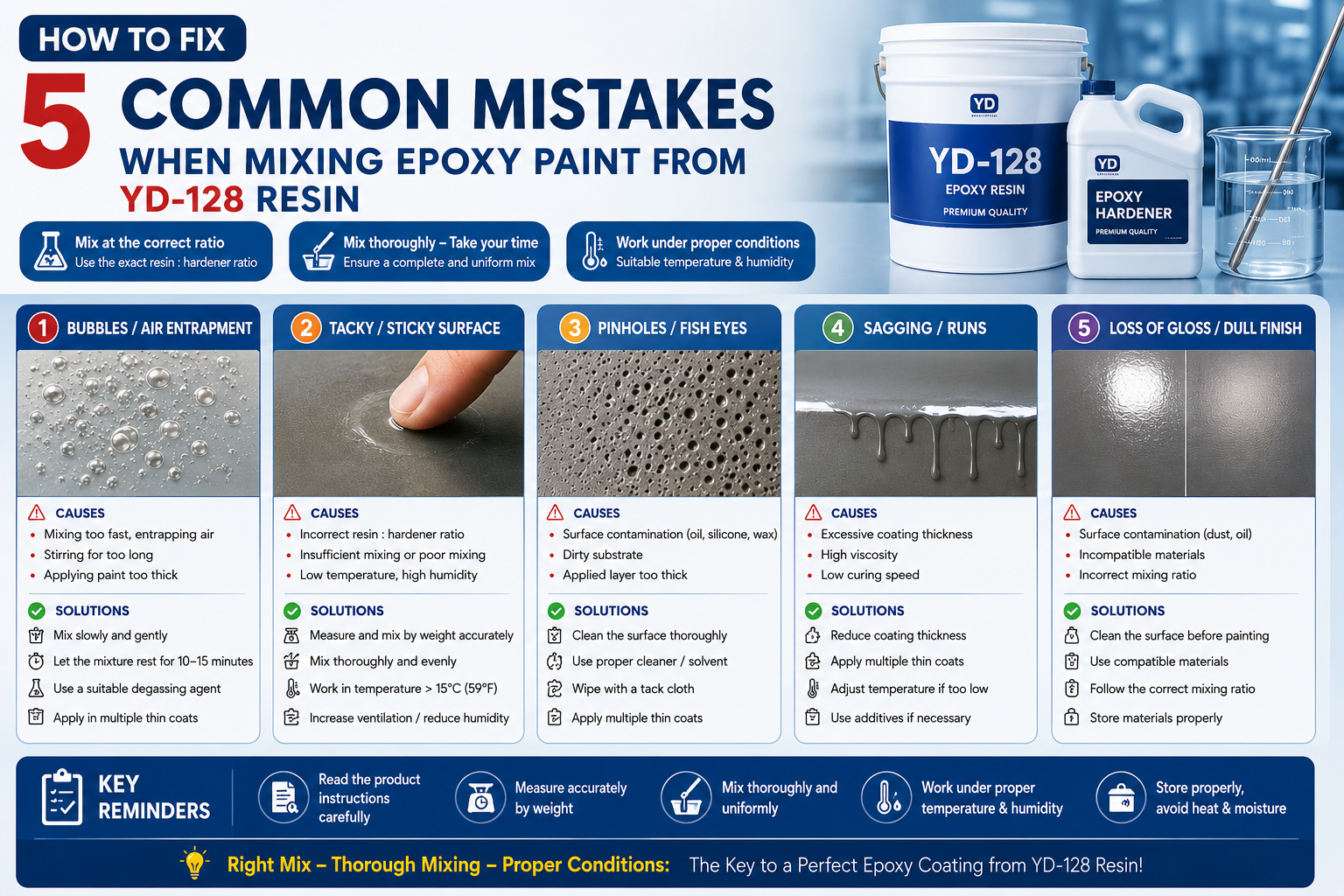
1. Air Trapping and Pinholes / Cavities
Symptoms
The coating surface exhibits countless tiny trapped air bubbles or develops pinhole-like cavities after curing, compromising aesthetics and anti-corrosion performance.
Technical Causes
-
Increased YD-128 Viscosity at Low Ambient Temperatures: When ambient temperatures drop below 20°C, the viscosity of YD-128 surges beyond 13,500 cps, preventing air bubbles (entrained during high-speed mixing) from escaping to the surface.
-
High Surface Tension: The coating film lacks sufficient fluidity to rupture air bubbles and self-level before gelation occurs.
-
Inadequate Defoamer Dosage or Selection: Incorrect defoamer type or insufficient loading.
Corrective Actions & Formulation Adjustments
-
Viscosity Reduction: Incorporate formulation solvents (Xylene/PMA) or reactive diluents (such as AGE or C12-C14 Glycidyl Ether) to lower the base system's viscosity to the target application range.
-
Pre-heating: Maintain YD-128 raw material processing temperatures at 25°C – 35°C prior to mixing.
-
Specialty Additive Addition:
-
Defoamers: Use a combination of silicone-based defoamers (at risk of causing fisheyes if overused) or non-silicone defoamers at a ratio of 0.1% – 0.5% by total mass.
-
Leveling & Wetting Agents: Add surface-tension-reducing agents (such as polyether-modified polysiloxanes) to promote self-leveling capabilities.
2. Amine Blush / Bloom (Sticky Surface and Blistering)
Symptoms
After drying, the coating surface develops a hazy, greasy, sticky film, occasionally accompanied by surface blistering or loss of gloss. Subsequent topcoat applications will suffer from complete intercoat adhesion failure.
Technical Causes
-
Amine Blush Reaction: Free amine groups in the curing agent (Hardener) are highly hygroscopic. When applied at low temperatures or high relative humidity (> 85%), amines react with atmospheric CO2 and moisture to form carbamate salts (low solubility), which exudate to the surface.
-
Incorrect Hardener Selection: Using unreacted aliphatic amines combined with YD-128 under high-humidity conditions.
-
Skipping Induction Time: Failing to allow a pre-reaction period between YD-128 and the hardener before application.
Corrective Actions
-
Environmental Control: Avoid application when relative humidity (RH) exceeds 80% or when the dew point margin is less than 3C above the surface temperature.
-
Hardener Substitution: Switch to Cycloaliphatic Amine Adducts or Phenalkamines (cashew nut shell liquid-based), which offer high moisture resistance and superior amine blush prevention.
-
Adhere to Induction Time: Allow an induction time of 10 – 15 minutes for the YD-128 and hardener mixture to pre-react prior to application.
-
Remediating Blushed Coatings: Do not wipe with solvents. Wash off carbamate wax deposits with warm soapy water, scrub gently, rinse with clean water, allow to dry completely, and lightly abrade the surface before topcoating.
3. Off-Color, Color Floating, and Color Flooding
Symptoms
Uneven color distribution, streaks, or shade variations across the applied film surface, or noticeable color discrepancies compared to the original color paste.
Technical Causes
-
Poor Pigment Dispersion: Color concentrates/pastes are inadequately wetted and dispersed within the high-viscosity YD-128 resin vehicle.
-
Pigment Mobility Mismatch: Differences in particle size and specific gravity among pigments (e.g., Titanium Dioxide being heavier than Phthalo Blue) lead to phase separation via Benard convection cells during film drying.
Corrective Actions
-
Standardized Pigment Paste Processing: Grind and disperse pigments into YD-128 using high-molecular-weight polyurethane/polyether-based wetting and dispersing additives.
-
Optimize Grind Fineness: Verify pigment paste fineness using a Hegman Gauge, ensuring it reaches < 15 microns prior to letdown into the main formulation.
-
Incorporate Anti-Floating Additives: Add anti-floating agents at 0.2% – 0.5% to stabilize pigment particle positions within the liquid coating film.
4. Craters, Fisheyes, and Crawling
Symptoms
Circular depressions with raised centers (fisheyes) appear on the film, or the coating pulls back to expose the underlying substrate.
Technical Causes
-
Surface Contamination: Oil, grease, silicone, or dust contamination on the substrate or mixing equipment.
-
Localized Surface Tension Gradients: Contaminants possess significantly lower surface tension than the YD-128 coating system, repelling the liquid paint away from the contaminated spots.
Corrective Actions
-
Industrial Surface Preparation: Thoroughly clean substrates using specialized detergents and wipe down with fast-evaporating solvents (MEK/Thinner).
-
Compressed Air Inspection: Ensure compressed air systems for spraying are equipped with properly functioning oil/water separators.
-
Formulation Adjustment: Add anti-fisheye additives or acrylic-based leveling agents to harmonize surface tension across the coating system.
5. Poor Curing, Soft Film, or Brittleness
Symptoms
The coating film remains soft and tacky after 24–48 hours, or conversely, becomes overly brittle and prone to cracking under impact.
Technical Causes
-
Stoichiometric Errors: Incorrect mixing ratio between YD-128 (EEW 184–190 g/eq) and Hardener (AHEW - Amine Hydrogen Equivalent Weight).
-
Incomplete Mixing: Neglecting dead zones in the mixing container, preventing thorough contact between YD-128 resin and the hardener.
Corrective Actions
-
Two-Container Mixing Procedure: Blend Component A and Component B thoroughly for 3 – 5 minutes using a low-speed mixer (300 – 500 RPM), transfer the mixture into a second clean container, and remix for 1 minute before application.
Quick Troubleshooting Guide
| Issue |
Primary Cause |
Corrective Action / Additive |
| Air Trapping / Pinholes |
High YD-128 viscosity, high surface tension |
Add defoamer, reactive diluent, or pre-heat resin |
| Tacky Surface / Amine Blush |
High humidity, Amine + CO2 side reaction |
Wash with warm water; switch to Cycloaliphatic/Phenalkamine |
| Color Floating / Separation |
Poor pigment dispersion, density mismatch |
Use high-molecular dispersant; grind to Hegman < 15µm |
| Fisheyes / Craters |
Oil/silicone contamination, surface tension differential |
Solvent wipe substrate; incorporate silicone leveling agents |
| Soft / Incomplete Cure |
Incorrect EEW/AHEW stoichiometry, poor mixing |
Recalculate Phr per TDS; enforce two-step mixing protocol |