Amid constantly fluctuating chemical raw material prices, reducing MDI consumption has become a crucial goal for Polyurethane (PU) manufacturers. As the primary building block of the Polyurethane structure, MDI typically accounts for 35% to 60% of total raw material costs, depending on the specific product line—whether flexible foam, rigid foam, integral skin, CASE, or elastomers.
Many manufacturing plants still lose between 2% and 8% of their MDI volume due to unoptimized processes. For facilities with an annual output of thousands of tons, this variance translates into billions of VND in unnecessary expenses.
The good news is that most causes of excess MDI consumption can be controlled through process improvements, formula optimization, and the selection of the right raw materials.
What is MDI?
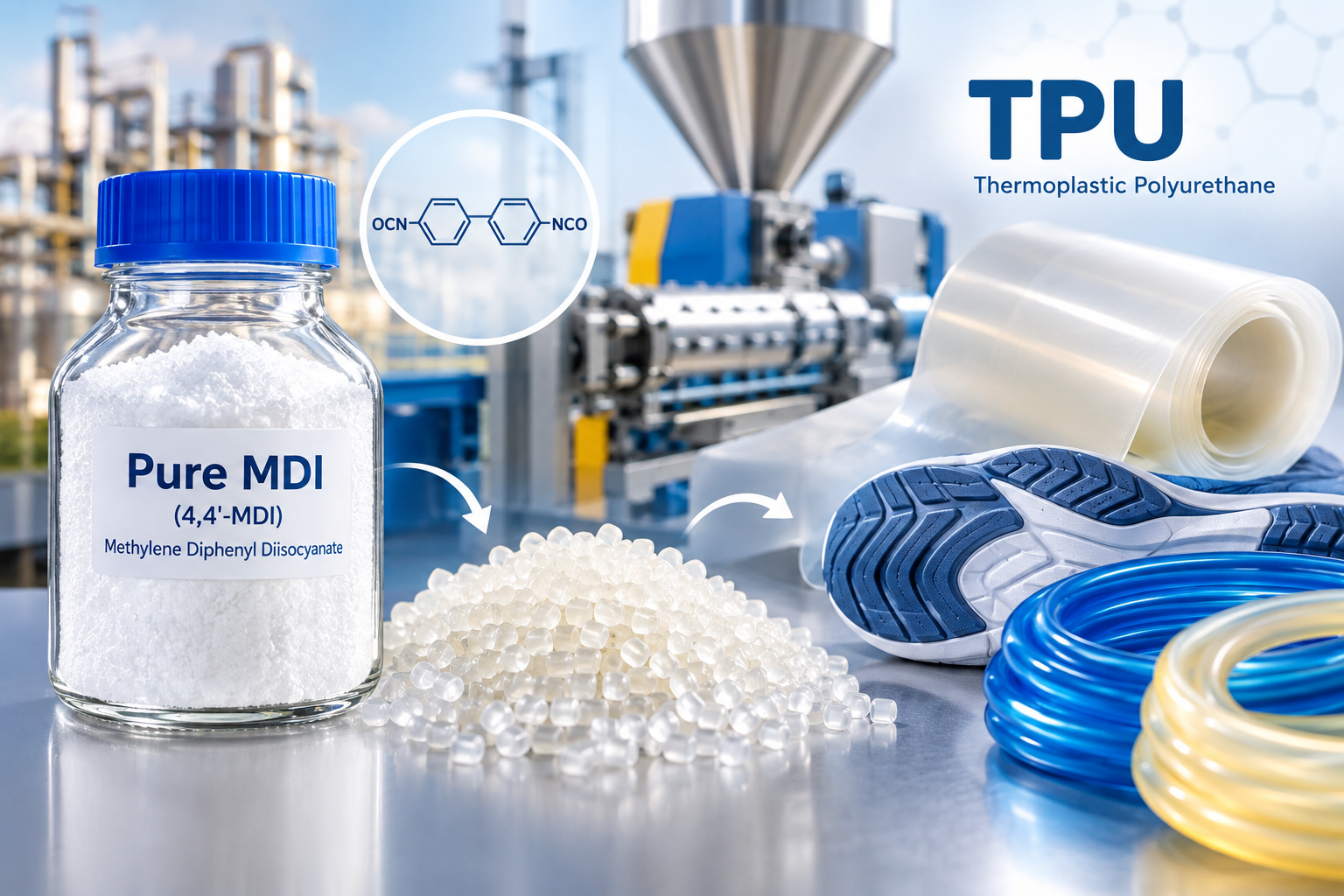
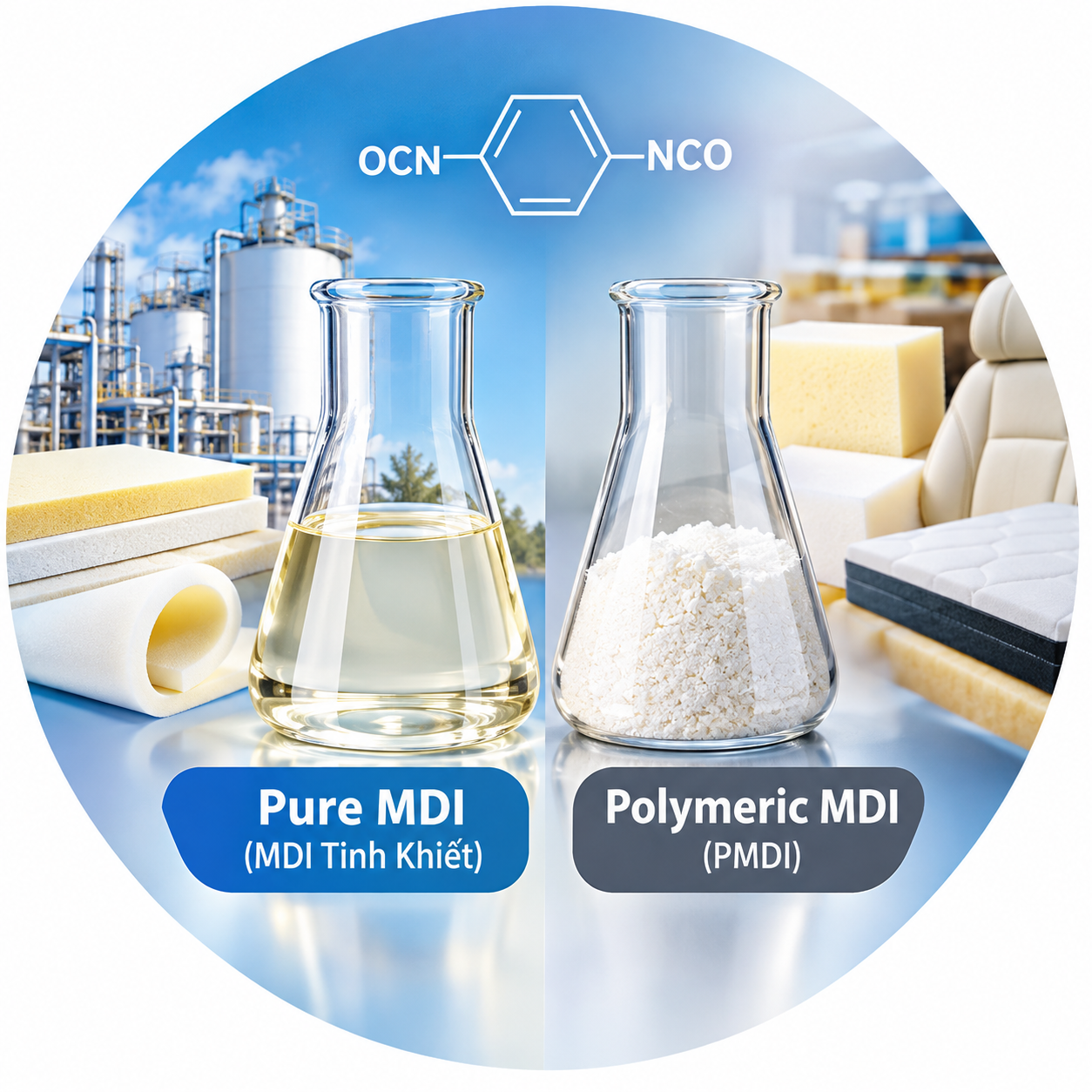
MDI (Methylene Diphenyl Diisocyanate) is an Isocyanate compound widely used in Polyurethane manufacturing.
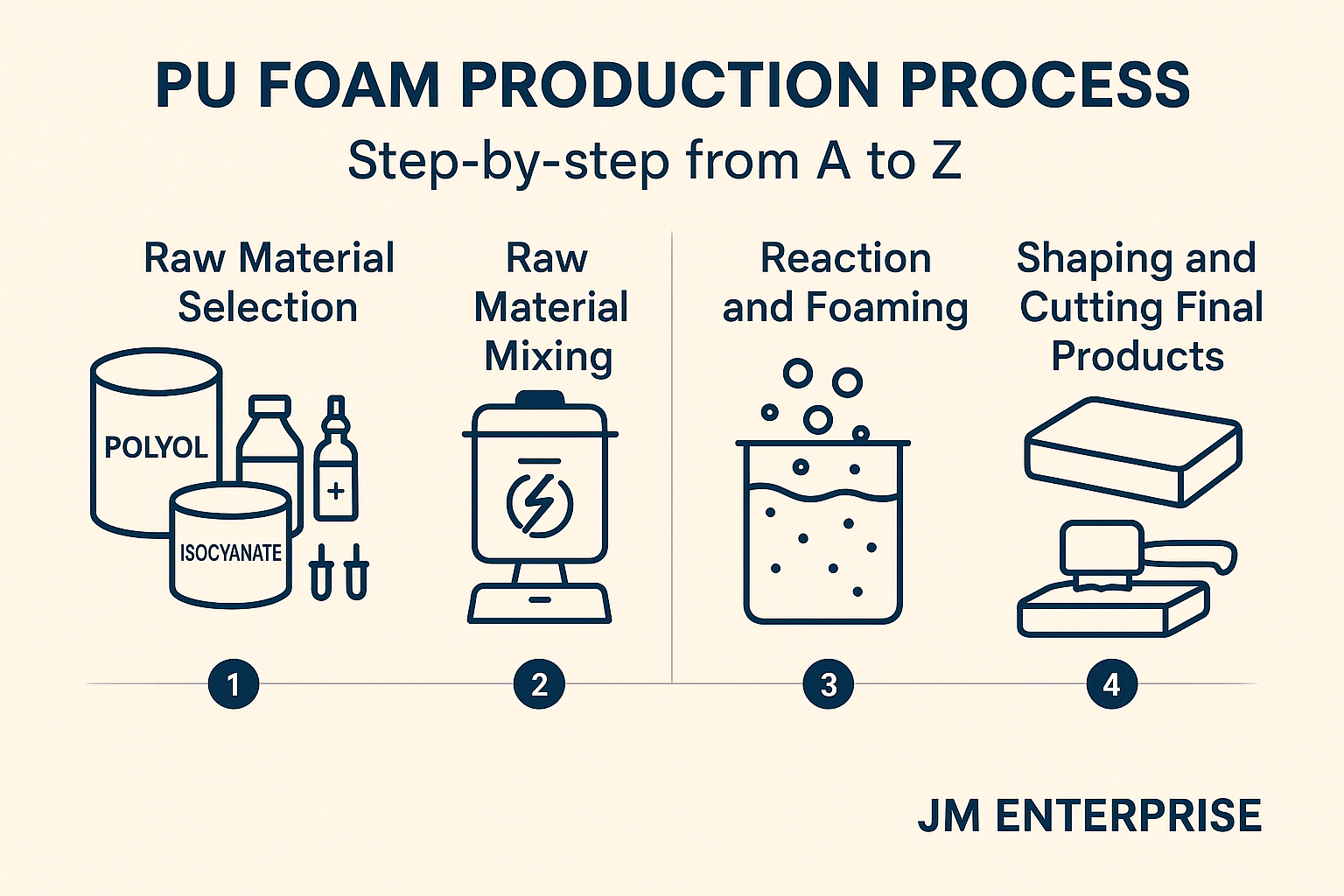
MDI reacts with Polyol to form the Polyurethane polymer network, which directly determines critical product properties, including:
- Hardness
- Elasticity
- Load-bearing capacity
- Thermal insulation
- Mechanical durability
- Product lifespan
Consequently, using MDI efficiently not only slashes production costs but also significantly elevates the quality of the finished goods.
Why is MDI Prone to Waste and Loss?
1. Reaction with Moisture
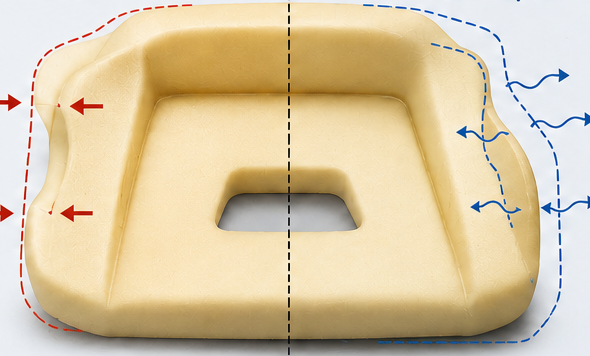
MDI is highly sensitive to water. Upon contact with moisture in the air or within the system, MDI reacts to form Polyurea and CO2 gas.
gas.
This reaction leads to:
- Raw material loss
- Clogging and buildup inside piping
- Reduced MDI reactivity
- Higher product defect rates
2. Dosing Equipment Calibration Errors
Dosing pumps can develop precision errors after long periods of continuous operation.
Example: If a machine over-doses by just 1 kg of MDI per hour on a line operating 20 hours a day, the business will waste over 7 tons of MDI annually.
3. Unoptimized Formulas
Quite a few businesses stick to the same formula for years without re-evaluating their Isocyanate Index. Using excess MDI rarely results in a better product, but it always results in higher costs.
4. Substandard Storage Conditions
Common mistakes include:
- Leaving drums open for too long
- Using unsealed storage tanks
- Failing to use a nitrogen gas blanket
- Allowing unstable storage temperatures
These factors degrade the quality and reactivity of MDI over time.
5. Production Changeover Loss
During color changes, formula adjustments, mixing head cleaning, or pipeline flushing, a substantial amount of MDI is discarded if an optimization or recovery process is not actively in place.
10 Solutions to Successfully Reduce MDI Consumption
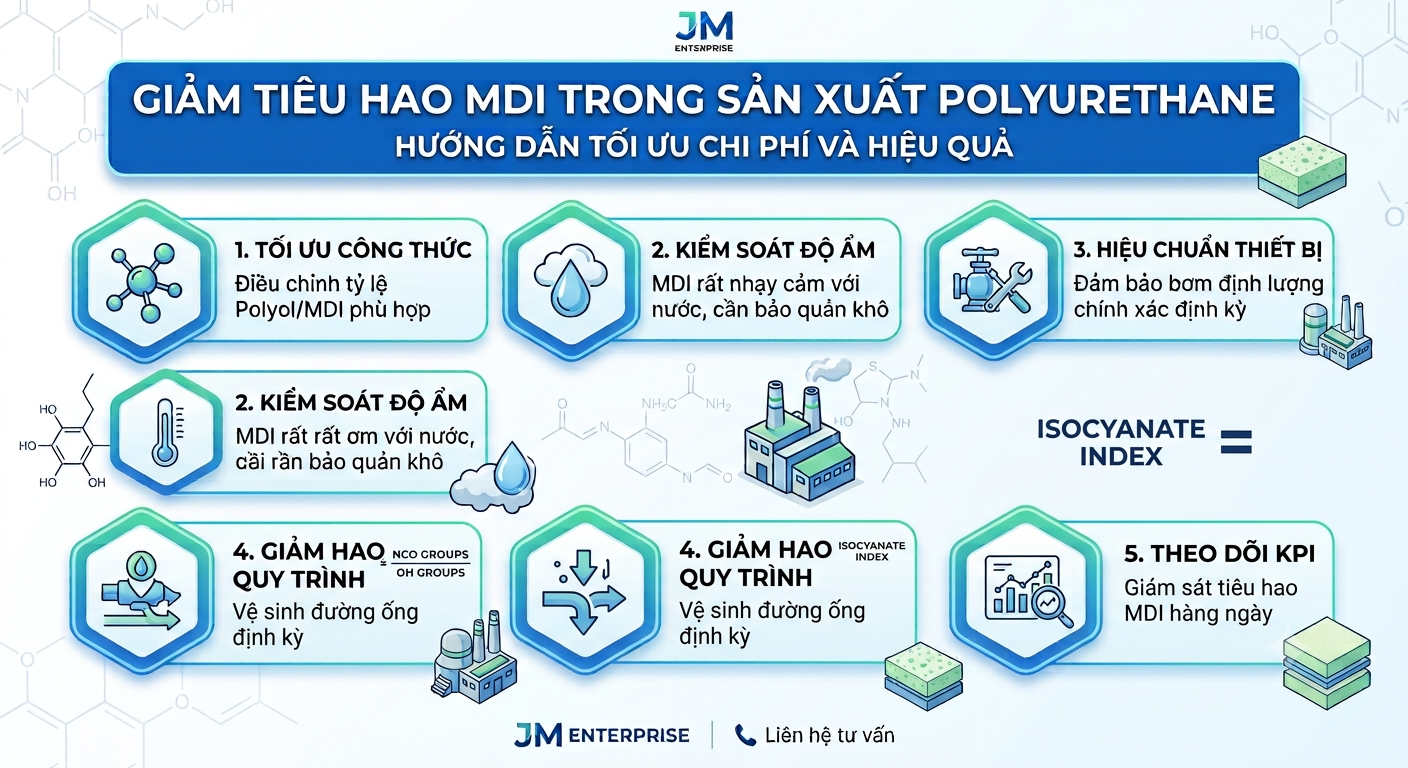
1. Control Moisture Across the Entire System
- Use nitrogen gas blankets to protect storage tanks.
- Ensure all containers remain tightly sealed when not in use.
- Conduct routine inspections to check pipeline airtightness.
This is a straightforward approach that yields immediate, noticeable results.
2. Calibrate Dosing Equipment
Perform routine calibration for dosing pumps, flow meters, pressure sensors, and control valves at least every 3 to 6 months.
3. Optimize the Isocyanate Index
Re-evaluate your MDI-to-Polyol ratio through practical trial testing. Many factories can reduce MDI volume by 2% to 4% while perfectly maintaining the physical and mechanical specifications of the product.
4. Manage MDI Temperature
Temperatures that are too low increase viscosity, making pumping and precise dosing difficult. Conversely, temperatures that are too high can compromise raw material quality. Keeping the temperature within the manufacturer's recommended range ensures system stability.
5. Source High-Quality MDI
Utilizing MDI with highly stable quality delivers a uniform chemical reaction, fewer product defects, less need for constant formula adjustments, and higher raw material utilization efficiency.
6. Minimize Cleaning and Flushing Waste
Implement protocols to recover residual raw materials left in pipelines, shorten cleaning windows, and standardize production changeover workflows.
7. Automate the Production Line
PLC-driven control systems help ensure precise flow rate management, minimize blending errors, and drastically reduce human operational mistakes.
8. Workforce Training
Operators must thoroughly understand MDI characteristics, blending procedures, temperature controls, equipment inspection routines, and proper cleaning workflows. Periodic training minimizes material loss caused by operational errors.
9. Monitor MDI Consumption KPIs
Establish clear tracking metrics such as kg of MDI per ton of product, material loss per shift, consumption per production line, and consumption per specific formula. These indicators help teams detect anomalies early and drive continuous improvement.
10. Partner with a Technically Capable Supplier
An experienced raw material provider does more than ship products; they assist you with formula optimization, process adjustments, raw material quality assessments, defect root-cause analysis, and overall material cost reduction. This is the most sustainable approach, particularly for factories scaling up production.
Key Benefits of Reducing MDI Consumption
Optimizing your MDI usage yields substantial value across your operations:
|
Benefit
|
Practical Impact
|
|
Lower Material Costs
|
Saves 2% to 8% on total MDI expenses
|
|
Reduced Unit Costs
|
Boosts market competitiveness
|
|
Consistent Product Quality
|
Lowers defect and reject rates
|
|
Increased Productivity
|
Minimizes unexpected machine downtime
|
|
Equipment Protection
|
Reduces scale buildup and line blockages
|
|
Environmental Protection
|
Lowers chemical waste volumes
|
Why Choose JM ENTERPRISE?
JM ENTERPRISE does not just supply Polyurethane raw materials—we walk alongside our customers to optimize their entire production ecosystem.
What We Offer:
- ✓ High-quality Polymeric MDI and Pure MDI
- ✓ Premium Polyols for flexible foam, rigid foam, and integral skin
- ✓ Catalysts, Silicones, and Blowing Agents
- ✓ Comprehensive formula optimization support
- ✓ Strategic advice on reducing raw material consumption
- ✓ Direct, on-site technical support at your factory
- ✓ Operator training and process improvement consulting
Our engineering team is always ready to help your business reduce production costs, upgrade product quality, and maximize your investment returns.
Frequently Asked Questions (FAQ)
1. What percentage of raw material costs does MDI account for?
Depending on the specific product line, MDI generally makes up about 35% to 60% of the total Polyurethane raw material cost.
2. Can I reduce the amount of MDI without compromising product quality?
Yes. By properly optimizing the Isocyanate Index and the blending formula through rigorous testing, many businesses successfully cut MDI usage by 2% to 5% while keeping all technical specifications intact.
3. What is the single biggest cause of MDI waste?
MDI loss is typically driven by exposure to moisture, dosing equipment inaccuracies, unoptimized formulas, waste during equipment cleaning, and improper storage conditions.
4. How often should dosing equipment be calibrated?
Generally, calibration should be carried out every 3 to 6 months, or in accordance with the manufacturer's recommendations and your specific operational frequency.
5. Does JM ENTERPRISE offer formula optimization support?
Yes. We actively support our customers by evaluating their current formulas, selecting the most compatible raw materials, improving production workflows, and reducing MDI consumption to optimize overall manufacturing costs.
Conclusion
Reducing MDI consumption is a powerful lever for cutting raw material costs, improving production efficiency, stabilizing product quality, and driving higher profitability. By tightly controlling moisture, optimizing the Isocyanate Index, calibrating equipment, choosing premium materials, and partnering with a trusted technical ally, your business can establish an efficient and highly sustainable Polyurethane production process.
If your enterprise is searching for solutions to optimize MDI utilization, the expert team at JM ENTERPRISE is ready to consult, provide high-quality raw materials, and support your technology improvements.
📞 Contact JM ENTERPRISE Today
Looking for a reliable raw material source for your production line?
👉 Contact JM ENTERPRISE today to get the most optimized TPU solutions tailored specifically for your footwear products.
- Hotline/Zalo:
- +84 933 706 351 – Mr. Cha (English & Korean)
- +84 913 390 054 – Ms. Ngan (Vietnamese)
- Email: jhcha@jmentchemical.com
- Website: https://jmentchemical.com/