1. PU Plastic and the Challenge of Controlling Physical Properties
Polyurethane (PU) plastic is one of the most versatile materials available today, utilized in industries ranging from footwear and synthetic leather to protective films, coatings, and engineering components. However, unmodified PU plastic is inherently rigid and lacks flexibility.
To transform PU resin into finished products with ideal softness, high elasticity, and ease of processing, manufacturers must utilize plasticizers. Choosing the right plasticizer—such as DBP, DINP, DOP, or DOTP—directly dictates the Shore hardness and elongation ratio of the final PU product.
2. How Plasticizers Interact with PU Plastic
Chemically, plasticizers function by embedding themselves between the polymer chains of PU plastic, weakening intermolecular forces. This process allows the polymer chains to slide past each other more freely, resulting in:
- Reduced Hardness: Lowers the Shore A or Shore D hardness of PU plastic to the desired specifications.
- Increased Flexibility (Elongation at Break): Enables PU products to stretch and bend repeatedly without cracking or fracturing.
- Lowered Glass Transition Temperature (Tg): Ensures the material maintains its flexible and ductile state even in low-temperature environments.
3. Comparing the Roles of DBP, DINP, DOP, and DOTP in PU Plastic Processing
Each type of plasticizer possesses a unique molecular structure, imparting distinct characteristics to the PU resin system:
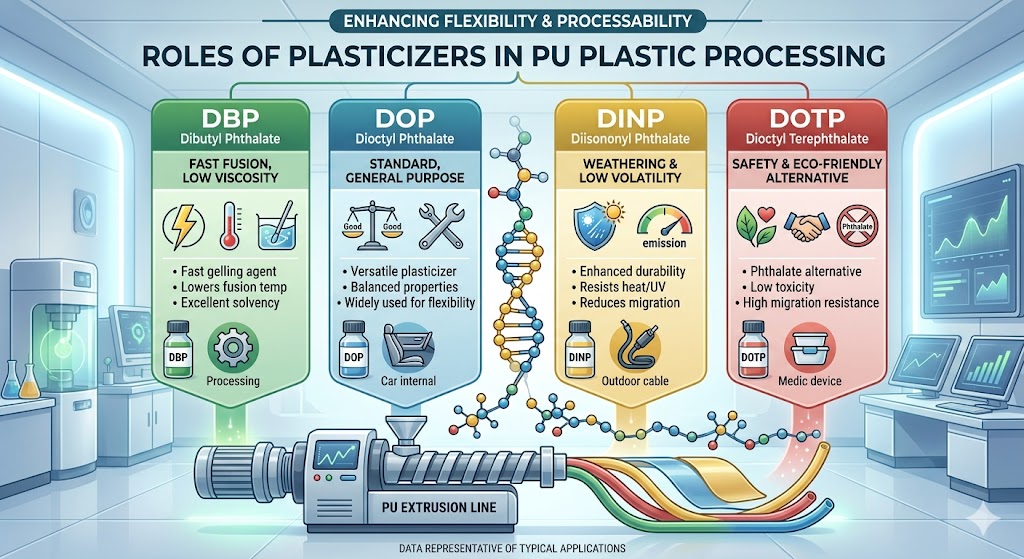
DOP (Dioctyl Phthalate) – The High-Performance Traditional Plasticizer
DOP is the most widely used plasticizer due to its excellent compatibility and solubility with PU plastic. It rapidly decreases hardness and drastically boosts flexibility at a very cost-effective price. However, with increasingly stringent global health and safety regulations, DOP is being gradually restricted in products that come into direct contact with humans.
DOTP (Dioctyl Terephthalate) – The Next-Generation Eco-Friendly Solution
DOTP has a similar molecular structure to DOP but does not belong to the toxic Phthalate group. For PU plastic, DOTP delivers equivalent plasticizing efficiency to DOP, along with lower volatility and superior electrical insulation. It is the top choice for PU products exported to strict global markets (fully complying with REACH/RoHS standards).
DINP (Diisononyl Phthalate) – New Height of Weather Resistance
Boasting a larger molecular weight than DOP, DINP exhibits extremely low volatility and outstanding resistance to migration (oil bleeding). PU plastic formulated with DINP retains stable flexibility over extended periods, preventing dry hardening or embrittlement when exposed to harsh outdoor environments.
DBP (Dibutyl Phthalate) – Rapid Plasticizing Speed
DBP features a smaller molecular size, allowing it to penetrate PU polymer chains exceptionally fast, which effectively reduces processing temperatures. DBP is frequently blended as a co-plasticizer to instantly improve surface gloss and flexibility, though its main drawback is higher volatility compared to other variants.
4. Controlling Ratios to Optimize Hardness and Elongation
In PU processing engineering, balancing the plasticizer content (measured in PHR – parts per hundred parts of resin) is the core technical challenge:
- Engineering PU Plastics (High hardness, moderate elongation): Formulated with low plasticizer content (5 - 15 PHR), prioritizing DINP or DOTP to maintain mechanical strength and excellent wear resistance.
- PU Films and Synthetic Leather (Low hardness, high elongation): Utilizes a high plasticizer content (30 - 50 PHR), combining DOP or DOTP to achieve a soft, authentic leather-like texture. The elongation at break can easily exceed 300%.
5. Why Do Manufacturers Choose JM ENTERPRISE?
To precisely control the technical specifications of PU plastic, the quality of input chemicals must be absolutely consistent. JM ENTERPRISE proudly serves as a leading strategic partner, delivering comprehensive material solutions to manufacturers through our outstanding competitive advantages:
- Reputable Global Supply: Beyond high-quality plasticizers (DBP, DINP, DOP, DOTP), all of our new-generation ABS, flame-retardant ABS, and impact-reinforced ABS products at JM ENTERPRISE originate from world-renowned manufacturers and carry full international quality certifications.
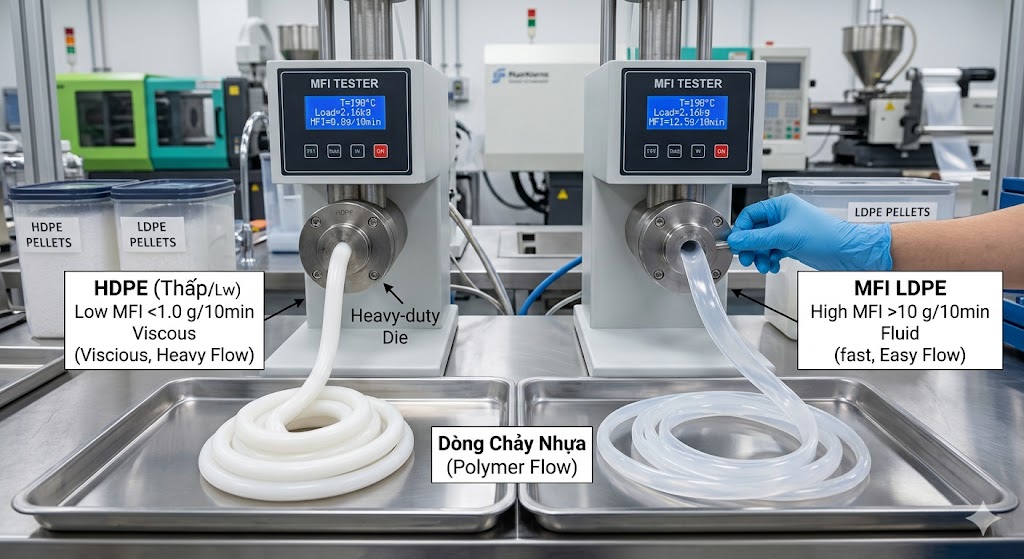
- Perfect Fit for Technical Requirements: We are fully equipped to supply engineering plastics and chemicals with a highly stable Melt Flow Index (MFI) and low shrinkage rate. This ensures that the molding process for complex parts—up to large-sized electric vehicle (EV) battery packs—takes place with absolute precision, entirely free from warping.
- Competitive Pricing: Leveraging an extensive distribution network and long-term partnerships with global material giants, we guarantee the most optimized input costs for our clients.
- Professional Technical Support: We offer free technical consultations from a seasoned team of experts, assisting businesses in choosing the exact resin grades, proper plasticizer concentrations, and optimizing production lines to minimize defects.
6. Contact Us Today for a Free Consultation & Quotation!
Embrace the lightweight material trend for the new industrial era and the electric vehicle epoch with JM ENTERPRISE. Contact us today to receive the optimal material solution and the best quote for your business:
- Hotline/Zalo:
- +84 933 706 351 Mr. Cha (English)
- +84 913 390 054 Ms. Ngan (Vietnamese)
- Email: jhcha@jmentchemical.com
- Website: jmentchemical.com