The Polyurethane (PU) materials industry is undergoing a powerful green revolution. Within this movement, replacing traditional plasticizers from the Phthalate group (such as DBP, DEHP, DIDP) with safe, bio-based alternatives is no longer just an encouraging recommendation—it has become a mandatory standard for survival in the global export landscape.
Why is this chemical group heavily restricted, and when is the ideal window for enterprises to completely eliminate Phthalates from their Polyurethane production workflows?
1. Regulatory Barriers and International Legal Pressure on Phthalates
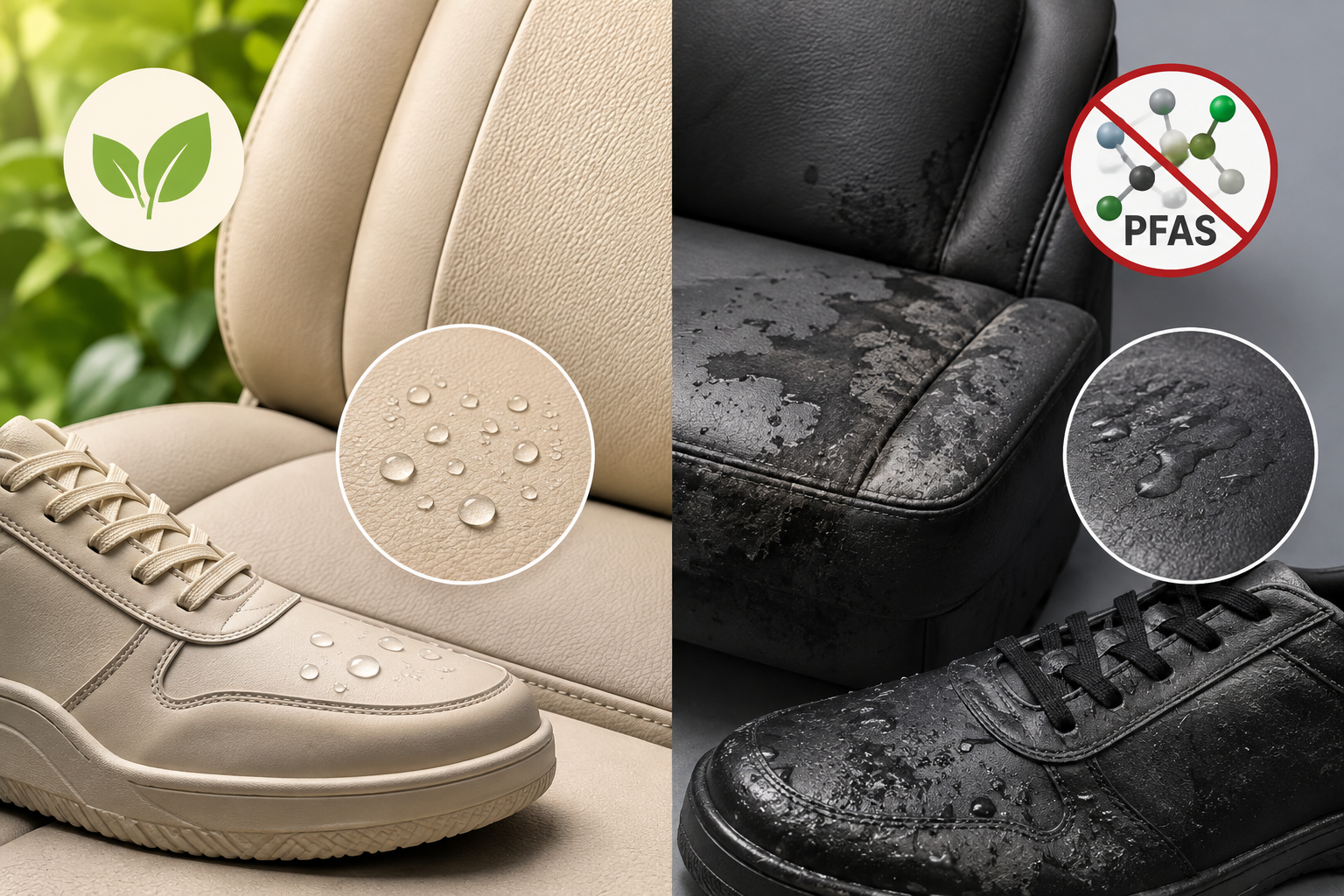
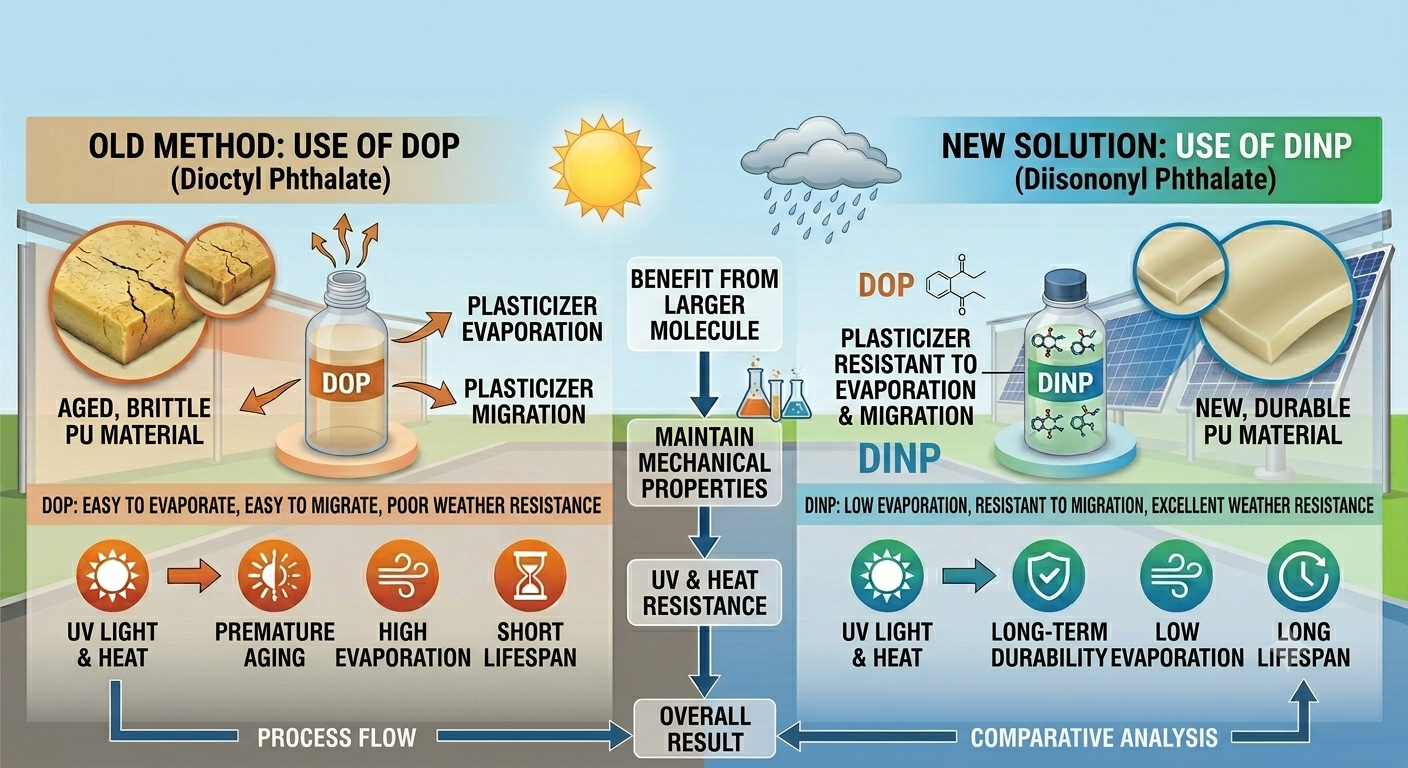
Phthalate-based plasticizers have long been used to soften PU plastics, enhancing flexibility in synthetic leather, foam matrices, and adhesive formulations. However, because the bond between Phthalates and the polymer matrix is purely physical rather than chemical, these molecules easily volatilize or leach out to the surface (migration) over time.
Health Hazards: Extensive medical research has proven that Phthalates act as endocrine disruptors, directly affecting reproductive health and child development.
Consequently, international technical barriers have strictly tightened compliance rules:
- REACH / RoHS Standards (Europe): Mandate a strict threshold, limiting the concentration of major Phthalates to under 0.1% by weight.
- CPSIA Act (USA): Strictly bans the use of toys and child care articles containing Phthalate concentrations above permissible levels.
[International Standards: REACH / RoHS / CPSIA]
│
▼ Limits Phthalate Content to < 0.1%
[Vietnamese PU Enterprises] ─── Mandatory Transition ───> [Non-Phthalate Plasticizers]
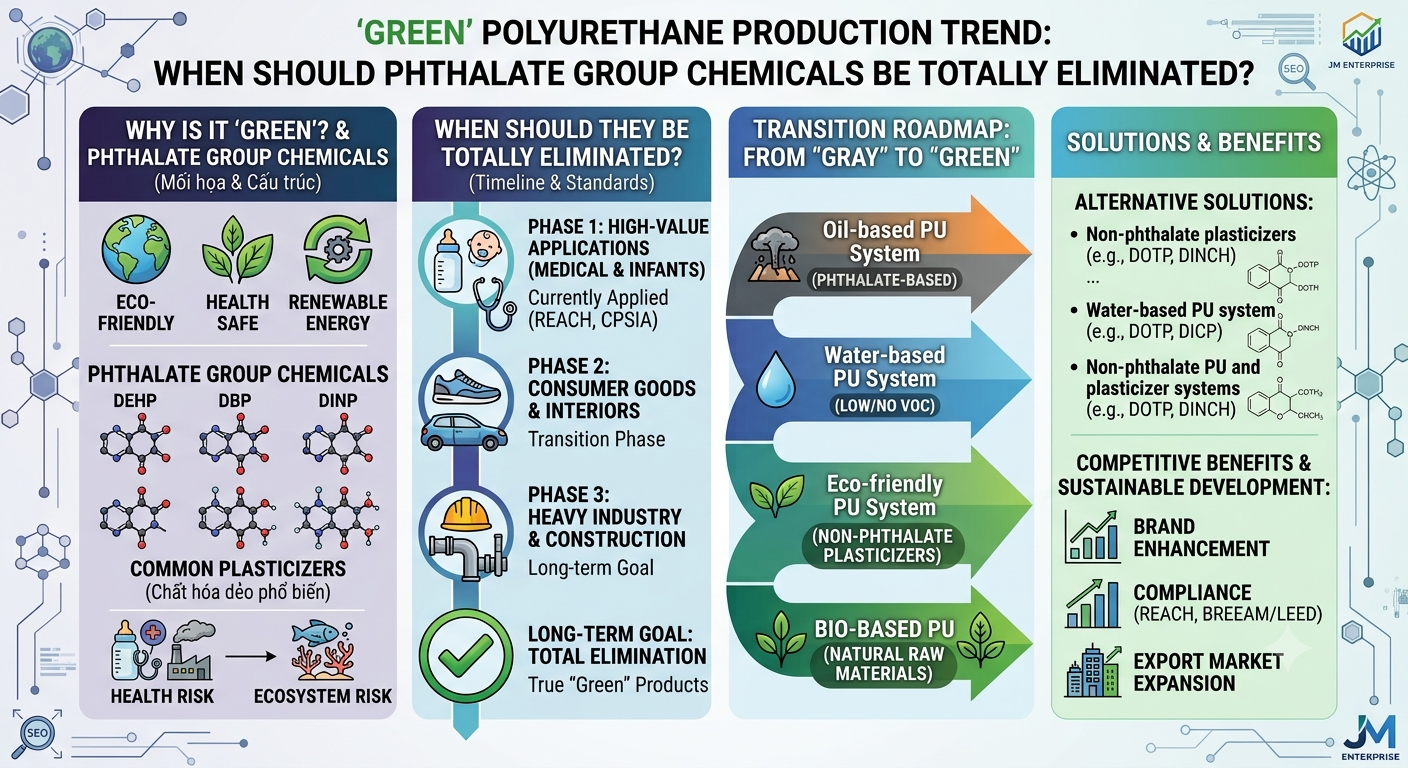
2. When Should Enterprises Completely Eliminate Phthalates?
Replacing a foundational chemical pipeline requires dedicated R&D time and formula testing costs. Enterprises must prioritize the complete elimination of Phthalates immediately if they operate in any of the following scenarios:
Sensitive Application Sectors (Synthetic Leather, Toys, Medical Devices)
If your Polyurethane products are utilized for automotive interior upholstery, sofa leather, athletic shoe outsoles, children's toys, or medical devices, phasing out Phthalates must be your number one priority. Modern consumers actively reject products that emit toxic chemical odors or pose high exposure risks.
Export Targets Facing Strict Markets (EU, USA, Japan)
To smoothly clear rigorous customs audits in European and American markets, Phthalate-free certifications serve as a mandatory passport. Delaying this transition exposes businesses to high risks of cargo rejection, customs impoundment, or severe contractual penalties.
Strategic Branding as a Green Polyurethane Manufacturer
When developing high-end product lines such as Bio-based Polyurethane or Waterborne PU (water-based PU), retaining Phthalate plasticizers completely nullifies the core value proposition of your sustainability message. Achieving synchronized green compliance—from the base resin to the additive package—is the only way to elevate your product's value chain.
3. Breakthrough Substitutes for the Polyurethane Industry
Modern chemical engineering has successfully developed lines of Non-Phthalate plasticizers that offer equivalent, and sometimes superior, physical and mechanical performance compared to traditional petroleum-derived variants:
- DOTP (Dioctyl Terephthalate): Features a straight molecular structure making it significantly less prone to volatilization and migration than DEHP, fully satisfying the most stringent international safety regulations.
- DINCH (Diisononyl Cyclohexane-1,2-dicarboxylate): A premium plasticizer explicitly designed for highly sensitive applications such as medical devices and food contact films, possessing near-zero toxicity.
- Bio-based Plasticizers: Formulated from epoxidized soybean oil (ESBO), castor oil, or citric acid. This represents the peak of circular Polyurethane trends, assisting manufacturers in drastically shrinking their product Carbon Footprint.
4. Partner with JM ENTERPRISE on Your Green Manufacturing Roadmap
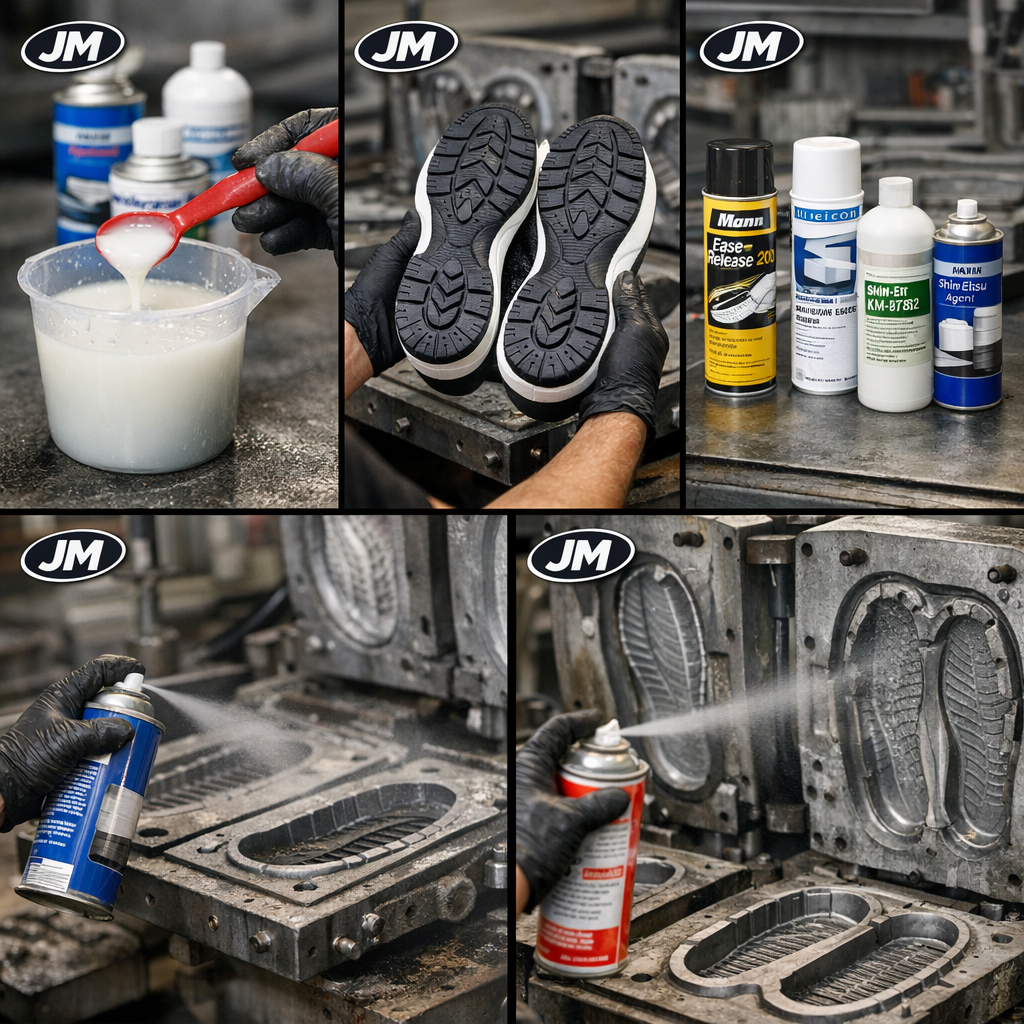
Transitioning a chemical formula to non-phthalate standards requires a precise recalibration of mixing ratios, processing temperatures, and curing profiles to ensure the finished PU material retains its structural properties.
JM ENTERPRISE proudly stands as your strategic partner, supplying specialty engineering resins, premium polyurethane raw materials, and eco-friendly green additive systems in Vietnam. Backed by an officially imported supply chain meeting global criteria and a seasoned team of material experts, we are fully committed to helping factories optimize production costs, bypass technical trade barriers, and confidently conquer global markets.
Contact JM ENTERPRISE Today to Lead the Trend in Green Materials:
- Hotline/Zalo: * +84 933 706 351 Mr. Cha (English)
- +84 913 390 054 Ms. Ngan (Vietnamese)
- Email: jhcha@jmentchemical.com
- Website: jmentchemical.com