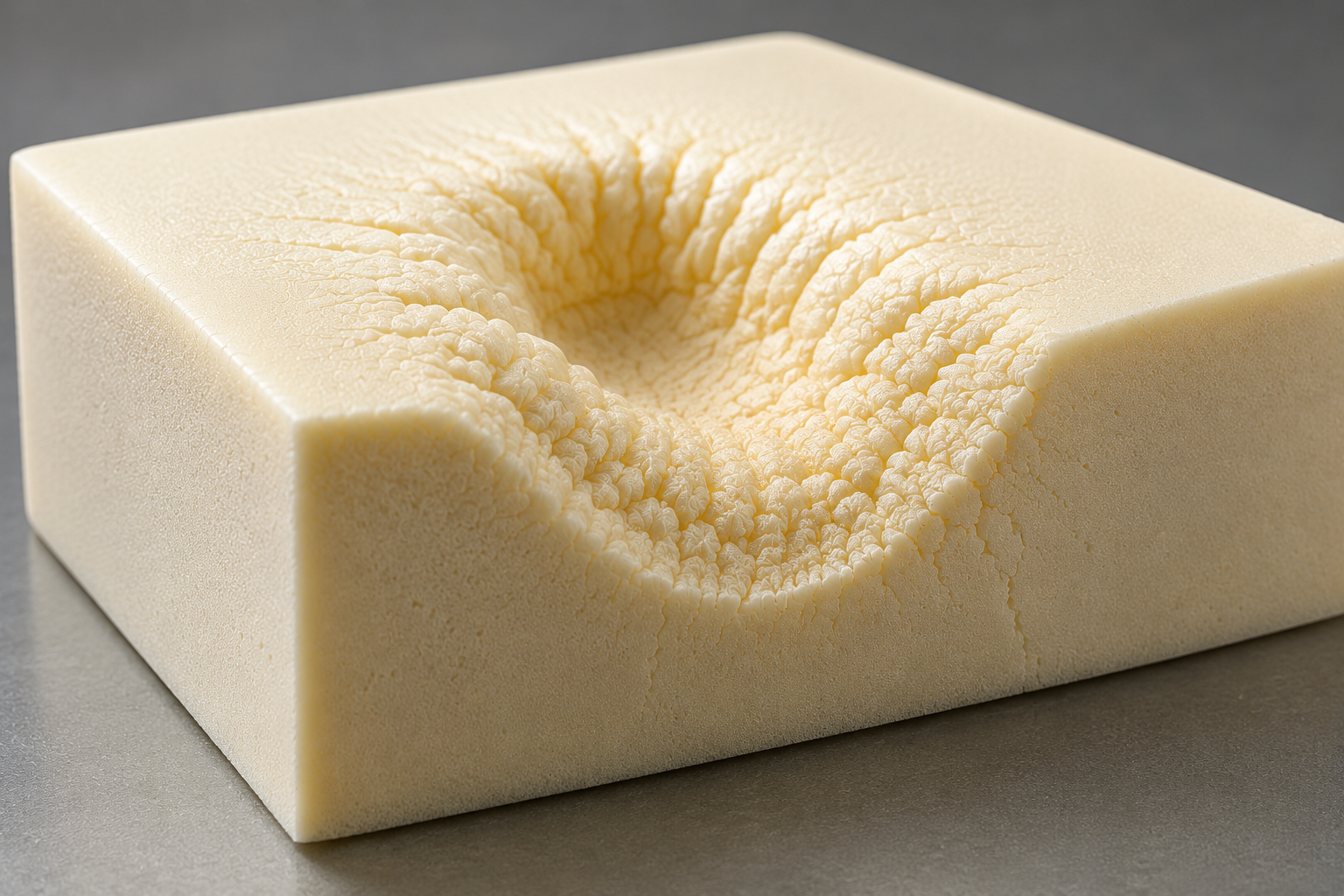
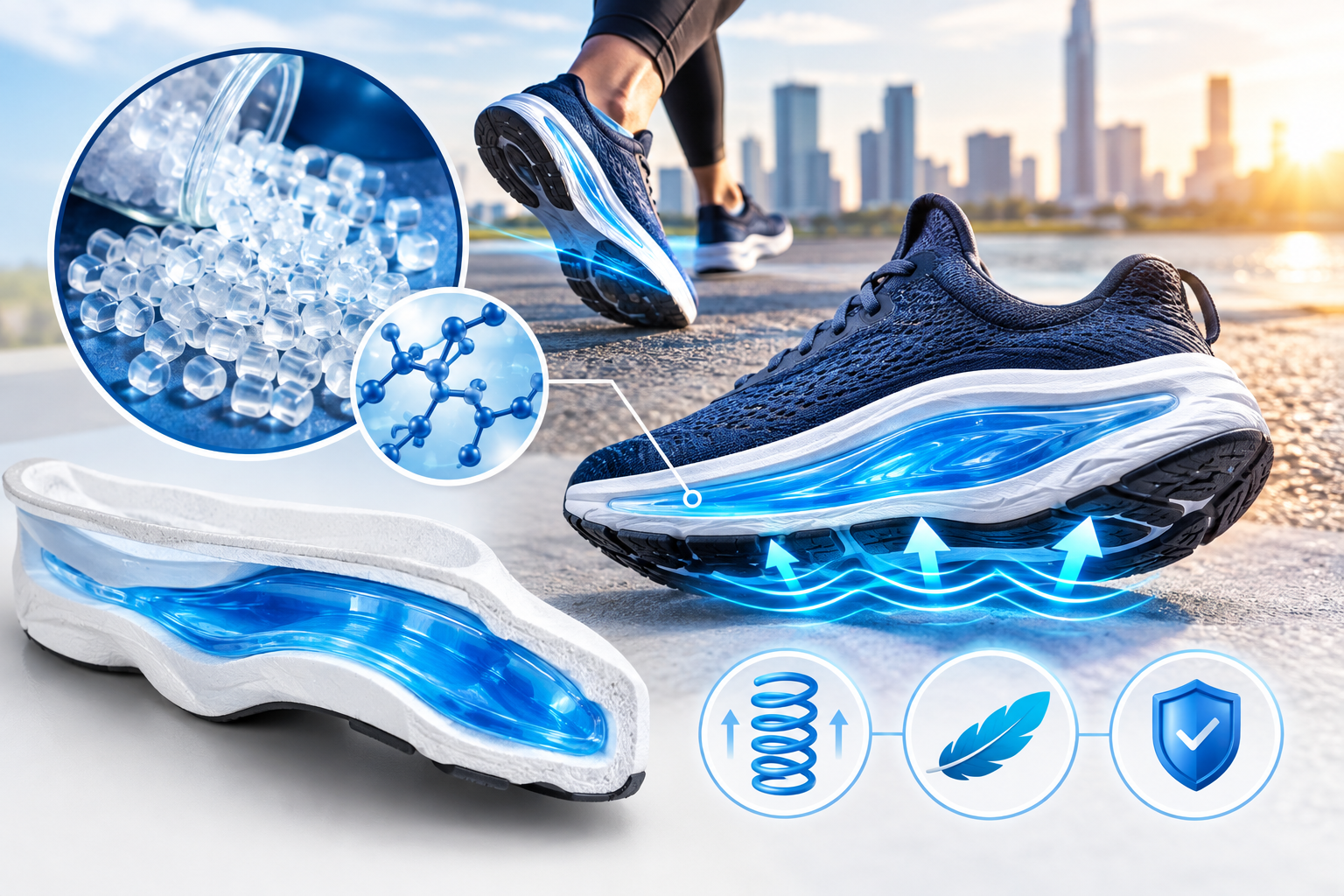
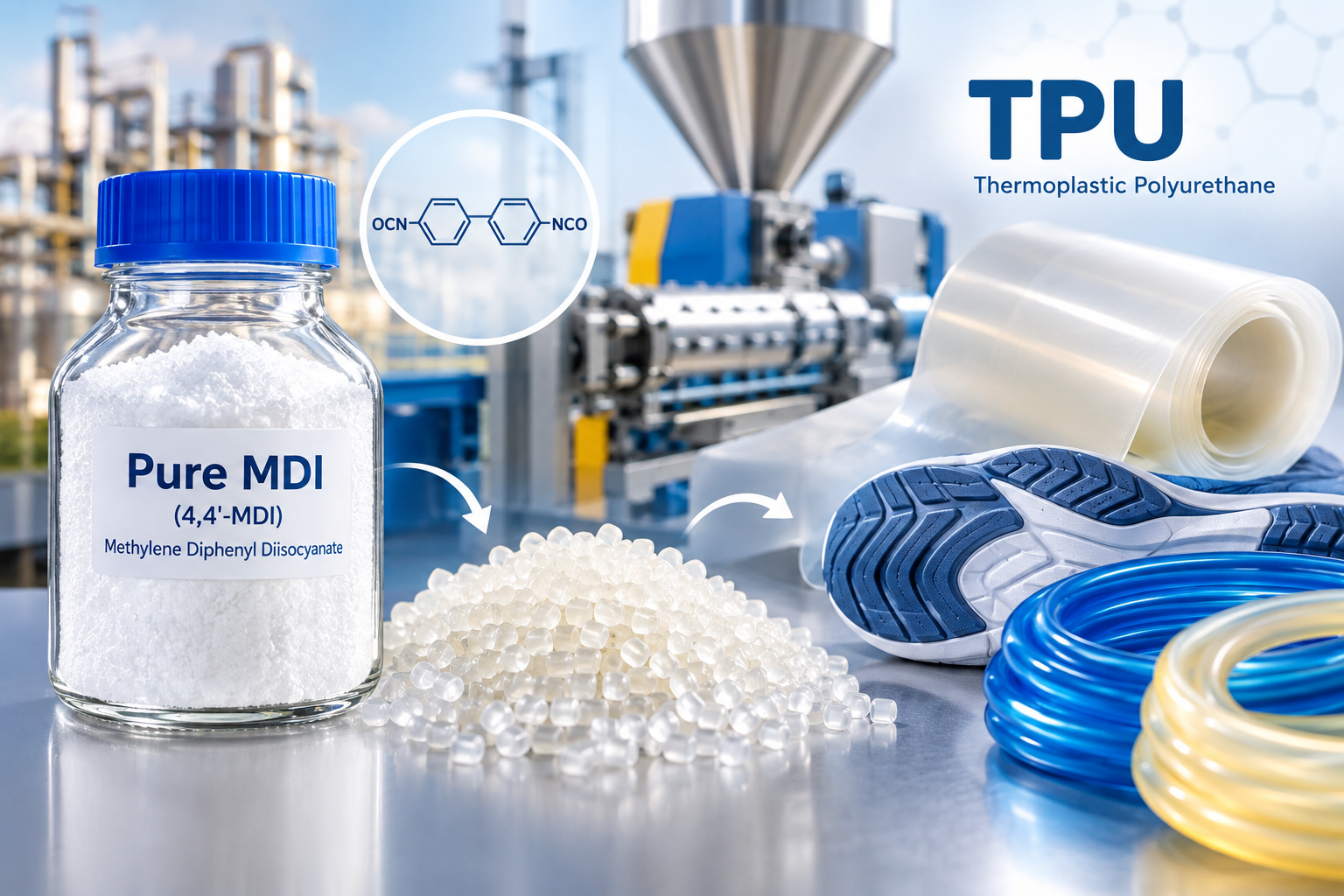
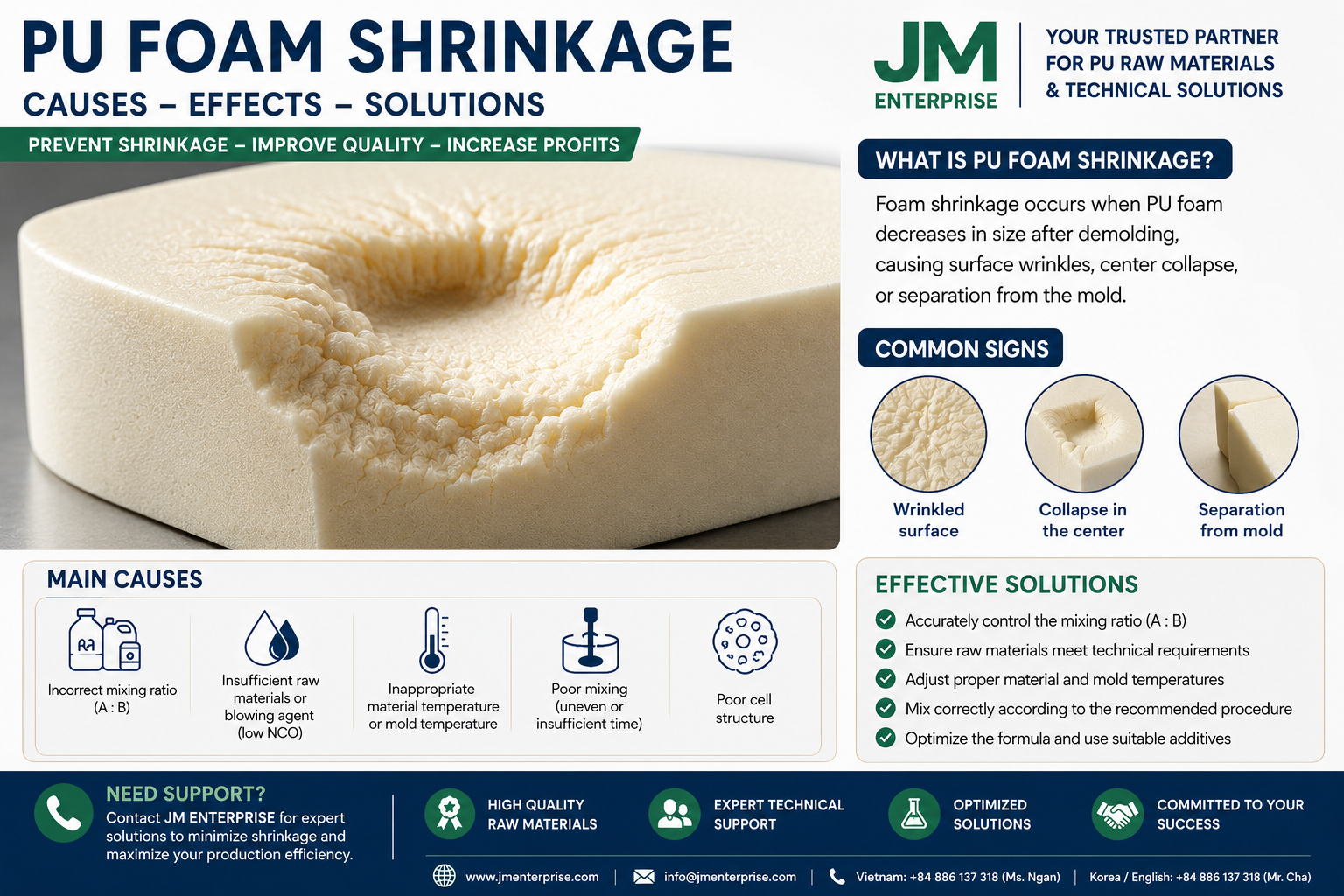
In polyurethane (PU) manufacturing—spanning rigid foam for thermal insulation, flexible foam for mattresses/furniture, semi-rigid foam for automotive components, and microcellular foam for shoe soles—PU foam shrinkage stands out as one of the most complex technical challenges.
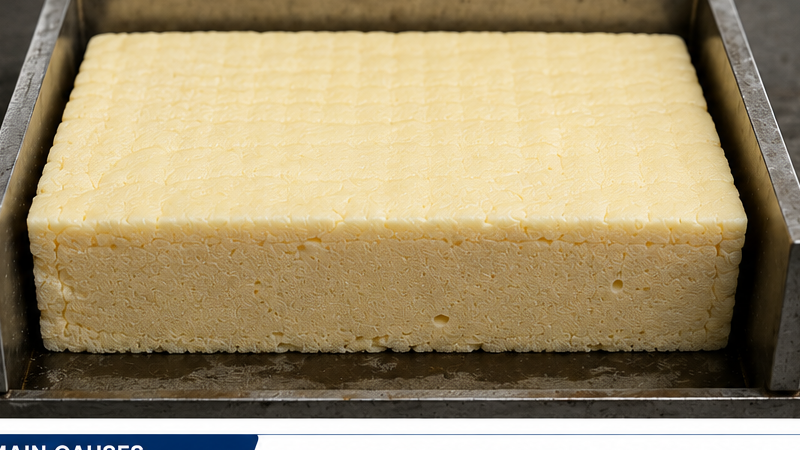
Foam shrinkage is far more than just a cosmetic surface defect. It is a direct manifestation of severe imbalances in polymer reaction kinetics and cell structure mechanics. For manufacturers, this defect can spike reject rates to alarming levels, resulting in massive raw material waste and heavy financial losses.
To permanently eliminate this issue, production teams must move beyond trial-and-error adjustments and understand the fundamental physical and chemical mechanisms at play. As a leading provider of raw materials and technical solutions, JM ENTERPRISE shares this in-depth technical analysis and professional troubleshooting guide.
1. Advanced Physico-Chemical Mechanisms of PU Foam Shrinkage
To engineer a definitive solution, we must first deconstruct the mechanisms governing the formation and deformation of the foam cell structure during the chemical reaction.
1.1. The Chemical Kinetics Race: Blowing vs. Gelling
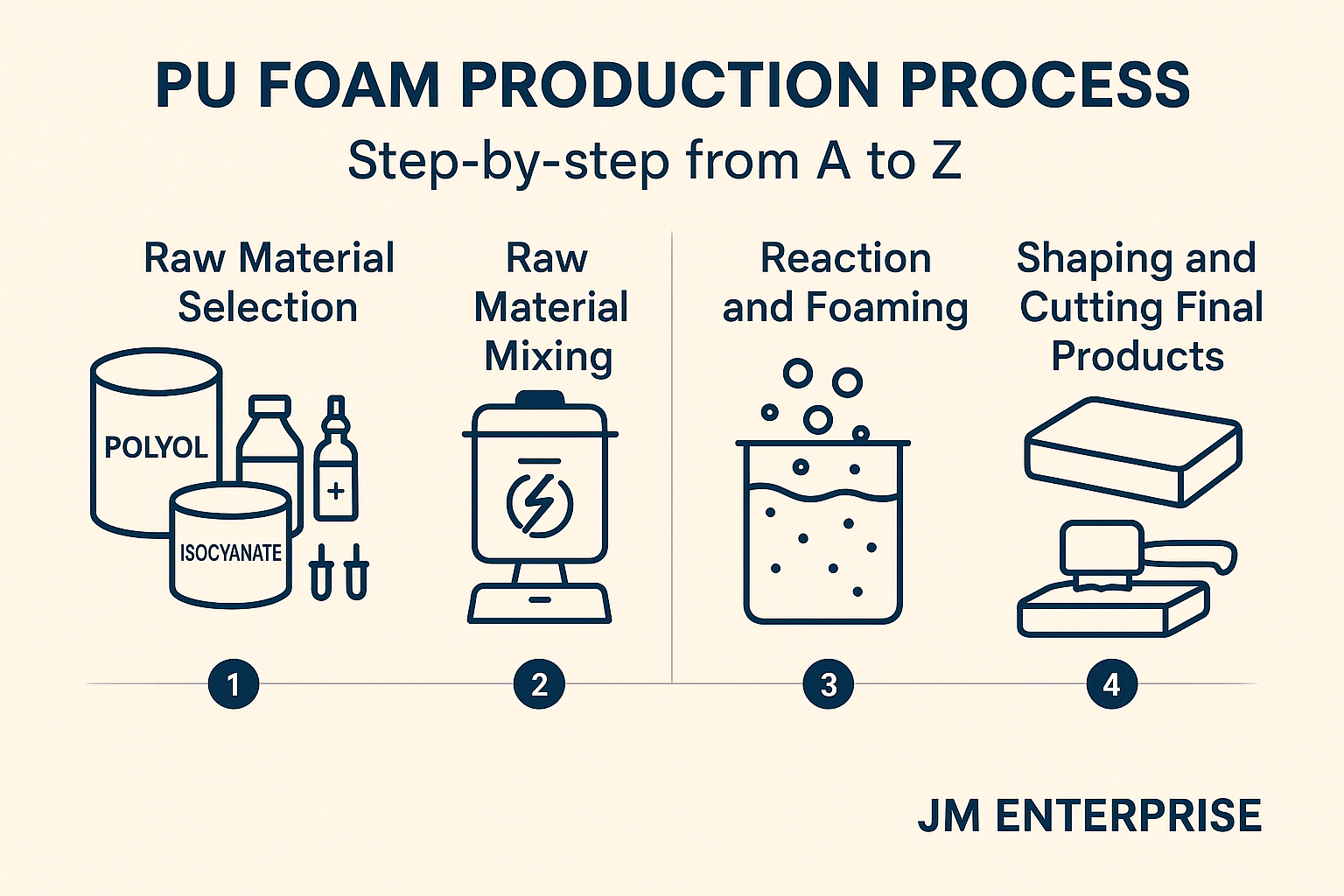
The synthesis of Polyurethane relies on two parallel yet competing reactions that require ultra-precise coordination:
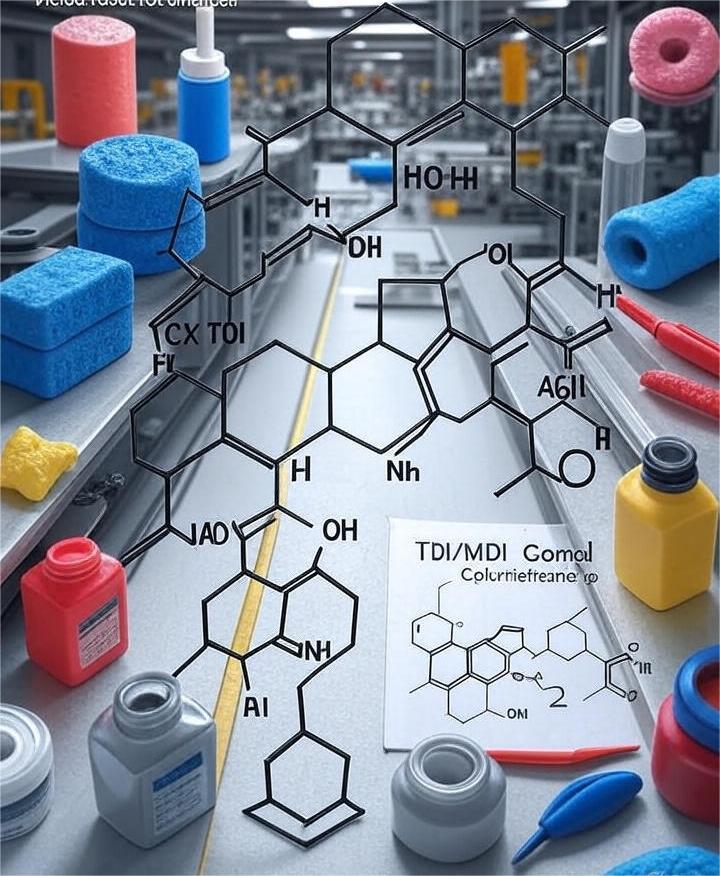
R-NCO (Isocyanate)+R'-OH (Polyol)Gelling CatalystR-NHCOOR' (Polyurethane Gel Network)
R-NCO (Isocyanate)+H2O (Water)Blowing CatalystR-NH2+CO2↑ (Gas Evolution)
If the blowing reaction (CO2 generation) proceeds too rapidly before the polyurethane matrix (gelling reaction) develops sufficient mechanical strength (i.e., the molecular weight Mw
 is inadequate), the gas bubbles will over-expand, rupture the cell windows, and trigger a catastrophic structural collapse.
Conversely, if the gelling reaction occurs prematurely, the cell membranes seal shut before the gas achieves volumetric equilibrium. The resulting internal negative pressure during cooling pulls the entire foam structure inward, causing severe shrinkage.
1.2. Gas Dynamics and Charles's Law
In rigid foam insulation or wood-imitation foam systems, the closed-cell content typically exceeds 90%. The blowing agents (such as Cyclopentane, HFCs, HFOs, or CO2) are locked tightly inside these sealed cell cavities.
According to Charles's Law for gases:
V1T1=V2T2
During the reaction, the internal exotherm temperature of the foam block can soar between 120°C and 160°C. As the product is demolded and cools down to ambient room temperature (25∘C ), the internal gas pressure (Pinside
 ) drops sharply due to the temperature decrease (T
 ) and the partial condensation of the blowing agents.
If the cell walls lack the necessary thickness and crosslinking density to withstand the external atmospheric pressure (Pambient ), the cells buckle and flatten, resulting in total or localized product shrinkage.
Foam temp drops (T ↓) ➔ Internal cell pressure drops (P_inside ↓)
➔ Weak Polymer Skeleton ➔ Cell structure collapses ➔ Foam Shrinkage
2. Key Technical Causes of Shrinkage in the Factory
Through extensive failure analysis for hundreds of manufacturing plants, JM ENTERPRISE has identified the following core technical culprits:
2.1. Incorrect Isocyanate Index
The Isocyanate Index (the stoichiometric ratio between -NCO and -OH
 groups) directly dictates the compressive strength and load-bearing capacity of the foam.
- Low Index (< 95): Insufficient Isocyanate leaves unreacted Polyol, yielding short polymer chains and low crosslinking density. The weak polymer skeleton cannot resist the negative internal pressure during cooling.
- High Index (> 110) Without Proper Catalysis: Can generate excessive Isocyanurate or Biuret structures, making the cell windows brittle. These membranes easily crack internally, leading to delayed shrinkage.
2.2. Improper Catalyst Balancing
Overusing or misbalancing the ratio between amine blowing catalysts (e.g., BDMAEE) and amine/metal gelling catalysts (e.g., TEDA, Dibutyltin Dilaurate) disrupts the reaction phase equilibrium. This mismatch is the leading cause of foam shrinkage occurring 2 to 24 hours post-demolding.
2.3. Mismatched Silicone Surfactants
Silicone surfactants dictate chemical system emulsification and control cell nucleation size.
- In Flexible Foam, if the surfactant makes the cell membranes too resilient, the foam fails to open cells at the end of the reaction cycle. The trapped gas contracts upon cooling, causing the mattress or cushion to shrink.
- In Rigid Foam, a low-efficiency surfactant leads to poor emulsification and uneven (oversized) cell distribution. This reduces the compressive strength in localized areas, triggering zonal shrinkage.
2.4. Thermal and Mechanical Process Variables
- Low Mold Temperature: Freezes the surface reaction, creating a thick skin while the underlying foam layer remains under-cured. This causes sub-surface shrinkage and wrinkling under the skin.
- Inadequate Mixing: Low mixing head speeds or insufficient pressure in high-pressure foaming machines prevents micro-level contact between MDI and Polyol. This produces polyol-rich zones that are highly prone to shrinkage.
3. Advanced Technical Solutions by JM ENTERPRISE
Moving far beyond raw material distribution, JM ENTERPRISE delivers an end-to-end technical ecosystem standardized by veteran Korean polymer specialists.
[STEP 1: Defect Analysis & Sampling]
│
[STEP 2: Formula Tuning & Index Optimization]
│
[STEP 3: Additive System Balancing (Surfactant/Catalyst)]
│
[STEP 4: Equipment Parameters & Mold Temp Calibration]
│
[STEP 5: Trial Evaluation & Process Handover]
3.1. Tailor-Made Defect Analysis
Our engineering team conducts precise cross-sectional slicing of defective samples, measures closed/open-cell ratios, and runs compressive strength testing using specialized equipment. This allows us to isolate whether the root cause stems from chemical formulation or mechanical processing.
3.2. MDI and Polyol Formula Optimization
- Polyol Customization: JM ENTERPRISE advises on blending high-functionality polyols to increase the 3D spatial crosslinking density of the polymer matrix.
- Index Calibration: We recalculate and re-establish the optimal MDI/Polyol mixing ratio tailored to the actual temperature and humidity fluctuations of your production plant.
3.3. Premium Additives for Cell Structure Control
- Specialized Silicone Surfactants: We supply next-generation surfactants. For flexible foam, they facilitate a perfect cell-opening process at the exact final second of rise. For rigid foam, they ensure ultra-fine, uniform cell nucleation to optimize internal pressure distribution.
- Balanced Catalyst Packages: We provide high-purity amine and metal catalysts to precisely govern the blowing-to-gelling rate, ensuring the foam reaches full mechanical maturity upon expansion.
3.4. On-Site Production Standardization
Led by our Korean Managing Director and technical team, JM ENTERPRISE works directly on your factory floor to optimize:
- The ideal mold temperature window (typically 45°C - 55°C depending on the application).
- Precise demold times to prevent premature removal before the structural matrix stabilizes.
- Injection pressures and chemical flow paths within complex mold geometries.
4. Industry Applications Fully Supported by JM ENTERPRISE
With extensive field experience, our engineers deeply understand the unique technical specifications required for each market segment:
|
Industry Segment
|
Critical Controls for Shrinkage Mitigation
|
|
Mattress & Furniture
|
Optimizing open-cell ratios to guarantee high resilience (rebound) and fatigue resistance without sagging.
|
|
Footwear & Shoe Soles
|
Regulating microcellular foam pore size and ensuring uniform hard-segment distribution to eliminate sole deformation.
|
|
Thermal Insulation (Panels & Spray)
|
Securing vertical and horizontal compressive strength to maintain long-term insulation properties and prevent metal sheet warping.
|
|
Automotive & Technical Foam
|
Meeting stringent NVH (noise, vibration, harshness) and density uniformity standards within intricate mold profiles.
|
|
Cast Polyurethane Elastomers
|
Maximizing crosslinking density while controlling green strength and post-cure mechanical shrinkage.
|
Eliminate PU Foam Shrinkage Permanently with JM ENTERPRISE
If your business is struggling with PU foam shrinkage, high scrap rates, or inconsistent product quality, let us help you fix it. JM ENTERPRISE is committed to partnering with your team, providing advanced additive samples, and deploying technical experts directly to your plant.
- Hotline / Zalo:
- +84 933 706 351 – Mr. Cha (English & Korean Support)
- +84 913 390 054 – Ms. Ngan (Vietnamese Support)
- Email: jhcha@jmentchemical.com
- Website: https://jmentchemical.com/