What is Integral Skin Foam?
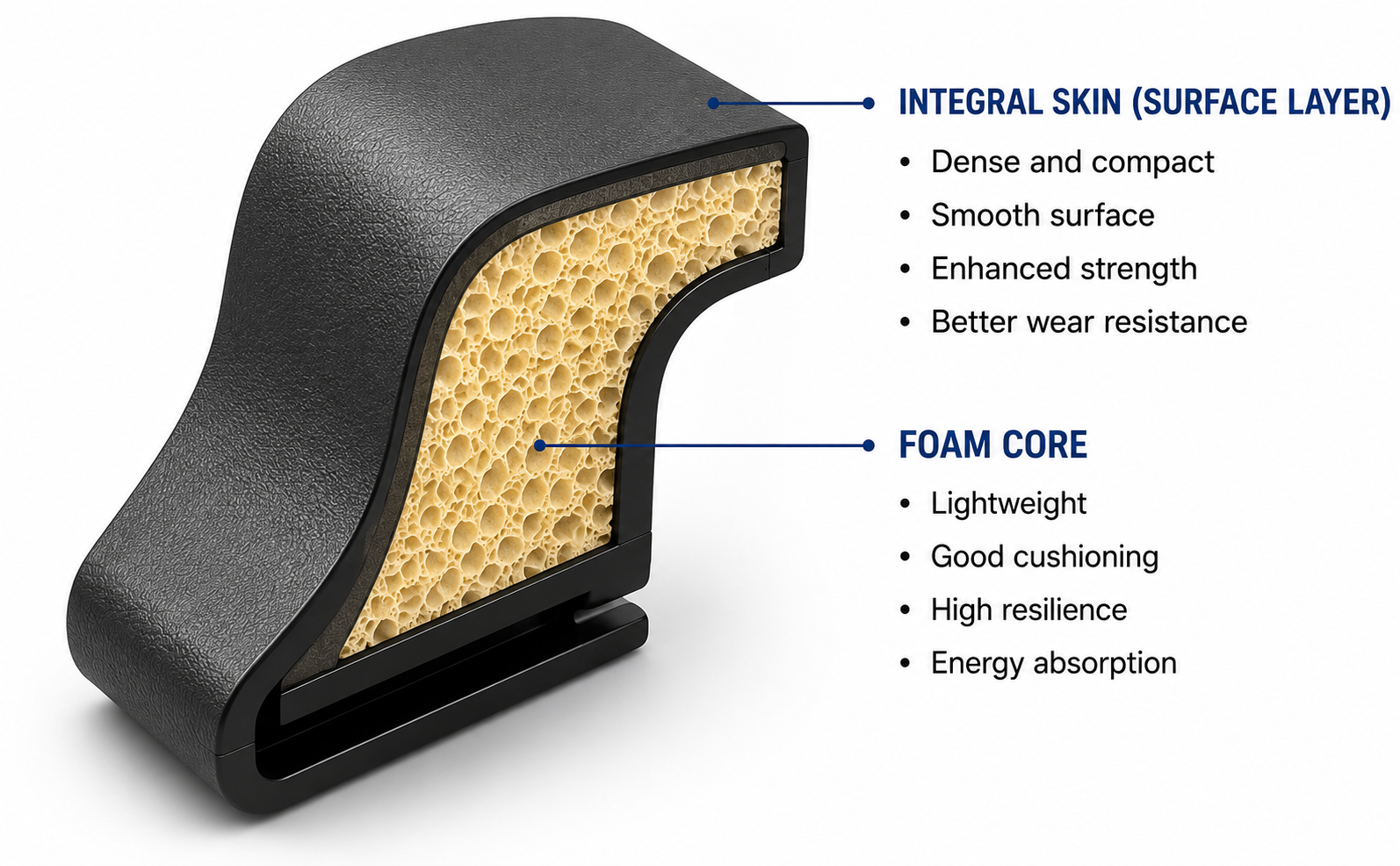
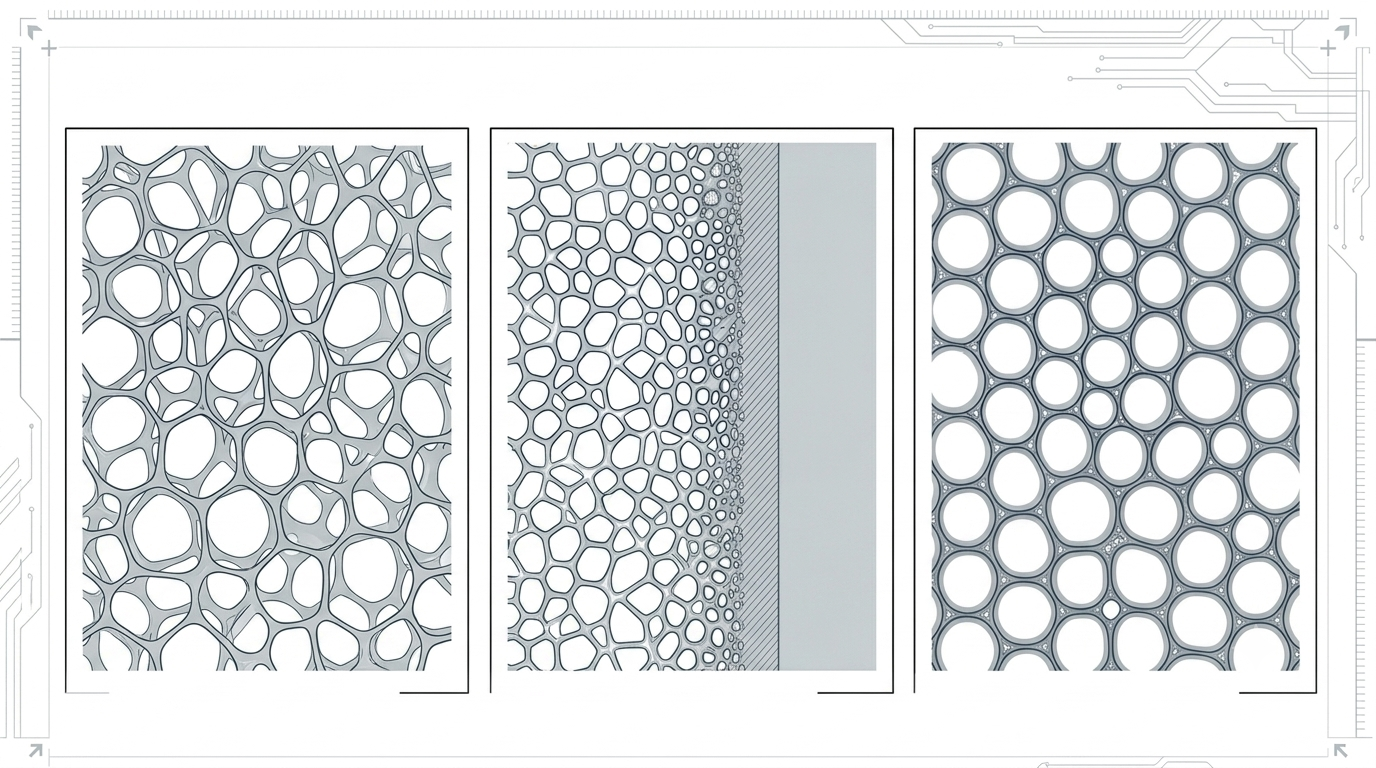
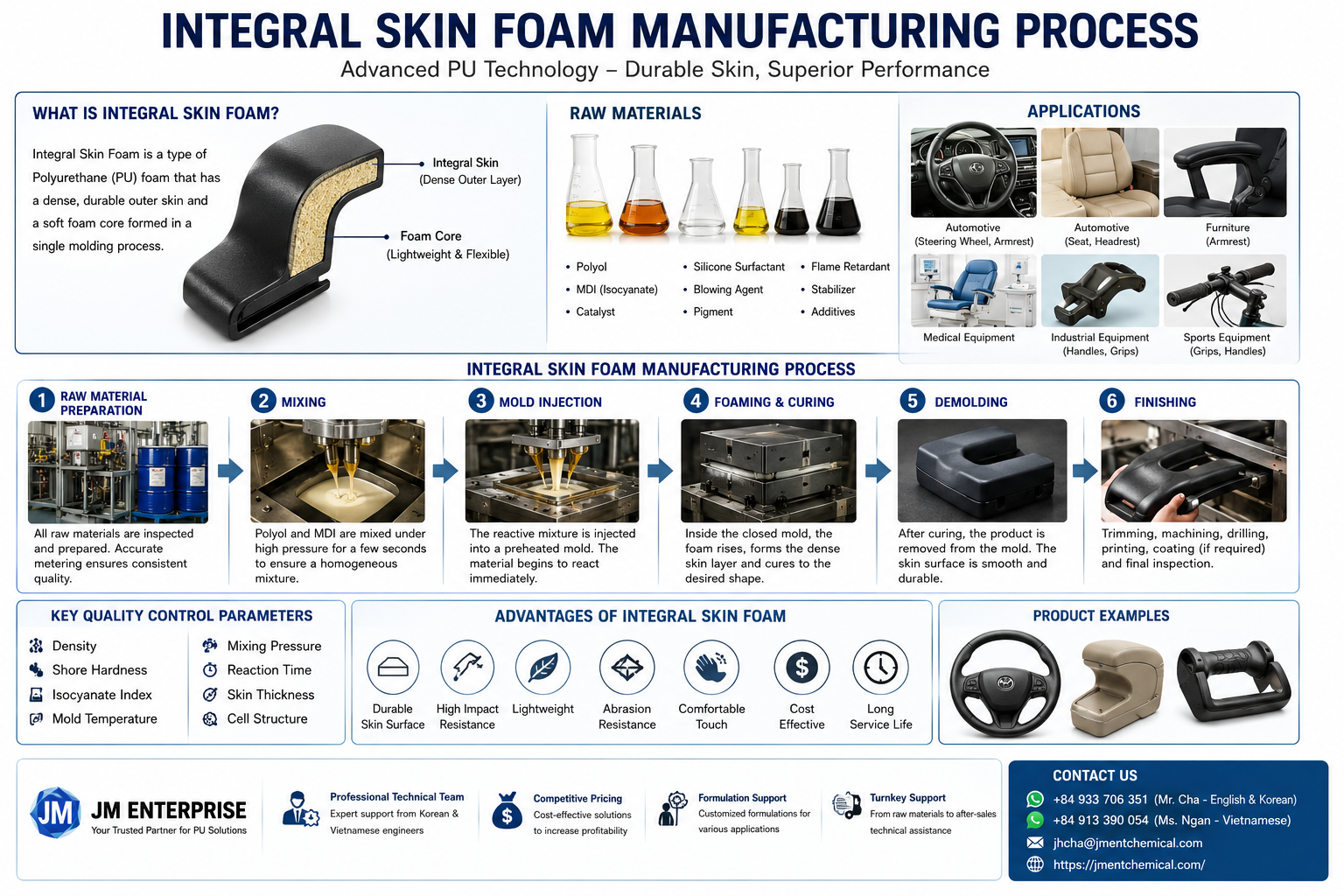
Integral Skin Foam is a specialized Polyurethane (PU) material characterized by a dense, durable outer skin and a lightweight cellular core. This unique structure is created during a single molding process, eliminating the need for additional surface coating while providing excellent durability, impact resistance, and aesthetic appearance.
Compared with conventional PU foam, Integral Skin Foam offers superior mechanical performance, making it an ideal material for automotive, furniture, medical equipment, industrial components, and sports equipment.
Structure of Integral Skin Foam
Integral Skin Foam consists of two distinct layers:
Dense Outer Skin
The outer skin provides:
- High abrasion resistance
- Excellent impact strength
- Scratch resistance
- Chemical resistance
- UV resistance
- Attractive surface finish
Cellular Foam Core
The foam core offers:
- Lightweight structure
- Excellent cushioning
- High resilience
- Energy absorption
- Comfortable touch
This combination allows manufacturers to achieve both durability and weight reduction in a single molded product.
Raw Materials for Integral Skin Foam
Selecting high-quality raw materials is essential for producing consistent Integral Skin Foam products.
The primary components include:
- Polyol
- MDI (Methylene Diphenyl Diisocyanate)
- Catalysts
- Silicone Surfactants
- Blowing Agents
- Pigments
- Flame Retardants
- Stabilizers
- Performance Additives
The correct formulation determines the foam density, skin thickness, hardness, and overall product performance.
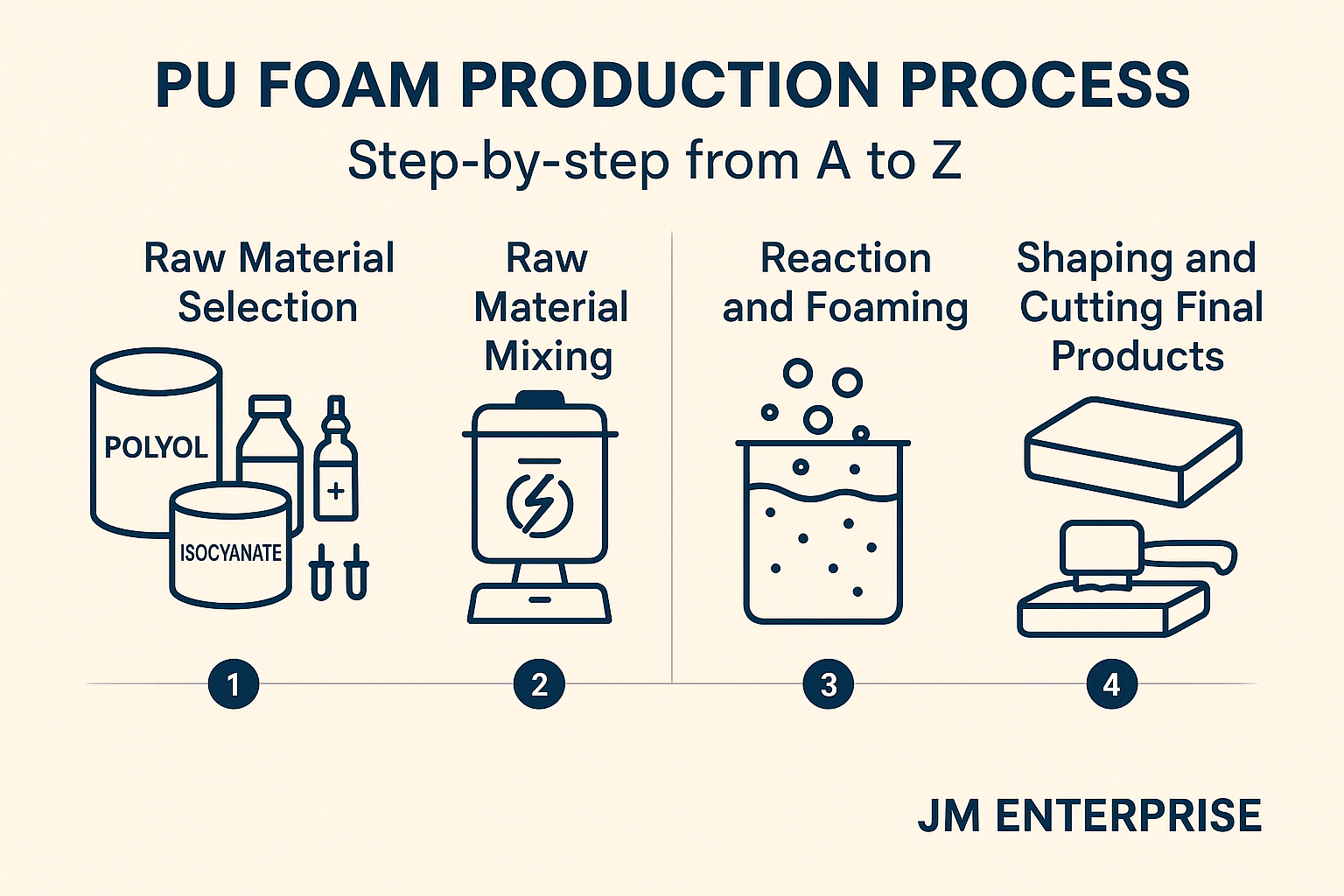
Integral Skin Foam Manufacturing Process
Step 1 – Raw Material Preparation
Before production begins, all raw materials are carefully inspected for:
- Viscosity
- Moisture content
- Temperature
- Reactivity
- Storage condition
Accurate metering ensures consistent product quality.
Step 2 – Mixing
Polyol and MDI are mixed using a high-pressure mixing machine.
Critical process parameters include:
- Mixing pressure
- Temperature
- Mixing time
- Polyol-to-MDI ratio
Uniform mixing ensures stable chemical reactions and consistent foam quality.
Step 3 – Mold Injection
The reactive mixture is injected into a preheated metal mold.
As the chemical reaction begins:
- The material contacting the mold surface forms a dense skin.
- The interior expands to create a lightweight foam core.
This simultaneous process creates the characteristic Integral Skin structure.
Step 4 – Foaming and Curing
Inside the closed mold, several chemical reactions occur simultaneously:
- Polyurethane polymer formation
- Gas generation
- Foam expansion
- Skin development
- Cell stabilization
Typical curing time ranges from 2 to 10 minutes, depending on product size and formulation.
Step 5 – Demolding
After complete curing, the finished product is removed from the mold.
At this stage, the product already features:
- Smooth surface
- Uniform color
- Excellent dimensional stability
- High mechanical strength
No additional skin coating is required.
Step 6 – Finishing Process
Depending on customer requirements, finishing operations may include:
- Flash trimming
- CNC machining
- Drilling
- Logo printing
- PU coating (if required)
- Final inspection
Critical Quality Control Parameters
Manufacturers should carefully monitor:
- Foam Density
- Shore Hardness
- Isocyanate Index
- Mold Temperature
- Mixing Pressure
- Reaction Time
- Skin Thickness
- Cell Structure
- Dimensional Stability
Consistent process control ensures superior product performance and minimizes production defects.
Common Production Defects
Thin Skin Layer
Possible causes:
- Low mold temperature
- Incorrect formulation
- Insufficient MDI
Surface Voids
Possible causes:
- Air trapped inside the mold
- Poor mixing
- Inappropriate silicone surfactant
Surface Wrinkles
Possible causes:
- Early demolding
- Uneven mold temperature
Foam Shrinkage
Possible causes:
- High moisture content
- Incorrect raw material ratio
- Incomplete chemical reaction
Applications of Integral Skin Foam
Integral Skin Foam is widely used in various industries.
Automotive Industry
- Steering wheels
- Armrests
- Headrests
- Seats
- Gear knobs
Furniture Industry
- Office chair armrests
- Chair cushions
- Ergonomic furniture
Medical Equipment
- Hospital chairs
- Rehabilitation devices
- Medical arm supports
Industrial Equipment
- Machine handles
- Protective covers
- Control levers
Sports Equipment
- Bicycle grips
- Fitness equipment
- Outdoor products
Advantages of Integral Skin Foam
- Durable outer skin
- Excellent impact resistance
- Lightweight structure
- High abrasion resistance
- Comfortable touch
- Long service life
- Attractive appearance
- Cost-effective manufacturing
- Flexible design possibilities
Why Choose JM ENTERPRISE?
JM ENTERPRISE is more than a supplier of Polyurethane raw materials—we are your trusted technical partner for complete PU solutions.
Professional Technical Team
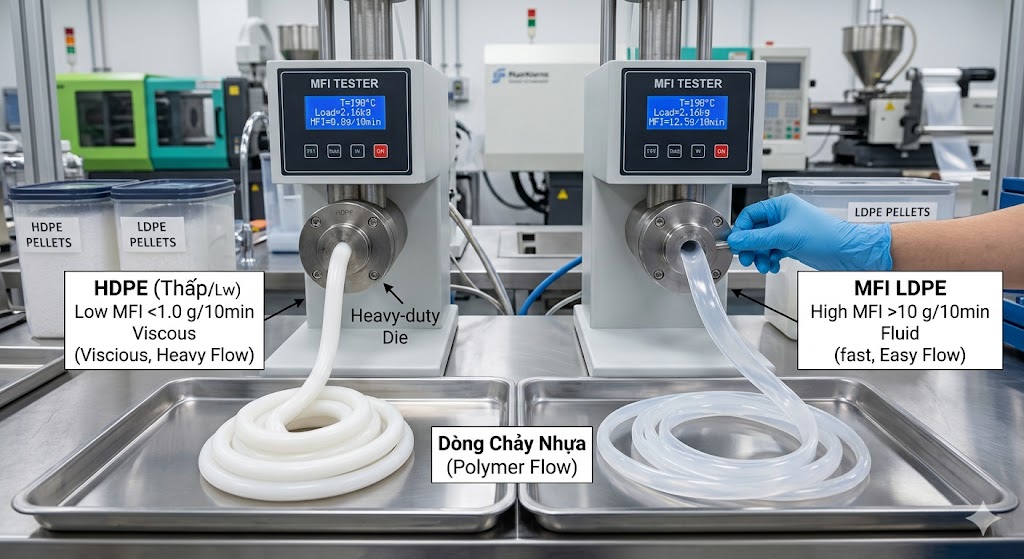
Our experienced Korean and Vietnamese engineers provide expert support in selecting the right raw materials, optimizing formulations, and improving production efficiency. We also assist customers in choosing the appropriate Melt Flow Index (MFI) for plastic materials and the proper foam density to match existing production equipment.
Competitive Pricing
We deliver cost-effective raw material solutions that help manufacturers reduce production costs, improve profitability, and remain competitive in today's global market.
Professional Formulation Support
Our specialists provide customized formulation consulting for plastic additives and PU Foam systems used in:
- Furniture
- Automotive
- Medical equipment
- Thermal insulation
- Industrial applications
Complete Turnkey Support
JM ENTERPRISE offers comprehensive turnkey services, including raw material supply, technical consultation, production optimization, troubleshooting, and after-sales technical support to ensure stable and efficient manufacturing operations.
Contact JM ENTERPRISE
High-quality raw materials are the foundation of successful Integral Skin Foam production. Contact JM ENTERPRISE today for professional technical consultation and free sample evaluation.
Hotline / WhatsApp
+84 933 706 351 (Mr. Cha – English & Korean)
+84 913 390 054 (Ms. Ngan – Vietnamese)
Email: jhcha@jmentchemical.com
Website: https://jmentchemical.com/