In surface protection and modern manufacturing, Epoxy resin and Polyurethane resin (PU) are two of the most widely used thermosetting polymers. Although both offer outstanding adhesion and protective capabilities, these two chemical systems possess fundamentally different physical and chemical properties.
Choosing the wrong material between Epoxy and Polyurethane can lead to premature coating failure, thermal expansion delamination, cracking, or rapid degradation under sunlight exposure. This guide breaks down the core technical differences between Epoxy Resin and Polyurethane Resin to help you make the right engineering decision for your plant.
1. Overview of Epoxy Resin vs Polyurethane Resin
┌── Epoxy Resin ───────► High hardness, chemical resistance, superior adhesion
Industrial Polymers ─────┤
└── Polyurethane (PU) ──► High elasticity, abrasion resistance, UV stability
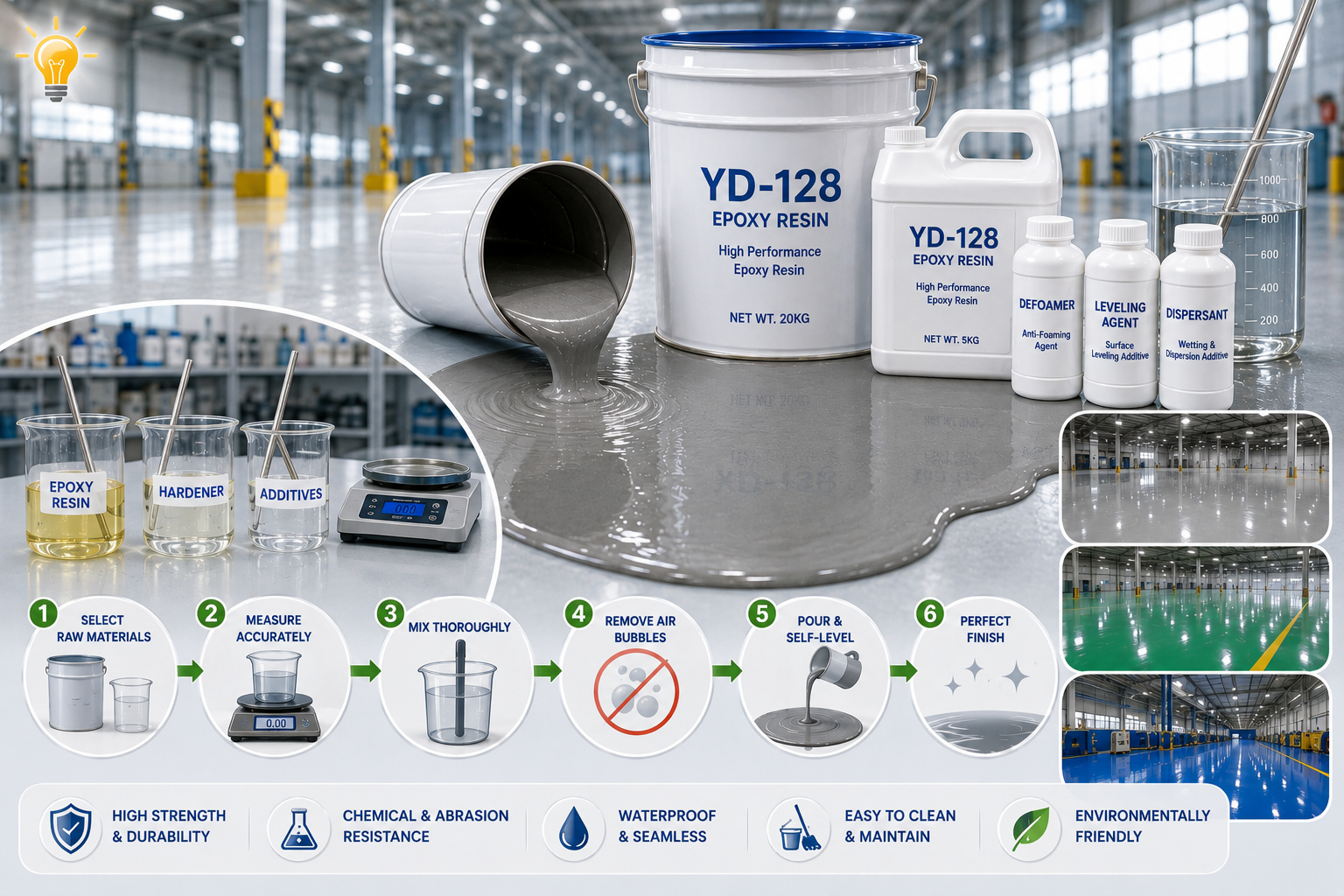
- Epoxy Resin: Created through a chemical reaction between an epoxy base resin (Part A) and an amine or anhydride curing agent (Part B). Epoxy is best known for its high structural rigidity, excellent compressive strength, and powerful mechanical bonding.
- Polyurethane Resin (PU): Formed by reacting Isocyanates with Polyols. PU materials excel in elasticity, impact absorption, mechanical abrasion resistance, and UV stability.
2. Head-to-Head Comparison: Epoxy Resin vs Polyurethane Resin
Here is a technical comparison matrix outlining the essential characteristics of both polymer systems:
|
Technical Criteria
|
Epoxy Resin
|
Polyurethane Resin (PU)
|
|
Hardness & Tensile Strength
|
Very High (High Tg , rigid structure) , rigid structure)
|
Moderate to High (More flexible)
|
|
Elasticity & Flexibility
|
Low (Prone to cracking under thermal movement)
|
Very High (Accommodates substrate movement)
|
|
Chemical Resistance
|
Superior against acids, solvents, alkalis, and oils
|
Good, but less resistant to concentrated acids
|
|
UV & Weather Resistance
|
Poor (Yellows and chalks under sunlight)
|
Exceptional (UV-stable, non-yellowing outdoors)
|
|
Abrasion & Impact Resistance
|
Excellent compressive strength, but scratches easier
|
Superior abrasion, scratch, and impact resistance
|
|
Thermal Shock Resistance
|
Moderate
|
Excellent (Handles rapid temperature changes)
|
|
Curing & Working Time
|
Generally longer pot life and slower cure
|
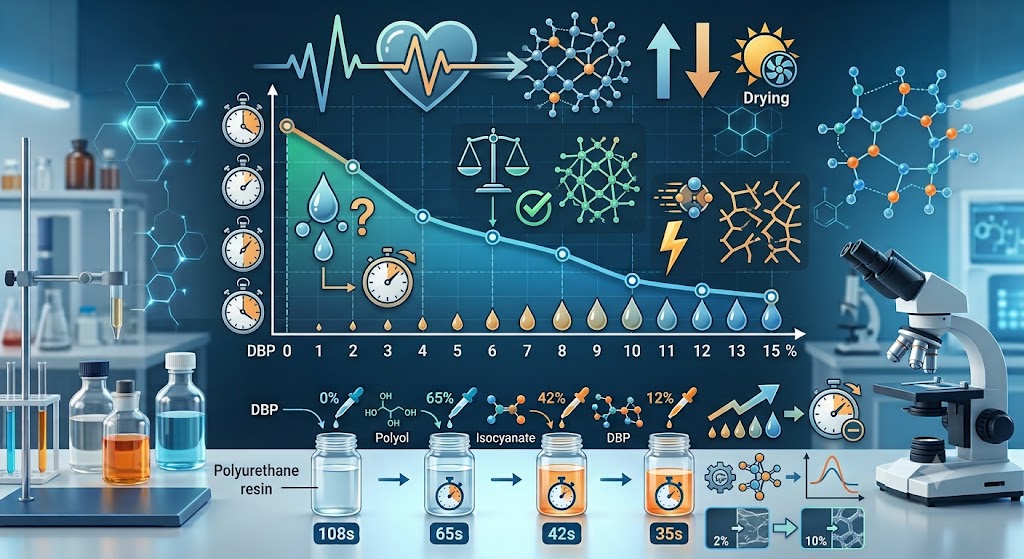
Faster curing, highly moisture-sensitive during application
|
3. Core Differences to Consider When Selecting
A. Mechanical Strength vs. Flexibility
- Epoxy offers high lap-shear strength and compressive strength. It is the premier choice for static structural bonding, rigid component casting, or heavy-duty industrial floor primers.
- Polyurethane features a flexible molecular backbone, allowing it to stretch and absorb dynamic vibrations. PU is ideal for substrates subject to structural movement, expansion joints, or continuous impact loading.
B. Operating Environment (Indoor vs. Outdoor)
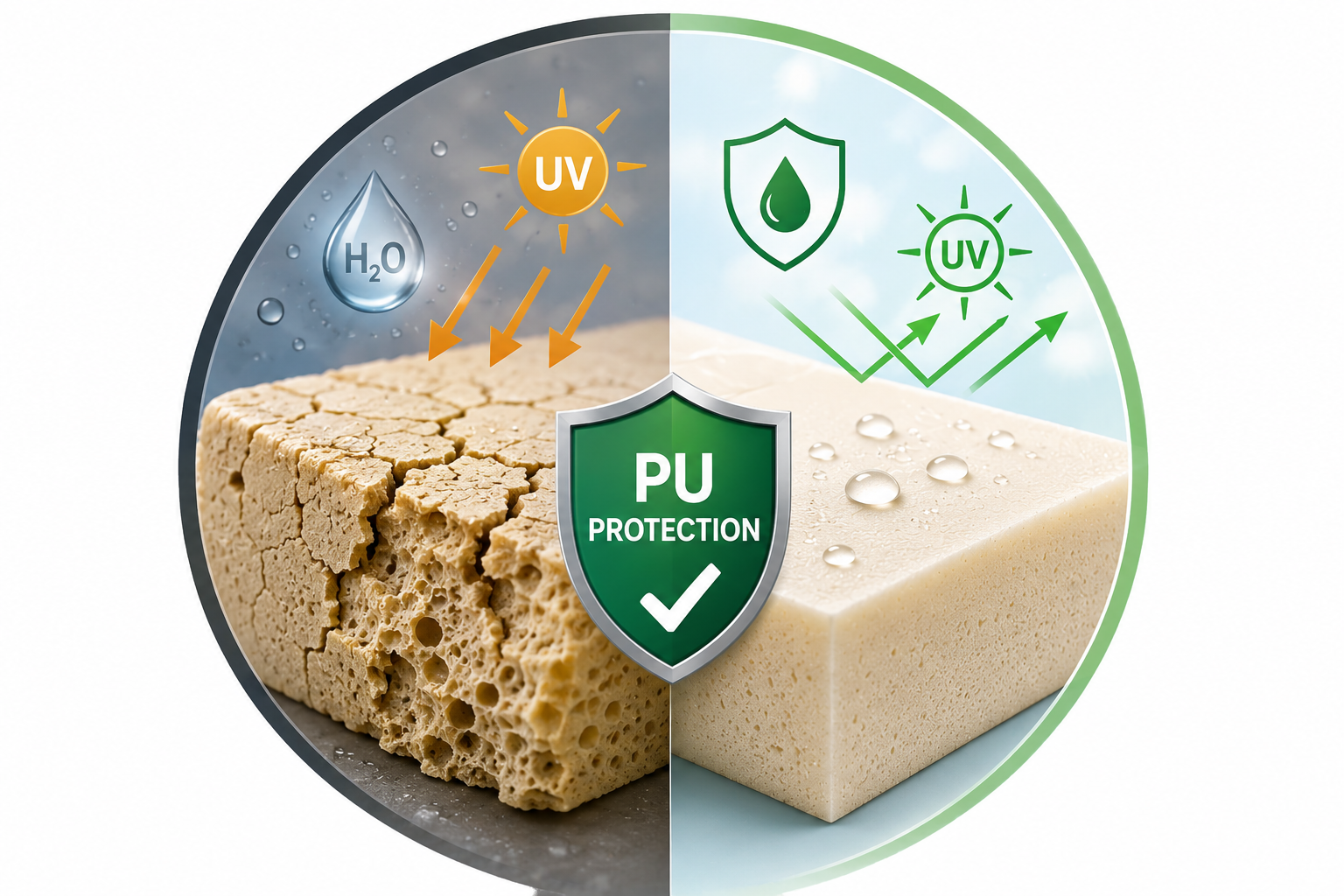
- The molecular structure of Epoxy degrades under ultraviolet (UV) radiation, leading to surface discoloration and chalking. Therefore, Epoxy is best suited for indoor applications or systems protected by a UV-stable topcoat.
- Polyurethane provides exceptional weatherability without yellowing or breaking down under direct sunlight, making it the ideal choice for outdoor exposures.
C. Temperature Limits & Thermal Shock
- Epoxy tolerates high continuous operating temperatures, but its rigid nature makes it susceptible to cracking under rapid temperature fluctuations (such as hot/cold water washdowns).
- PU retains flexibility even at sub-zero temperatures and performs significantly better under thermal shock, making it popular in cold storage facilities and food processing plants.
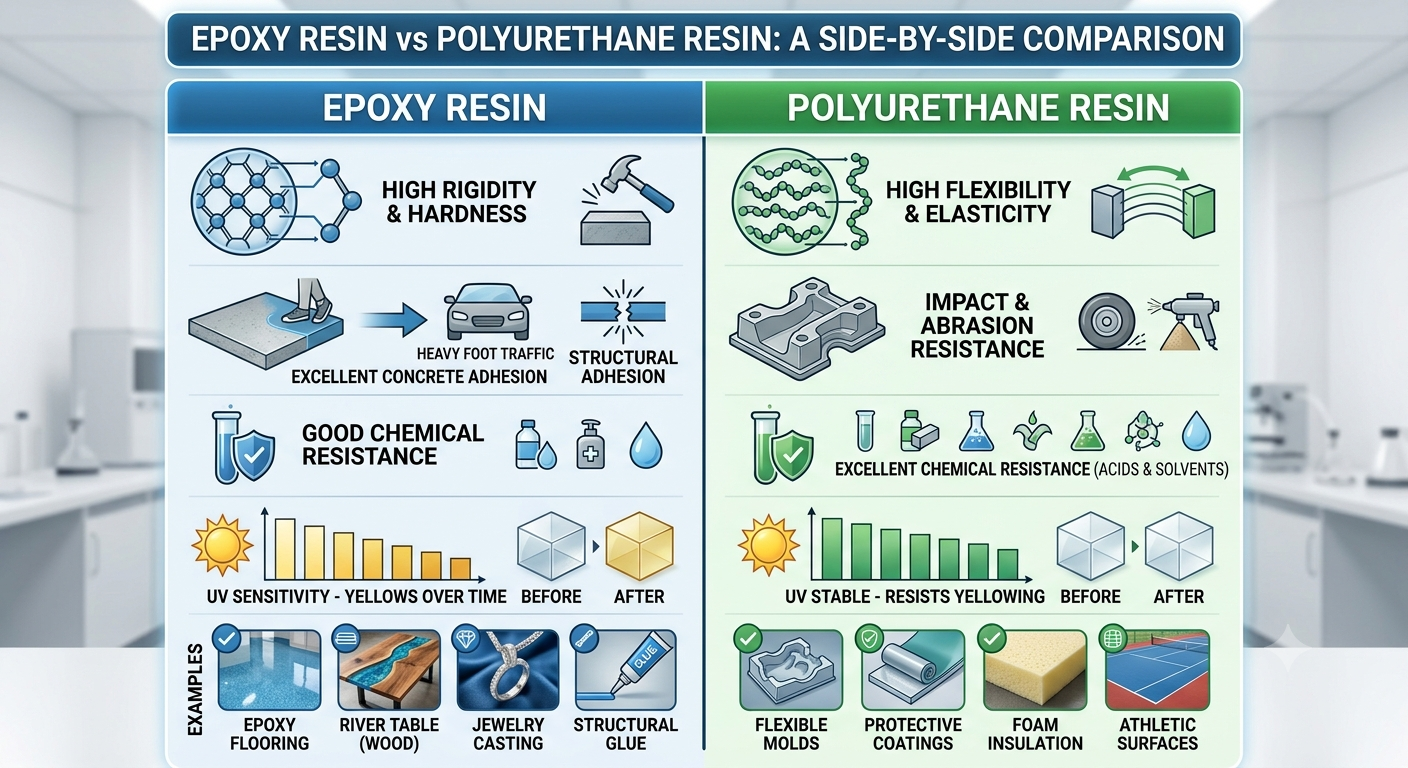
4. Industrial Applications
Choose Epoxy Resin for:
- Heavy-Duty Industrial Flooring: Facilities with heavy forklift traffic and potential chemical spills.
- Structural Bonding: Joining metals, concrete, and ceramics where high tensile or shear strength is required.
- Electronics Encapsulation (Potting): Protecting circuit boards and electrical components from moisture and harsh environments.
- Chemical Tank Linings: Secondary containment bunds and storage tanks exposed to concentrated acids.
Choose Polyurethane Resin for:
- Cold Storage & Food Processing Plants: Environments subjected to thermal shock and frequent washdowns.
- Outdoor Protective Coatings: UV-resistant topcoats for storage tanks, structural steel, and roofing.
- Expansion Joint Sealants: Sealing concrete expansion joints that require high flexibility.
- Wear-Resistant Equipment Linings: Coating pump impellers, chutes, and piping exposed to abrasive slurries or gravel.
5. Summary & Engineering Recommendation
Neither material is universally better—it comes down to matching the polymer properties with your operational conditions. In many modern facilities, a hybrid approach is used: applying Epoxy as a primer/base layer for adhesion and compressive strength, followed by a Polyurethane topcoat for UV protection, abrasion resistance, and flexibility.
Contact JM ENTERPRISE For Technical Support
Is your facility seeking the optimal epoxy or polyurethane formulation for surface protection, potting, structural bonding, or specialized industrial coatings?
Contact the application engineering team at JM ENTERPRISE today for expert technical advice and to request direct on-site testing samples:
- Hotline / Zalo:
- +84 933 706 351 – Mr. Cha (English & Korean Support)
- +84 913 390 054 – Ms. Ngan (Vietnamese Support)
- Email: jhcha@jmentchemical.com
- Website: https://jmentchemical.com/