HCM HEAD OFFICE: Room S15, Saigon Pearl, 92C Nguyen Huu Canh, Thanh My Tay Ward, Ho Chi Minh City
HANOI BRANCH: N45-TT4 Do Dinh Thien Street, My Dinh – Song Da Urban Area, Tu Liem Ward, Hanoi
24/7
Call Now
+84 933 706 351
JMENTERPRISE CO., LTD.
Mail Now
jhcha@jmentchemical.com
UV Stabilizers – The Invisible Shield Protecting Plastics from Sunlight and Time

UV Stabilizers – The Invisible Shield Protecting Plastics from Sunlight and Time

UV Stabilizers – The Invisible Shield Protecting Plastics from Sunlight and Time

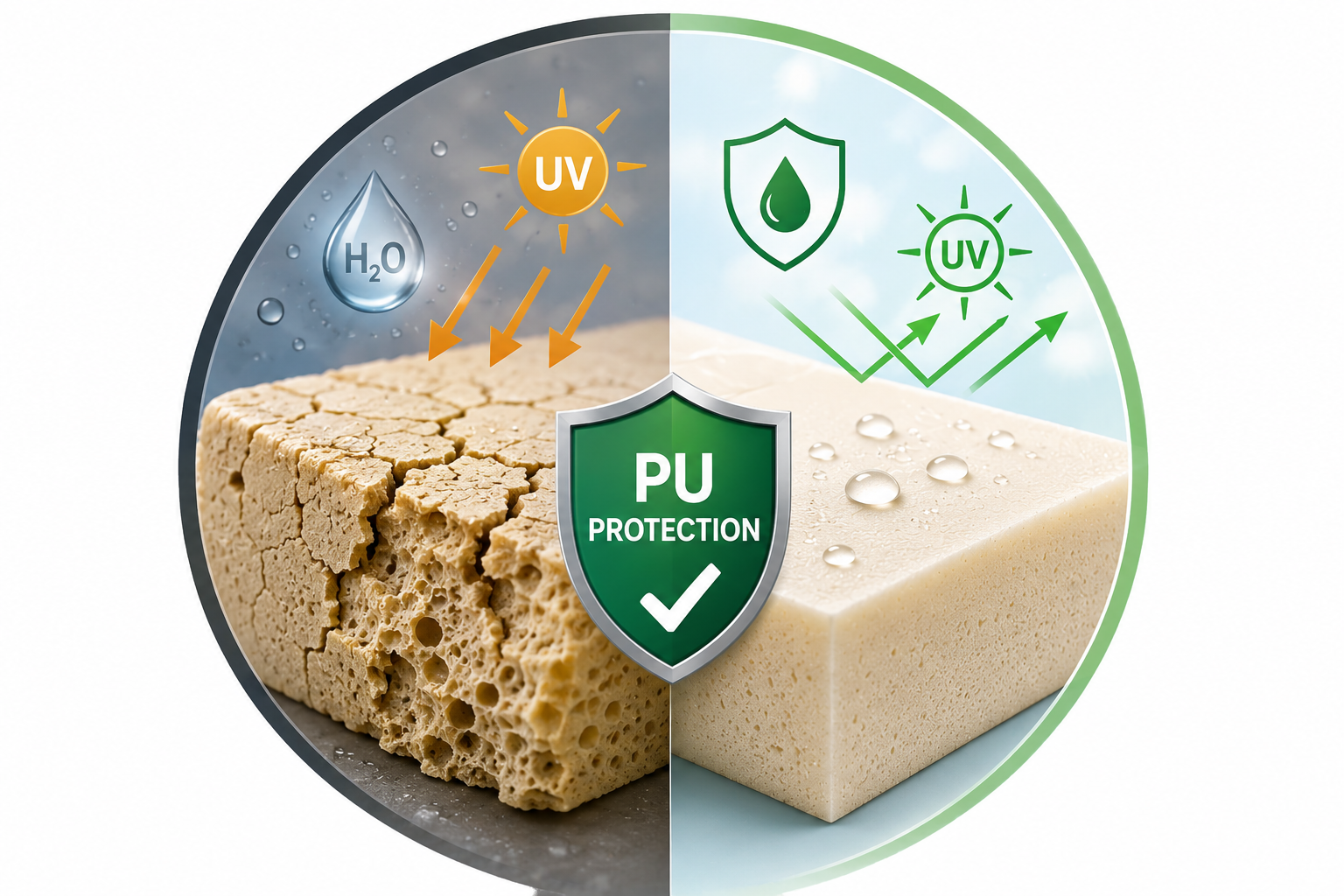
🌞 How UV Radiation Damages Plastic Products

Under direct sunlight—especially in high UV-index regions like Vietnam and Southeast Asia—UV radiation silently degrades plastic materials. This degradation may happen gradually but results in:

  • Discoloration: yellowing or fading of original color
  • Cracking and brittleness: polymer chains are broken down
  • Loss of mechanical properties: reduced tensile strength, flexibility, and impact resistance
  • Shortened product lifespan and decreased brand reputation

This is why UV stabilizers have become a vital component in plastic compound formulations, particularly for outdoor applications and products that demand long-term performance.

🔬 What Are UV Stabilizers & Why Are They Critical in Compounding?

UV Stabilizers are additives designed to protect polymers from UV-induced degradation. There are two main types, each serving a unique purpose:

  1. UV Absorbers (UVA):
    • Absorb harmful UV rays and convert them into harmless heat
    • Prevent UV penetration into polymer chains
    • Ideal for protecting surface appearance, transparency, and color
  2. HALS (Hindered Amine Light Stabilizers):
    • Neutralize free radicals generated by UV exposure
    • Act as a “self-healing” mechanism to maintain polymer integrity
    • Highly effective in polyolefin-based systems such as PP and PE

In many formulations, UVA and HALS are used in synergy to maximize protection:
UVA guards the surface – HALS protects the core, ensuring durable, color-stable, long-lasting plastic products.

🧪 Industries & Products Benefiting from UV Stabilizers

1. Agricultural Films & Packaging

  • LDPE/LLDPE greenhouse films, mulch films, UV-resistant packaging
  • Enhances crop protection and prolongs film usability under sunlight

2. Outdoor Furniture & Plastic Components

  • Garden chairs, fencing, decking, and outdoor accessories
  • Prevents chalking, fading, and mechanical degradation

3. Automotive & Transportation Plastics

  • Bumpers, trims, dashboards exposed to sunlight and heat
  • Maintains appearance and performance in tough environments

4. Electrical & Electronic Enclosures

  • UV-resistant electrical boxes, LED housings, junction covers
  • Prevents material embrittlement and surface cracks

5. Masterbatch Industry

  • UV masterbatches (black, white, or natural)
  • Enhances end-product stability and market competitiveness

🏭 JM ENTERPRISE – Premium UV Stabilizer Solutions for the Plastics Industry

As the official distributor of SONGWON in Vietnam, JM ENTERPRISE offers a comprehensive range of UVA products backed by global expertise and reliable local support:

Tailored formulation guidance for various resins
Free sample support with full TDS/MSDS documentation
Fast nationwide delivery and on-site technical support
Certified quality – RoHS, REACH, ISO 9001 compliant

💡 Why Choose High-Quality UV Stabilizers?

  • Extend product life by 2–5 times
  • 🎨 Maintain color integrity and surface aesthetics
  • 🛡️ Protect polymer structure and performance
  • 💰 Reduce warranty and replacement costs, enhance brand reputation

📞 Need UV Protection in Your Plastic Compounds? Let’s Talk!

JM ENTERPRISE is your trusted partner for UV stabilizers, delivering international-grade solutions at competitive pricing—backed by local technical support across Vietnam.

📍 JM ENTERPRISE
☎️ Hotline/Zalo: 84 933 706 351 Mr Cha (speak English) 84 913390054 Ms Ngan ( speak Vietnamese)
📧 Email: jhcha@jmentchemical.com
🌐 Website: https://jmentchemical.com/

Newest Blogs

Epoxy Resin vs Polyurethane Resin: Key Differences & Selection Guide

Compare Epoxy Resin vs Polyurethane Resin (PU) in detail. Explore key difference...

How to Choose the Right Epoxy Resin for Industrial Applications

Learn how to choose the right epoxy resin for industrial applications. Explore k...

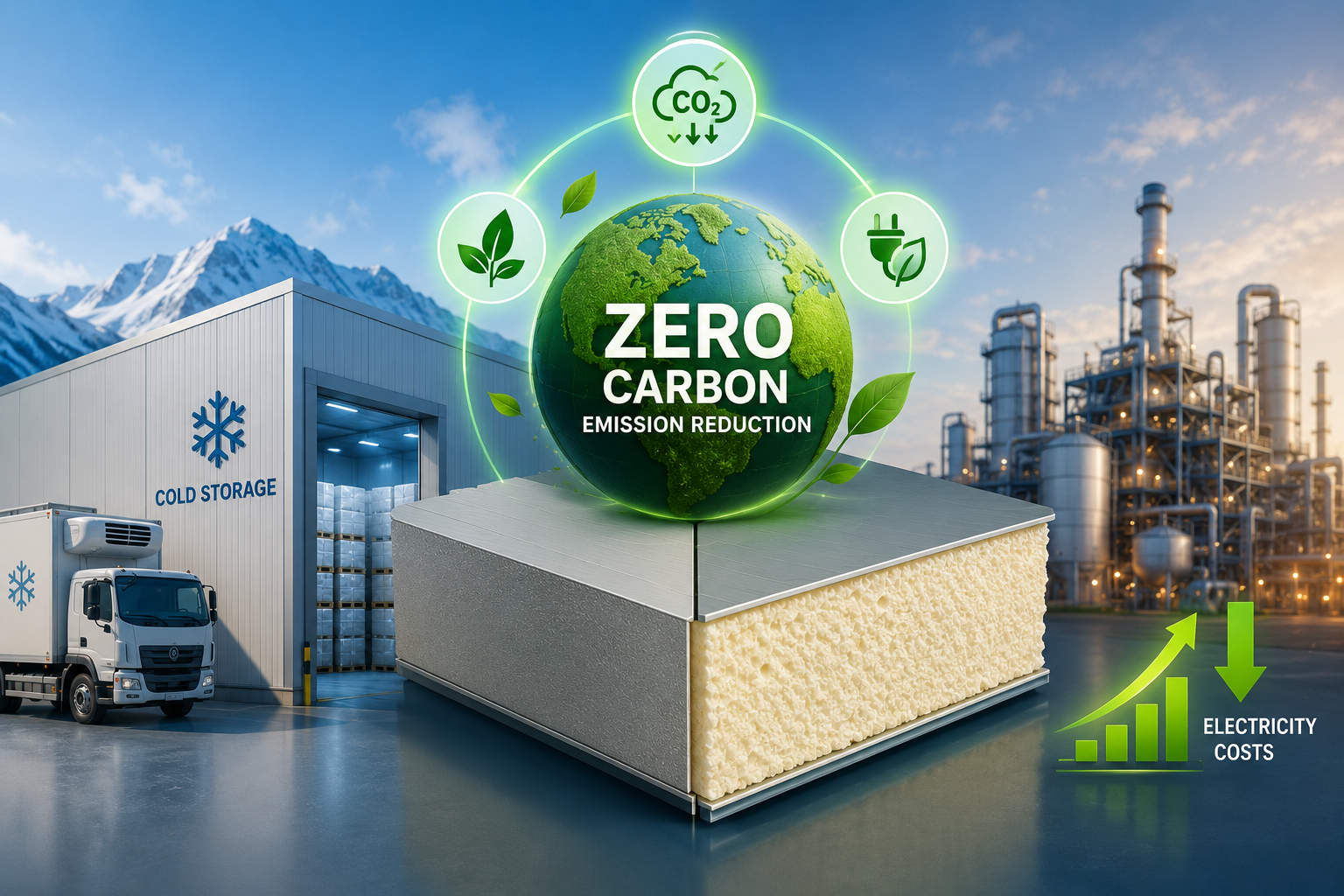
Zero-Carbon Emission Reduction Solutions

Explore Zero-Carbon emission reduction solutions using PU foam insulation. Learn...

In-Depth Analysis of Epoxy vs Epoxy Resin: Chemical Nature, Technical Properties, and Industrial Applications

An in-depth technical analysis of Epoxy vs Epoxy Resin. Clarify terminology, che...

Low-VOC Trends: Comprehensive Guide to Odorless Catalysts & Additives for Export-Grade PU Foam

Discover Low-VOC additives & reactive catalysts for PU Foam: Eliminate amine odo...

Fixing PU Foam Post-Demold Shrinkage & Distortion: Technical Causes & Line Solutions

Troubleshoot PU Foam shrinkage and distortion post-demolding: Uncover closed-cel...

Most Viewed Blogs

Eco-Friendly PU Adhesive for Sustainable Packaging

Durable PU laminating adhesive – solvent resistant, internationally certified....

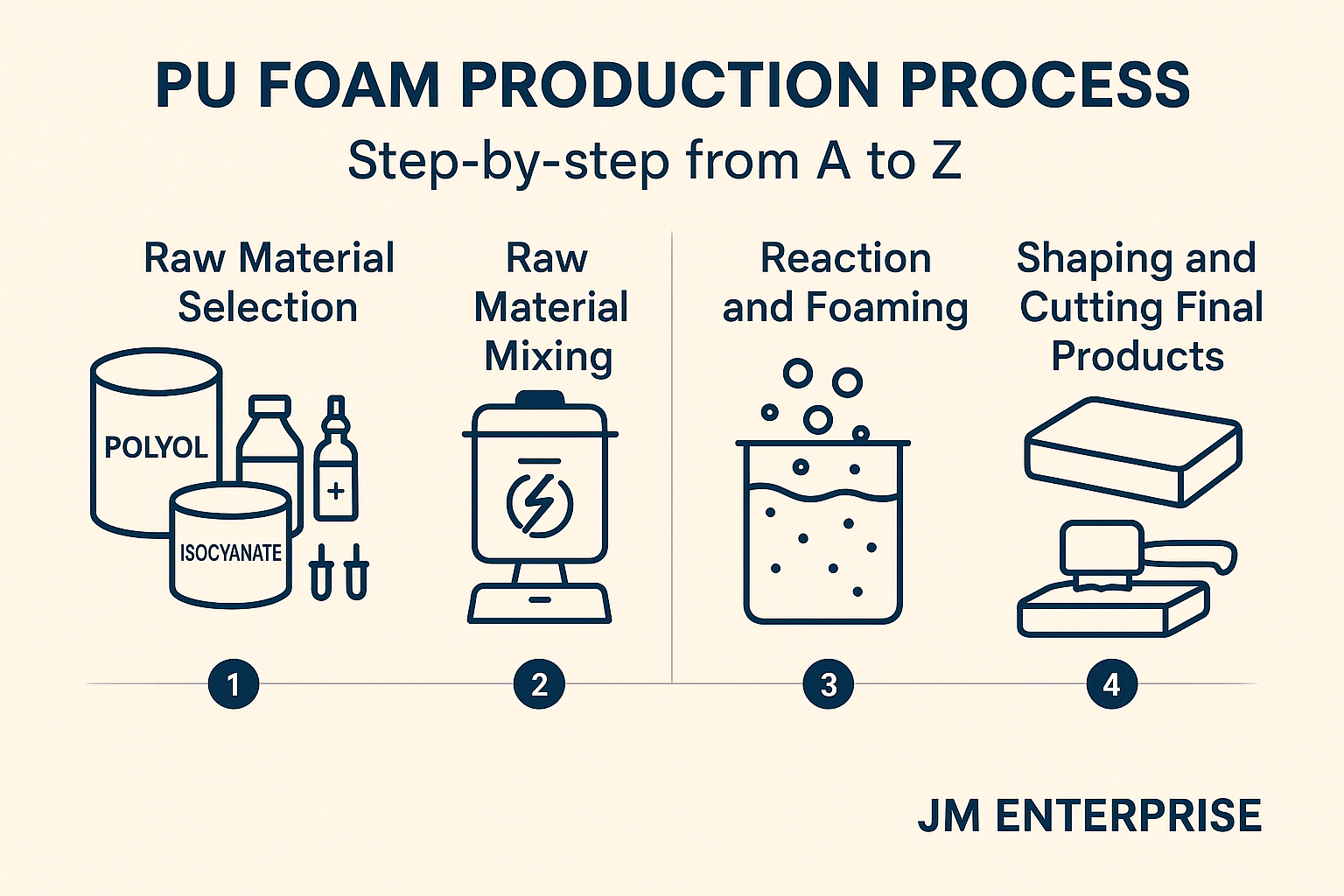
PU Foam Production Process: A Step-by-Step Guide from A to Z

Explore the complete PU foam production process from A to Z and discover how sou...

TPU and Sustainability: Is It an Eco-Friendly Material?

Discover whether TPU is truly eco-friendly, its recyclability, product life cycl...

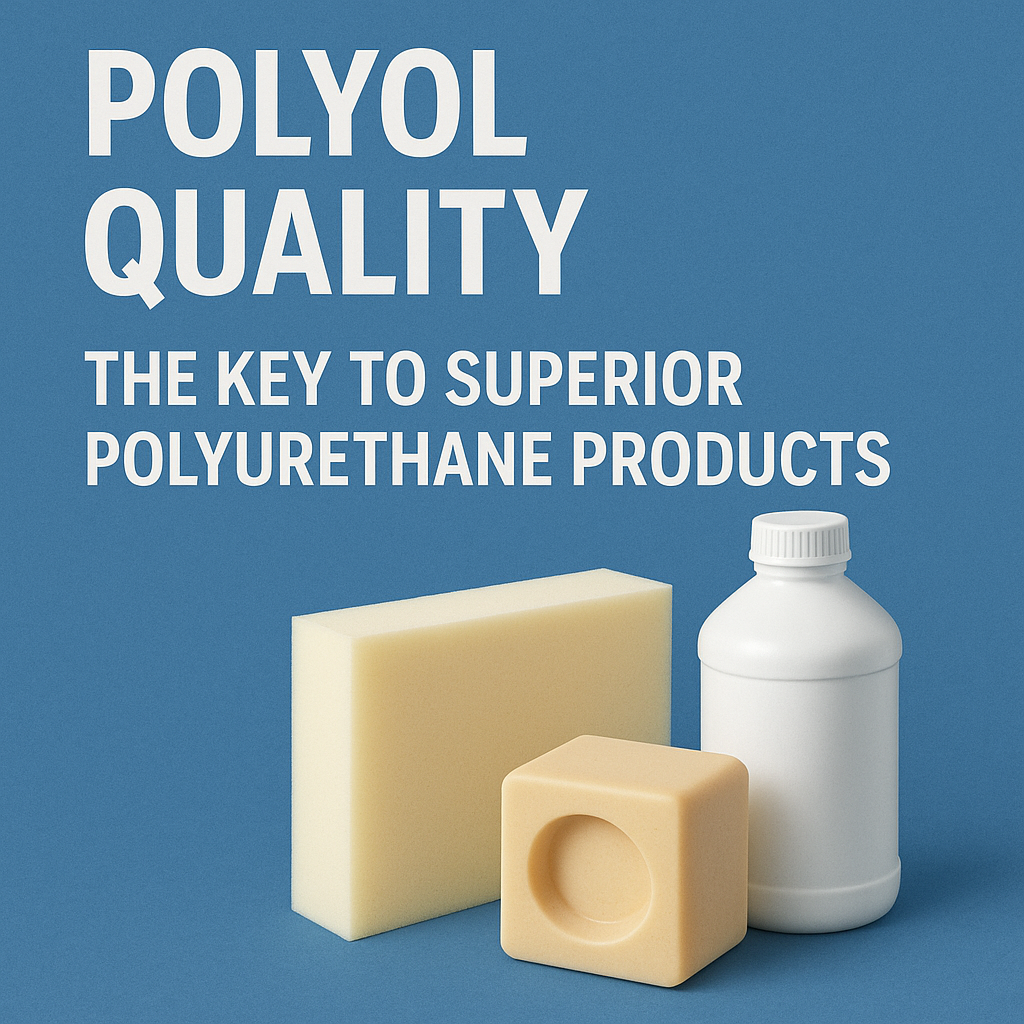
Hydroxy and Oxygen Content in Polyol – The Key to High-Quality Polyurethane Production

How OH and oxygen content in polyol affect polyurethane performance. Learn how t...

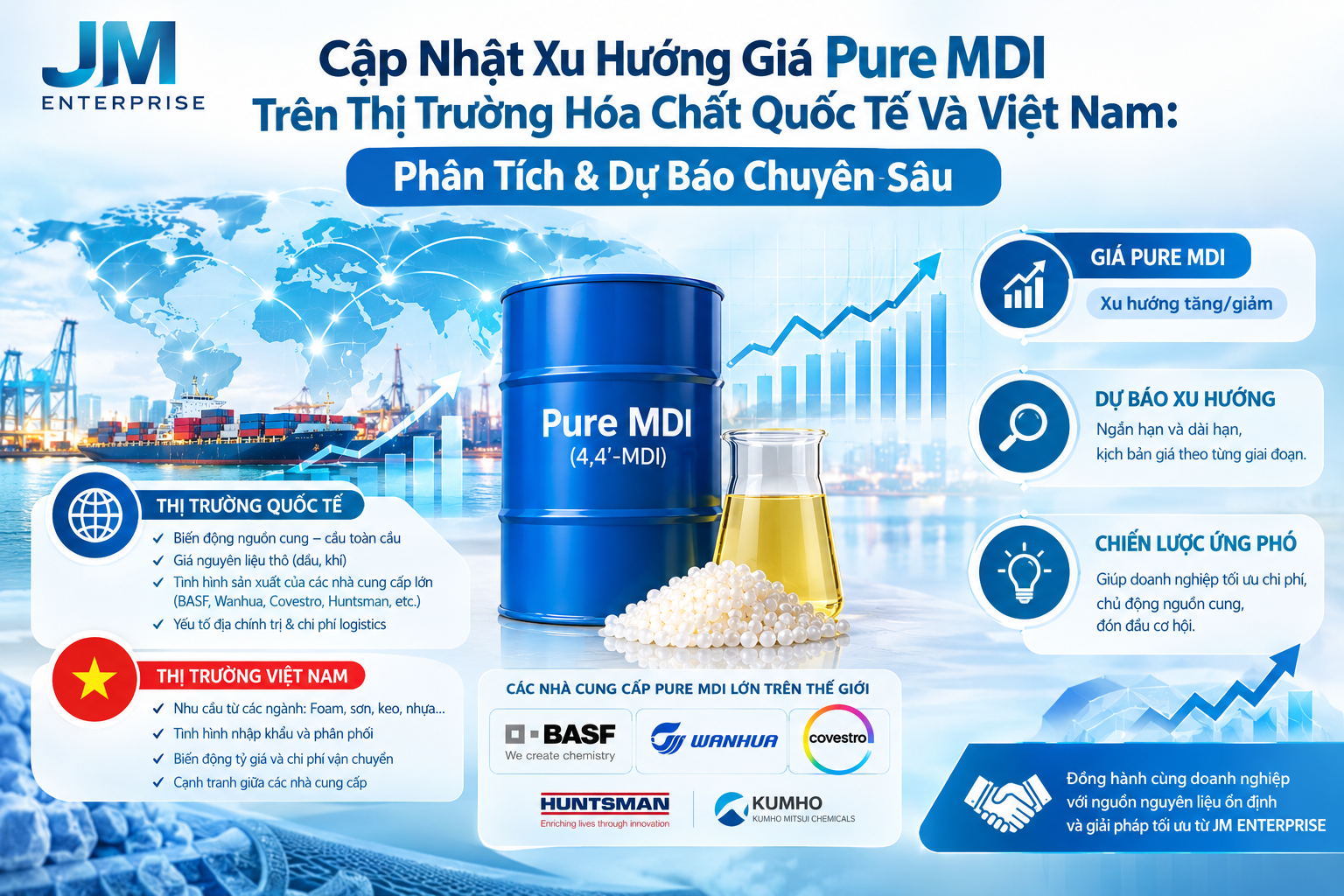
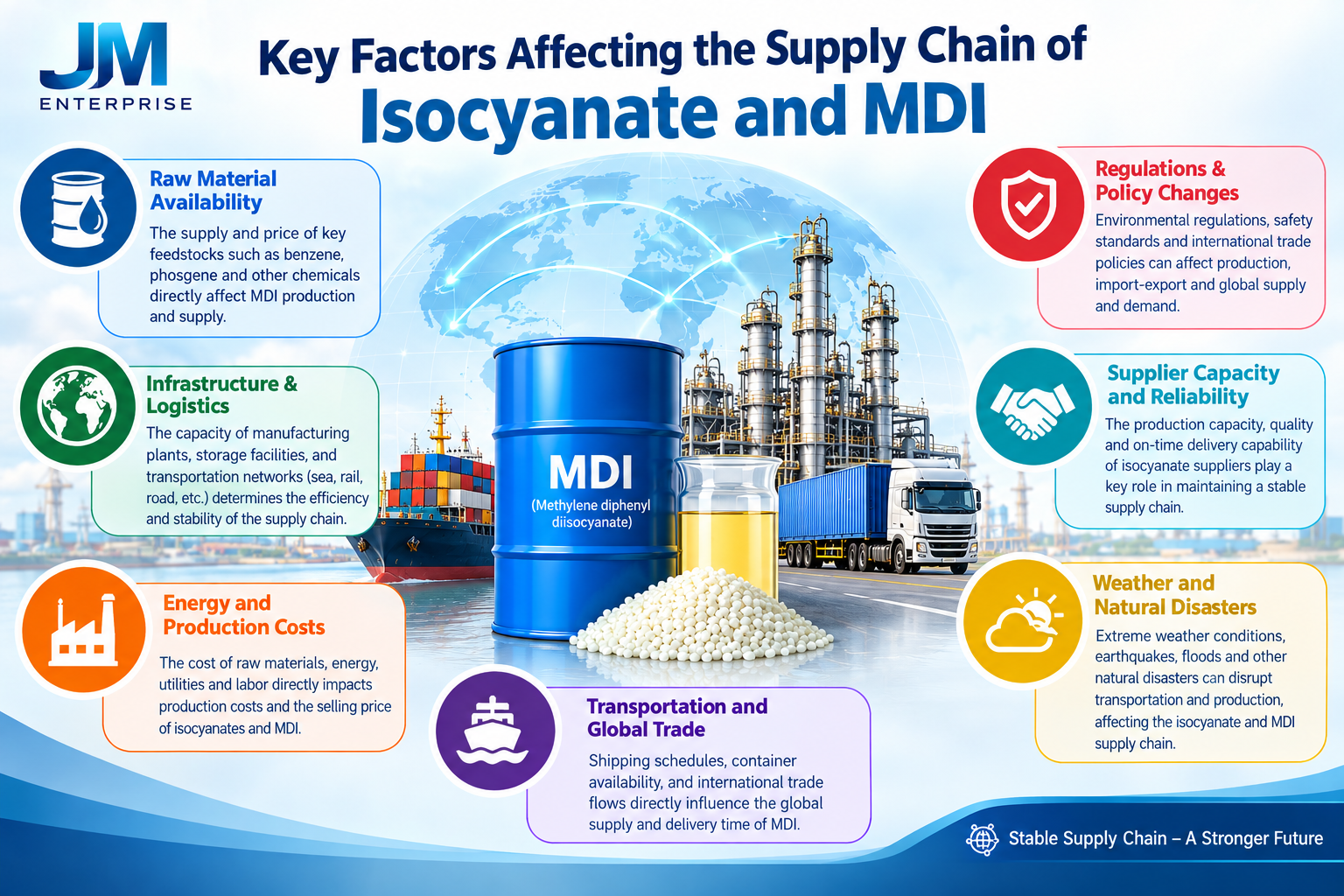
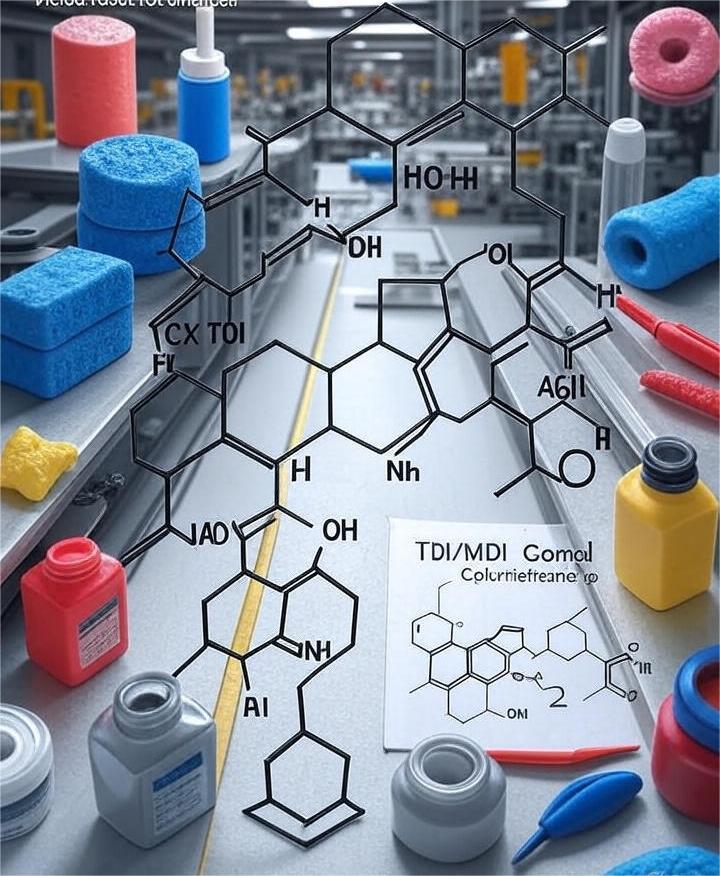
TDI/MDI – Complete Solutions for Your PU Production Needs

JM Enterprise supplies high-quality MDI and TDI for PU production in Vietnam. Co...

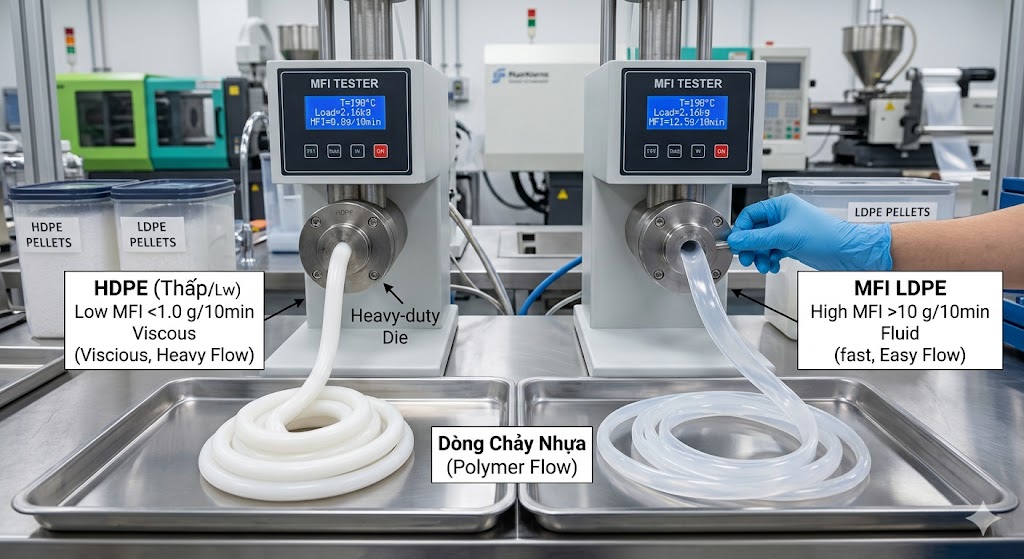
Impact of Melt Flow Index (MFI) on HDPE/LDPE Extrusion & Film Blowing | JM ENTERPRISE

Understand how MFI affects the production of HDPE and LDPE. Expert technical ins...

Related Blogs

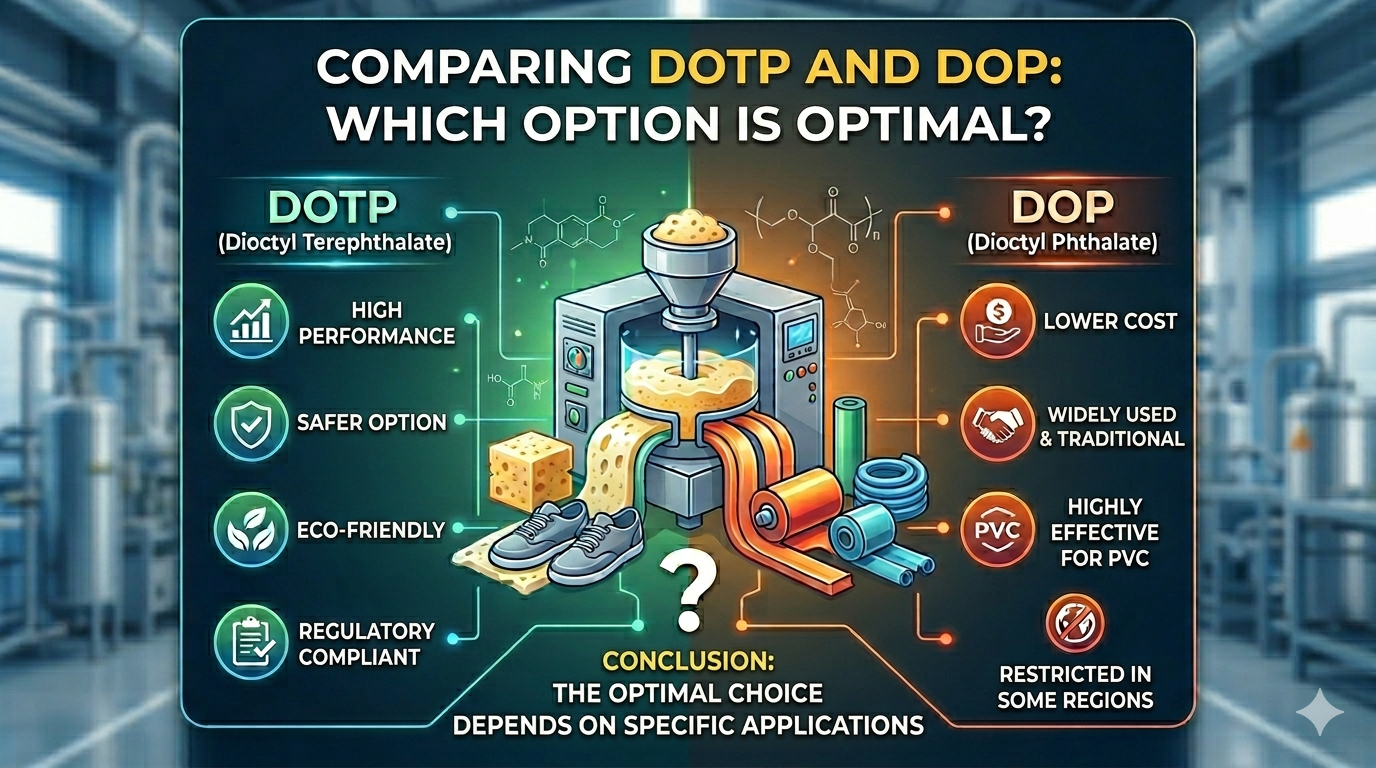
Comparing DOTP and DOP in Polyurethane Production: Which is the Optimal Choice?

A detailed technical analysis of the differences in molecular structure, volatil...

PU Foam Production Process: A Step-by-Step Guide from A to Z

Explore the complete PU foam production process from A to Z and discover how sou...

Waterproof Foam – The Superior Solution for Modern Construction

Waterproof foam – an effective solution for modern construction. JM ENTERPRISE s...

Injection Molding Process for EV Battery Packs Using ABS/PP Blend

A comprehensive guide to the injection molding process of EV battery pack casing...

Optimizing Injection Molding Performance with LLDPE MI 7-8: Technical Analysis & Cost Solutions

Cycle Time is the vital factor determining profitability. Selecting LLDPE (Linea...

In-Depth Analysis of Epoxy vs Epoxy Resin: Chemical Nature, Technical Properties, and Industrial Applications

An in-depth technical analysis of Epoxy vs Epoxy Resin. Clarify terminology, che...

Zalo Zalo