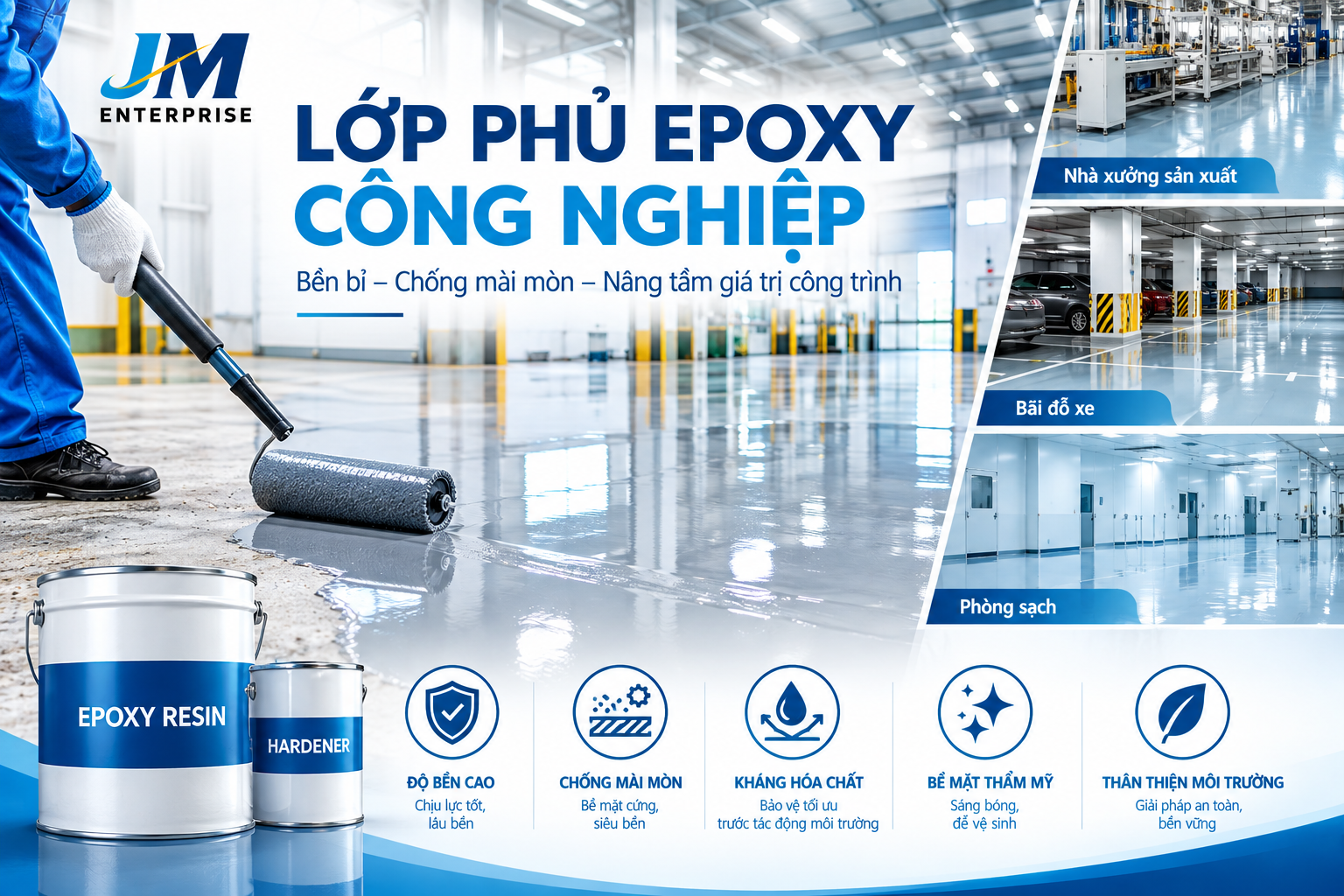
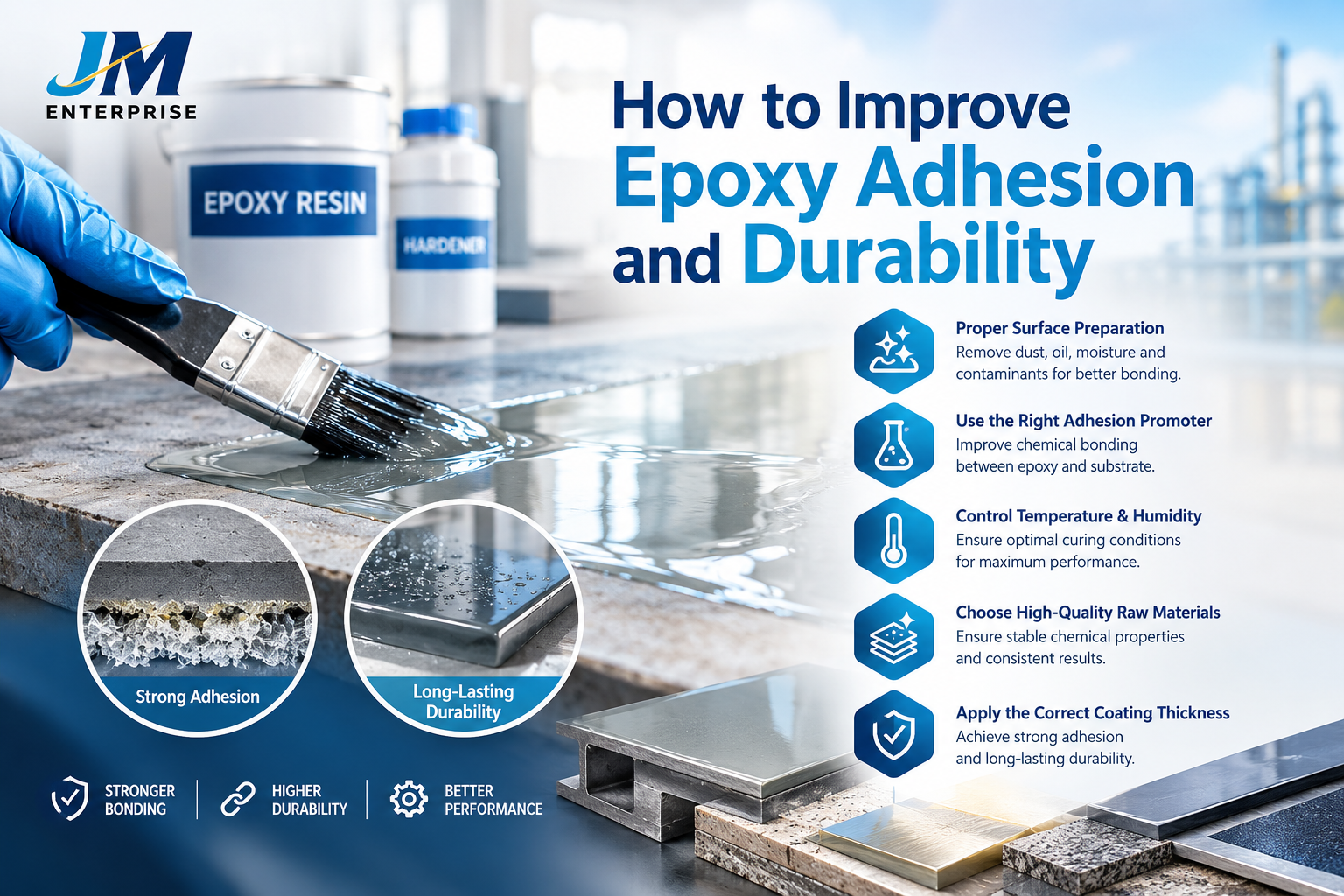
In modern manufacturing environments, factory floors, pipelines, chemical storage tanks, and heavy machinery are continuously exposed to severe mechanical loads, aggressive chemicals, and relentless surface abrasion. To protect infrastructure and extend asset lifespans, Epoxy Resin for Industrial Coatings has become the gold standard solution due to its exceptional adhesion, high mechanical strength, and outstanding chemical resistance.
This article provides an in-depth analysis of major industrial epoxy resin formulations, their core technical characteristics, and standard application procedures to help your plant optimize maintenance costs and protect critical infrastructure.
1. Why Epoxy Resins Are Preferred in Industrial Coatings
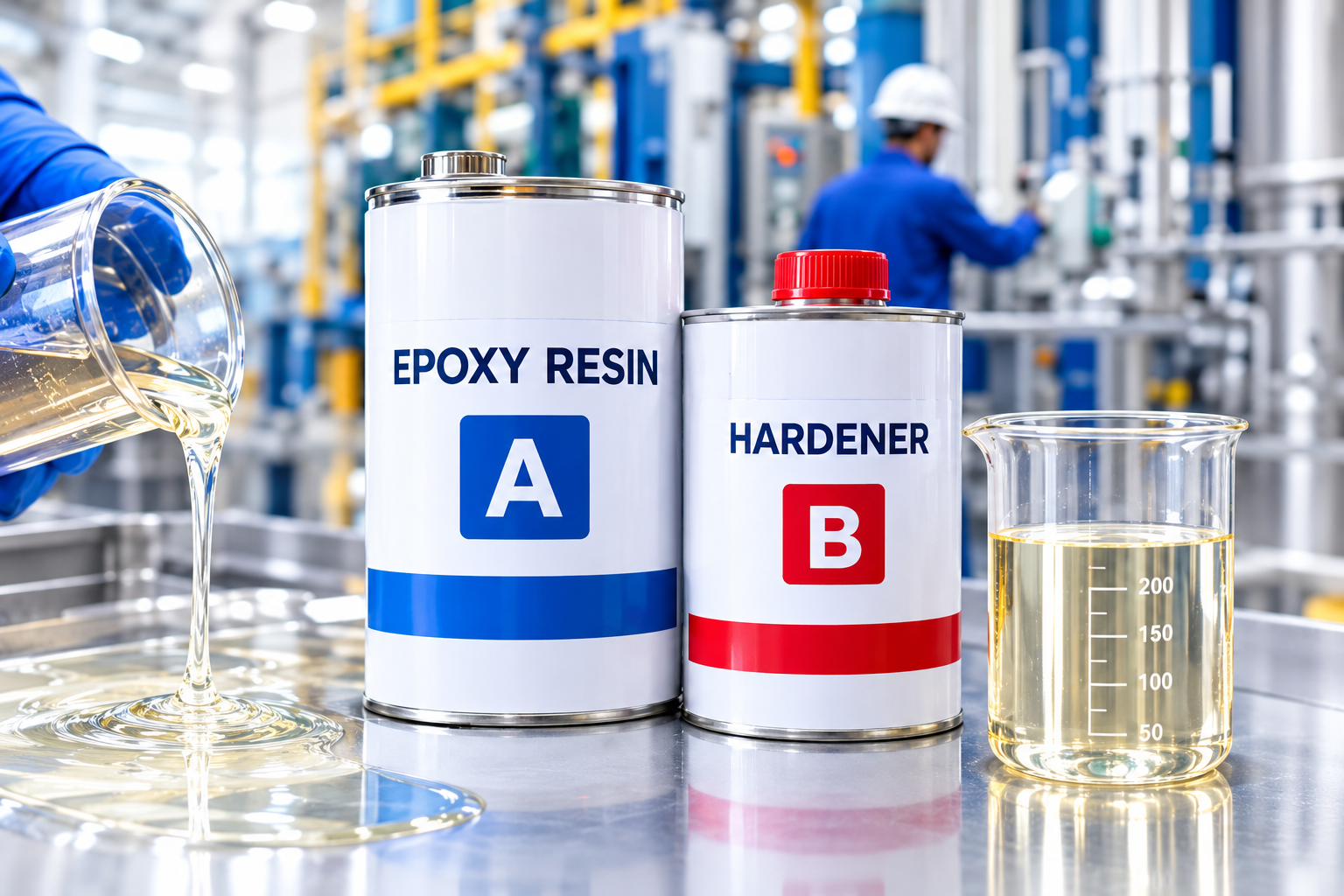
Unlike standard decorative paints, industrial epoxy coatings are formed through a cross-linking chemical reaction between an epoxy base resin (Part A) and a specialized hardener (Part B). This reaction creates a highly dense polymer network with distinct technical advantages:
- Superior Adhesion: Forms powerful mechanical and chemical bonds with concrete, steel, aluminum, wood, and composites.
- Chemical & Corrosion Resistance: Withstands prolonged exposure to solvents, acids, alkalis, oils, and fuels without degrading.
- Mechanical Durability & Wear Resistance: Absorbs heavy static loads, forklift traffic, and continuous surface friction.
- Seamless & Easy-to-Clean Surface: Creates a smooth, dust-free surface that inhibits bacterial growth and supports easy sanitization (meeting GMP/FDA guidelines).
- Moisture & Water Impermeability: Prevents water and chemical penetration that can weaken concrete structures or corrode steel sub-layers.
2. Common Epoxy Resin Types for Industrial Coatings
Depending on your facility's specific operating conditions, industrial epoxy coating systems are categorized into four primary chemical types:
|
Epoxy Resin Type
|
Technical Characteristics
|
Typical Industrial Applications
|
|
Bisphenol A (DGEBA)
|
Excellent adhesion, balanced mechanical strength, and cost efficiency.
|
Factory floor coatings, general industrial maintenance coatings.
|
|
Bisphenol F (DGEBF)
|
Lower viscosity, superior solvent and chemical resistance compared to Bisphenol A.
|
Chemical tank linings, high-solids protective coatings.
|
|
Epoxy Novolac
|
High cross-link density, heat resistance up to 200∘C , and high-acid resistance. , and high-acid resistance.
|
Chemical storage tanks, oil & gas pipelines, waste treatment facilities.
|
|
Waterborne / Solvent-Free Epoxy
|
Zero/Low VOC, low odor, environmentally friendly, safe for confined spaces.
|
Food processing plants, pharmaceutical cleanrooms, indoor storage.
|
3. Industrial Application Sectors
┌── 1. Industrial Flooring
│
Industrial Epoxy Coating Applications ────┼── 2. Tank & Pipeline Linings
│
├── 3. Anti-Corrosion Metal Primers
│
└── 4. Anti-Static / ESD Flooring
- Industrial Flooring: Self-leveling epoxy coatings and epoxy mortars shield concrete slabs from cracking under heavy forklift loads.
- Tank & Pipeline Linings: Novolac epoxy systems protect steel and concrete tank interiors from concentrated acids and alkalis.
- Anti-Corrosion Metal Primers: Zinc-rich epoxy primers shield structural steel, bridges, and offshore platforms from rusting and electrochemical corrosion.
- Anti-Static (ESD) Flooring: Formulated with conductive fibers or fillers to safely dissipate static electricity in electronics assembly plants and explosive storage areas.
4. Standard 3-Layer Industrial Epoxy Application Process
A complete industrial epoxy coating system typically consists of three essential layers:
- Epoxy Primer: Low-viscosity resin penetrates deep into the porous concrete or metal substrate, creating a strong mechanical anchor and sealing out air bubbles.
- Epoxy Body Coat / Mortar (Intermediate Layer): Enhances structural thickness, impacts strength, fills surface cracks, and levels out uneven surfaces.
- Epoxy Topcoat (Finish Layer): Provides final aesthetic finishes, safety demarcation colors, and direct resistance against chemicals, abrasion, and daily wear.
5. Summary & Recommendation
Selecting the right Epoxy Resin for Industrial Coatings requires evaluating real-world exposure conditions—including chemical types, traffic loads, and operating temperatures. Proper surface preparation (achieving appropriate CSP profiles via shot blasting or diamond grinding) combined with the right resin system ensures long-lasting surface protection for decades.
Contact JM ENTERPRISE For Technical Support
Is your facility seeking the optimal epoxy or polyurethane formulation for surface protection, potting, structural bonding, or specialized industrial coatings?
Contact the application engineering team at JM ENTERPRISE today for expert technical advice and to request direct on-site testing samples:
- Hotline / Zalo:
- +84 933 706 351 – Mr. Cha (English & Korean Support)
- +84 913 390 054 – Ms. Ngan (Vietnamese Support)
- Email: jhcha@jmentchemical.com
- Website: https://jmentchemical.com/